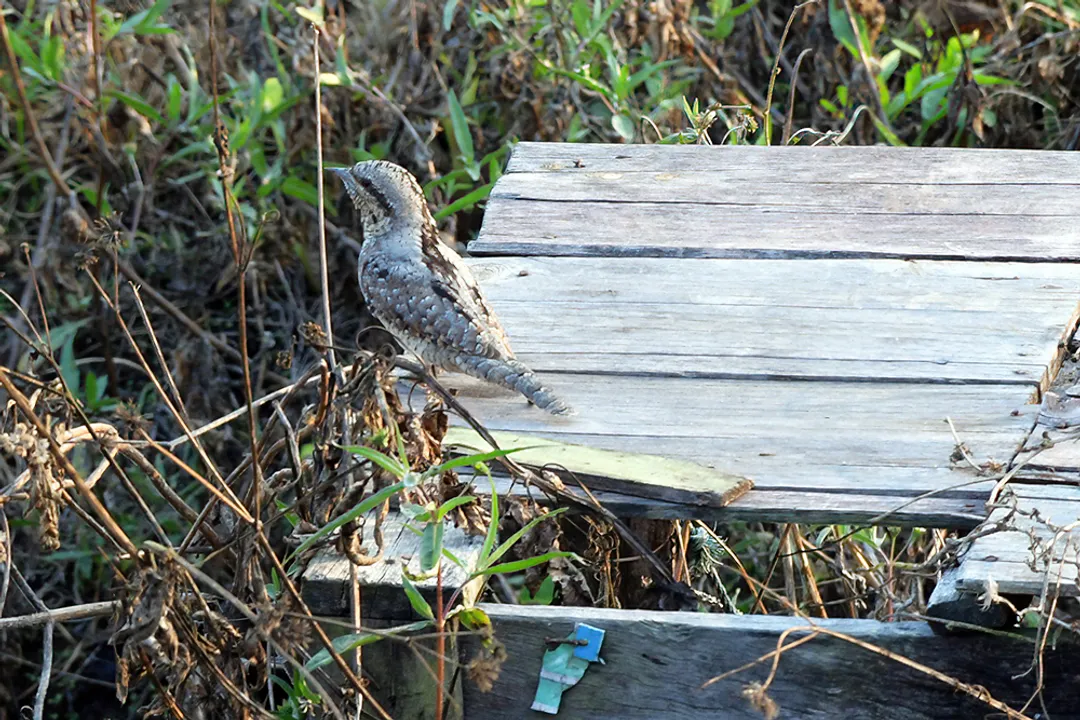
What ecological factor necessitates the migratory behavior of *Jynx torquilla* contrasting with resident woodpeckers?
Reliance on ground-dwelling ants whose availability is seasonal and scarce in winter
The migratory pattern observed in the Eurasian Wryneck is an adaptation dictated by its specialized diet and seasonal resource availability. Wrynecks heavily rely on ants and their larvae, which are abundant and accessible near the surface during the warm breeding season across Europe and temperate Asia. When winter arrives, these surface insects become scarce or dormant. This forces the wryneck to undertake long migrations to warmer areas like Africa or South Asia where insect life remains accessible. This contrasts sharply with resident woodpeckers, which can sustain themselves through the winter by accessing beetle larvae or other resources deeply embedded within tree trunks, food sources that remain relatively stable irrespective of surface temperatures.