What are the facts about wryneck birds?
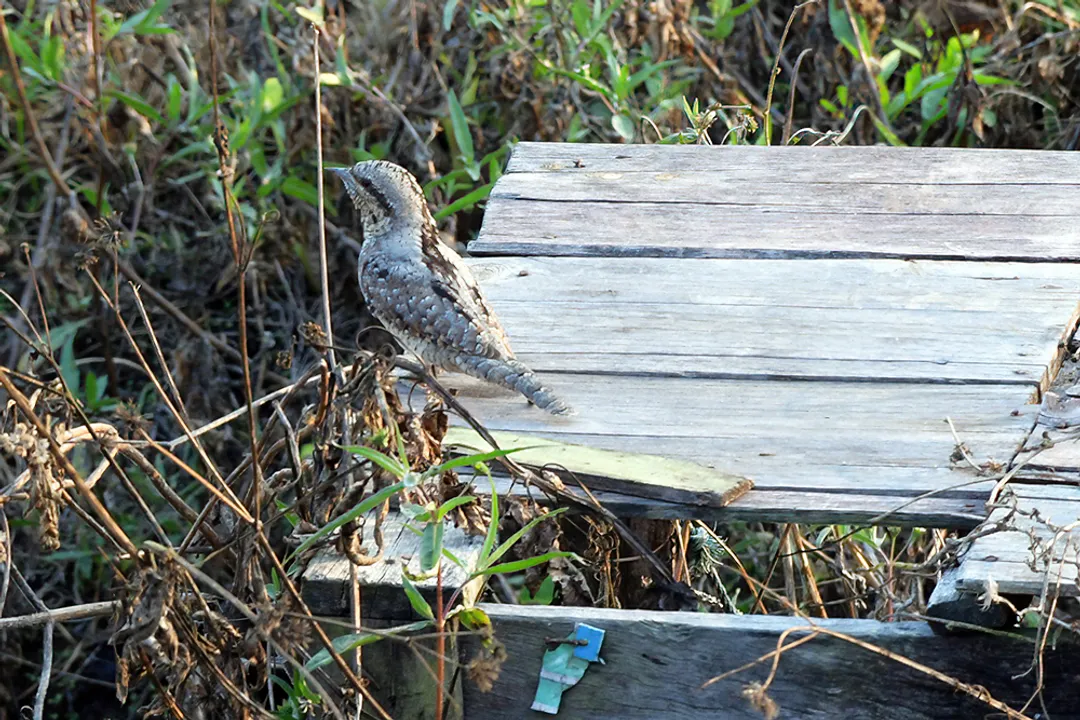
The wryneck, often less recognized than its more flamboyant woodpecker relatives, is a fascinating bird whose common name hints at its most peculiar defense mechanism. This secretive creature manages to blend so perfectly into the environment that spotting one often feels more like a lucky accident than the result of careful searching. [1] If you picture a woodpecker, you likely imagine bright colors, strong climbing abilities, and drumming sounds; the wryneck offers a much quieter, earthbound alternative within that family structure. [6]
# Woodpecker Kin
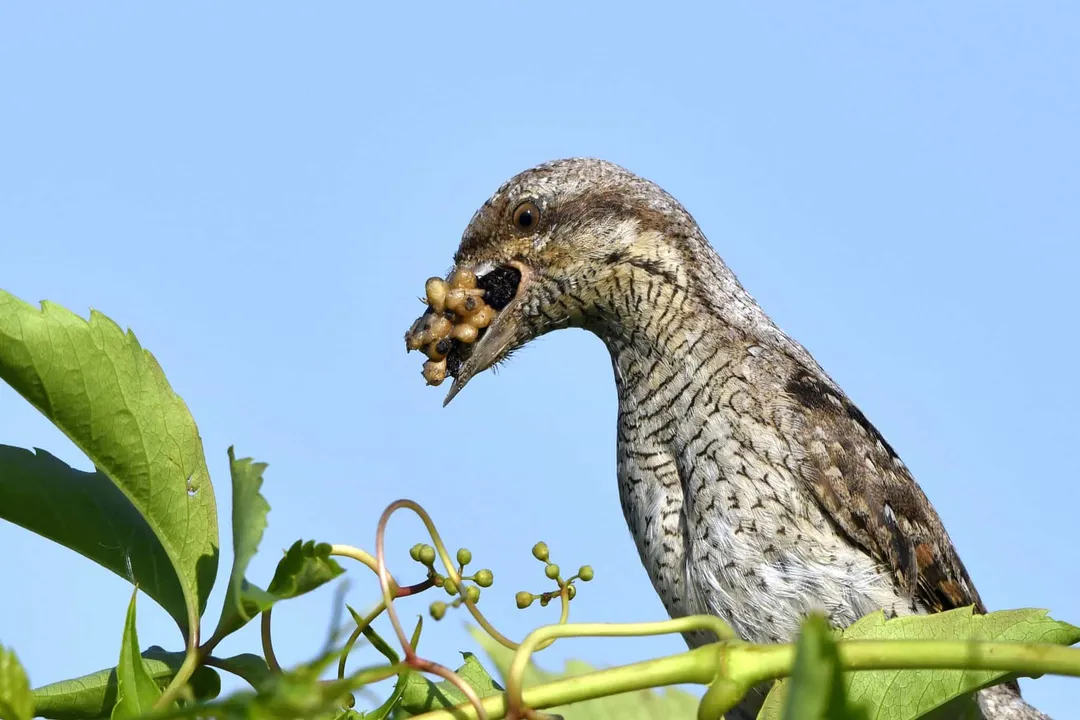
Despite its subdued appearance and preference for ground foraging, the wryneck belongs firmly to the woodpecker family, Picidae. [6] Specifically, it is often categorized within the subfamily Jynginae, or sometimes just as a distinct genus, Jynx. [4] This classification is significant because it explains some of its morphology, such as its zygodactyl feet—two toes pointing forward and two pointing backward, which aids in perching. [4] However, what truly sets it apart from other members of the Picidae is its movement and foraging style. [6] Unlike true woodpeckers, the wryneck lacks the stiff, pointed tail feathers that woodpeckers typically use as a prop to brace themselves against vertical tree trunks. [6] This difference means that while it nests in cavities like its cousins, it moves along branches and the ground much more like a creeper or a tit mouse, remaining close to the substrate. [1][6]
# Camouflage Master
Visually, the wryneck is a study in muted tones, expertly designed for deception. [1] Its plumage is a complex mix of browns, buffs, grays, and black markings, creating a highly mottled and cryptic appearance. [1][4][6] This coloring allows it to disappear against bark, leaf litter, or dry grasses. [1] A common measurement places the bird at about 16 to 17 centimeters in length. [4] In males, a subtle but important distinguishing feature is the presence of a reddish patch on the cheeks or throat area. [4] For the casual observer, the overall impression might simply be that of a small, drab songbird, perhaps similar to a thrush or even a large moth when seen from a distance. [1] It is this mastery of disguise that often means people overlook them, even when they are relatively close by.
One interesting aspect of their cryptic coloration is how perfectly tailored it seems to local environments. A wryneck found foraging on the damp, mossy bark of an old oak in a temperate woodland will exhibit slightly different shades and patterning compared to one in the drier, sun-bleached scrubland of the Mediterranean—a subtle but important local adaptation that enhances their near-invisibility. [1] This visual blending contrasts sharply with the often vivid crimson, yellow, or white patches sported by many other European woodpeckers, making the wryneck an outlier in terms of display coloration. [6]
# The Serpent Dance
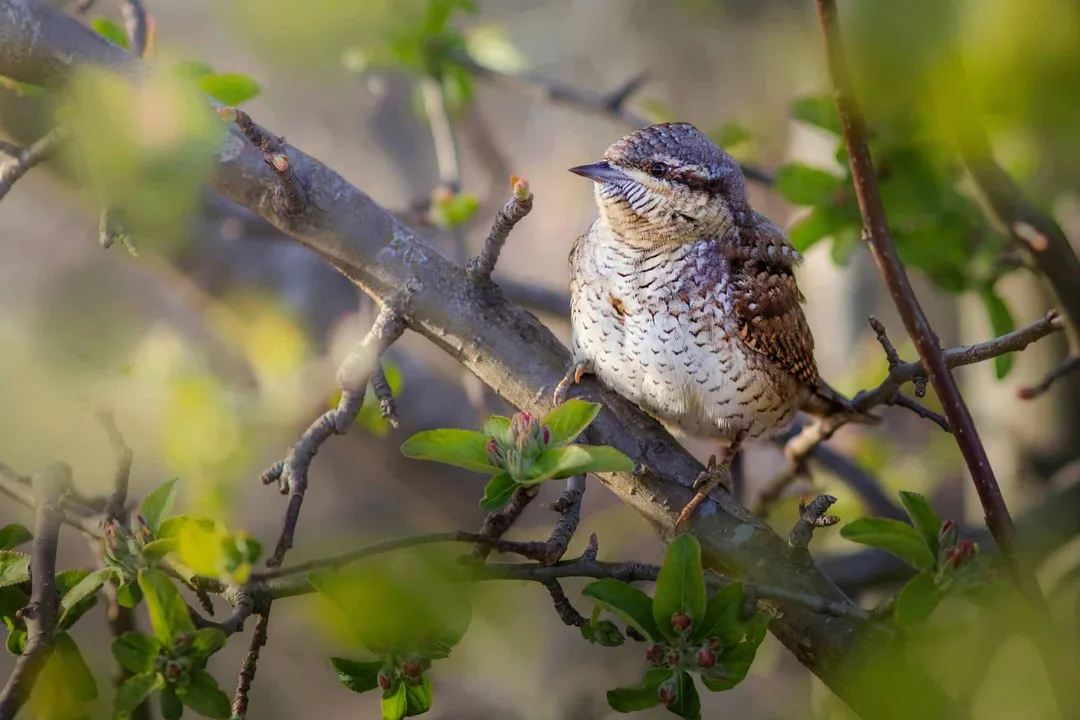
The bird derives its common name, wryneck, from its truly remarkable and unsettling defense display when it feels threatened and cannot immediately flee. [1][3] When cornered or disturbed on its nest, the wryneck doesn't just freeze; it puts on a performance. [3] It may arch its neck backward until its head touches its own back, then slowly writhe its head from side to side while opening its beak, sometimes even pointing its head towards the perceived danger in a truly snake-like fashion. [1][4] To complete the deterrent, the bird often emits a loud, drawn-out hiss, sounding incredibly fierce for such a small bird. [3] Furthermore, some reports indicate they can secrete a foul-smelling, unpleasant fluid from their glands to further discourage predators. [1] This combination of serpentine motion, hissing, and odor makes it an effective, albeit strange, method for startling an attacker into backing off. [3]
# Ant Appetite
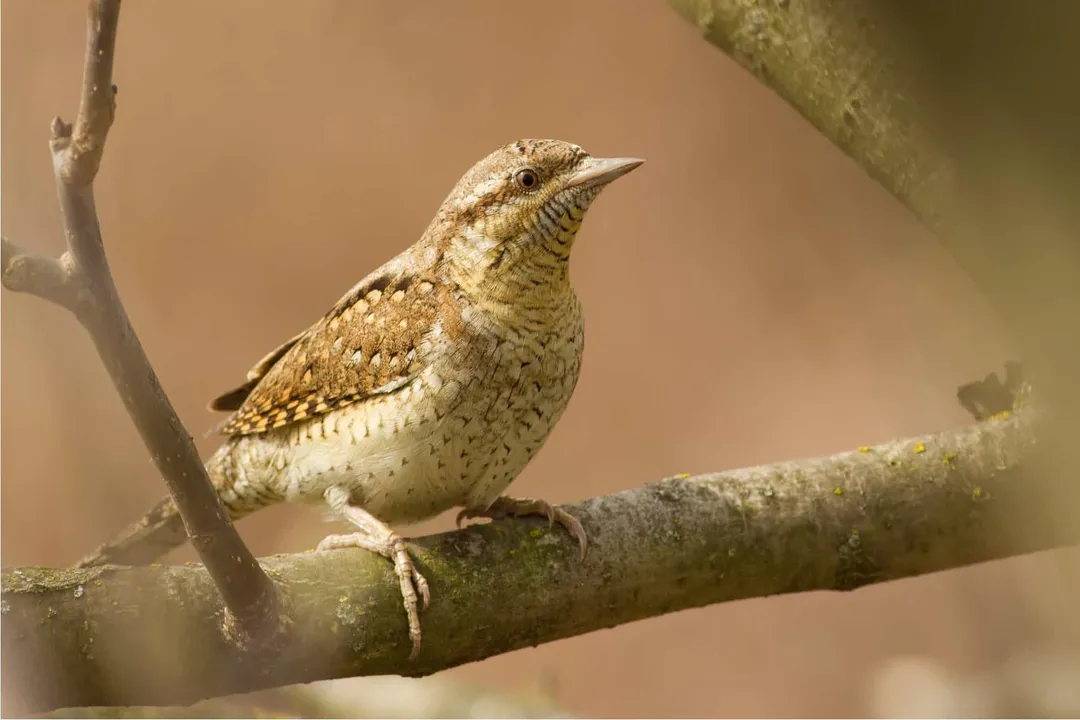
The wryneck’s diet shows a distinct specialization that dictates where it spends most of its time: on or very near the ground. [1][6] Its primary food source consists overwhelmingly of ants, including their larvae and pupae. [1][3][4] To access this preferred food, the wryneck uses a specialized tongue, which is notably long and slender, often equipped with a sticky tip. [1][4] It uses this tool to probe deeply into ant nests, crevices in the ground, or under bark flakes to extract its prey. [1]
If you are hoping to find a wryneck, understanding this feeding preference is key. Unlike observing a Great Spotted Woodpecker, which requires scanning the vertical trunks and dead snags of trees, finding a wryneck means observing the ground, especially near obvious ant trails or mounds. [6] Watching for slight movements in the grass or shallow probes into mossy patches near tree bases is a much more productive strategy for sighting one of these birds when they are actively feeding. [2]
# Hole Nesters
Like other woodpeckers, wrynecks are cavity nesters, relying on pre-existing holes for laying their eggs. [1][6] However, they are often quite capable of excavating their own nesting chambers in suitably rotten wood, though they may also utilize old holes created by larger woodpeckers. [4][6] The nest itself is usually lined with a few wood chips or fragments, rather than being a deep cup structure. [1] The eggs laid are characteristically plain white, a common trait among birds that nest in dark cavities, as camouflage for the eggs is unnecessary. [4]
# Seasonal Traveler
In many parts of its range, the wryneck is known as a migratory bird, undertaking significant annual movements. [6] The Eurasian Wryneck, for example, is famous for its long-distance travels. [4] During the breeding season, they occupy areas across Europe and Asia, but when the insect populations decline with the onset of colder weather, they depart for warmer wintering grounds further south. [4] This migratory behavior contributes to their low profile; they are only truly visible in their northern breeding habitats for a few brief months of the year. [6]

# Calling Style
While they are generally quiet birds, their song is quite distinctive when heard. [4] It is described as a loud, clear, and highly repetitive whistled call. [1][4] The sound is often rendered as a series of identical syllables, such as "whee-whee-whee" or "kyee-kyee-kyee," repeated at a steady, almost mechanical pace. [1][4] This call is often one of the most reliable ways to locate a wryneck during the breeding season, as its volume carries well, even if the bird itself remains hidden among dense foliage or close to the ground. [4]
# Status Check
From a conservation standpoint, the wryneck often faces challenges linked to habitat quality and changes in agricultural practices. [6] Since their entire life cycle depends heavily on the availability of insects—specifically ants—any significant reduction in insect populations due to pesticide use or habitat alteration can severely impact their breeding success. [6] While the species is not globally immediately threatened across its entire vast range, local populations, particularly in developed European areas, have shown declines, making the preservation of their specific habitat needs essential for their continued presence. [6] It is a subtle indicator species; if the ants are thriving, the wrynecks have a chance to thrive too. [4]
#Videos
WRYNECK Woodpecker What Should You Know? - YouTube
Related Questions
#Citations
Living with Birds 21 Facts on Wryneck Tweetapedia
Wryneck Bird Facts | Jynx Torquilla - RSPB
Wryneck Bird Facts - A-Z Animals
Wryneck - Wikipedia
The Wryneck: Biology, Behaviour, Conservation and Symbolism of ...
Wryneck - The Wildlife Trusts
WRYNECK Woodpecker What Should You Know? - YouTube
Eurasian Wryneck Facts For Kids | AstroSafe Search - DIY.ORG
Wryneck - BTO