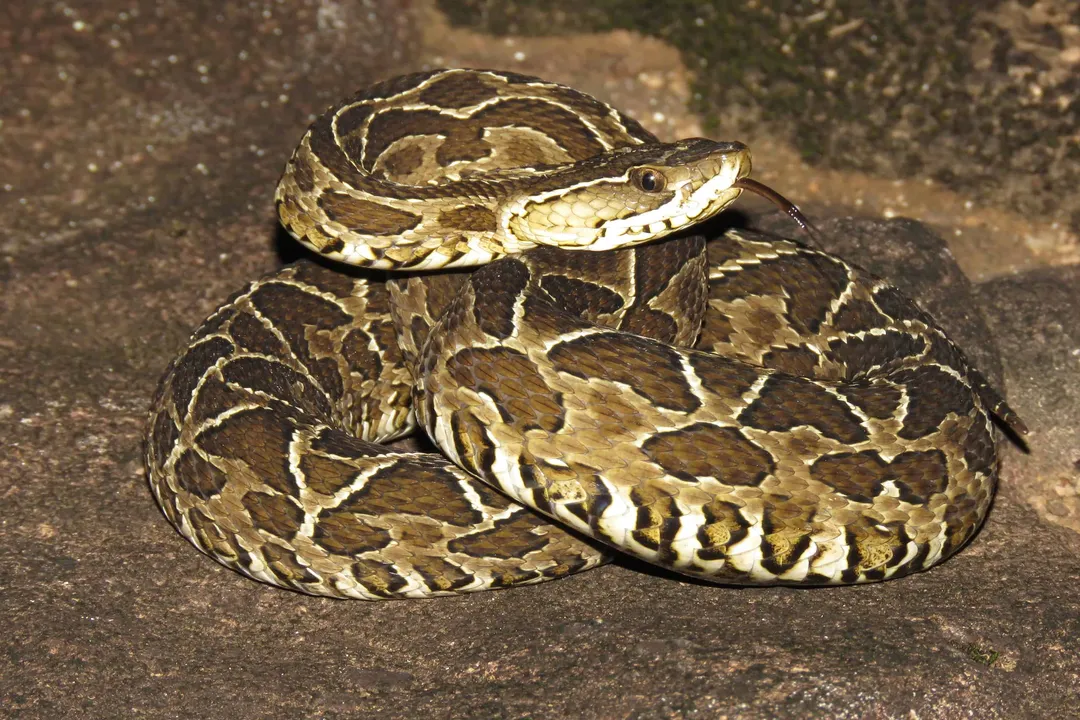
What specialized hunting behavior do juvenile *B. jararaca* utilize to attract small prey, often observed when they are young and potentially arboreal?
Caudal luring, which involves wiggling the distinctively white tip of their tail to mimic an insect larva.
Juvenile *B. jararaca* exhibit a highly specialized behavioral adaptation for securing small prey, known as caudal luring. This technique involves the snake actively wiggling the very tip of its tail, which is distinctively colored white. By manipulating this tail movement, the juvenile effectively mimics the appearance of an insect larva moving on the substrate. This mimicry serves to attract small prey items that would mistake the tail tip for a potential meal, thereby bringing the prey within striking distance of the young viper. This behavior is hypothesized to have evolved particularly among arboreal young to supplement their diet when other, more readily available prey items are scarce.