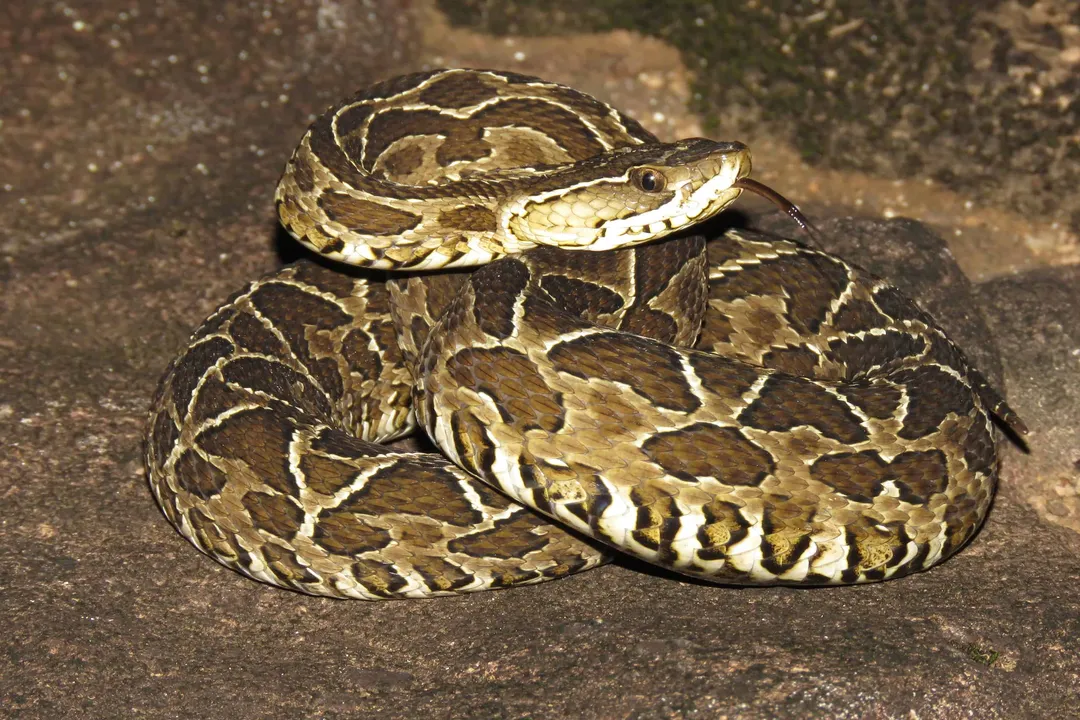
How do the venom activities of male versus female *B. jararaca* illustrate sexual dimorphism in toxin expression?
Females produce venom generally more potent in hemorrhagic and hyaluronidasic activities, while males exhibit greater potency in coagulant, phospholipasic, and myotoxic activities.
The venom of *B. jararaca* displays significant sexual dimorphism, meaning the composition and effects vary notably between the sexes. Females, often being the larger individuals, have venom characterized by increased potency in activities that cause tissue damage and break down connective tissue, specifically hemorrhagic and hyaluronidasic activities. Conversely, male venom exhibits a profile optimized for different effects, showing greater potency in actions related to clotting (coagulant), muscle breakdown (myotoxic), and the activity associated with phospholipids (phospholipasic). This divergence suggests that selective pressures regarding prey capture, defense, or perhaps even niche partitioning between the sexes have tuned their enzymatic profiles to favor distinct biochemical outcomes.