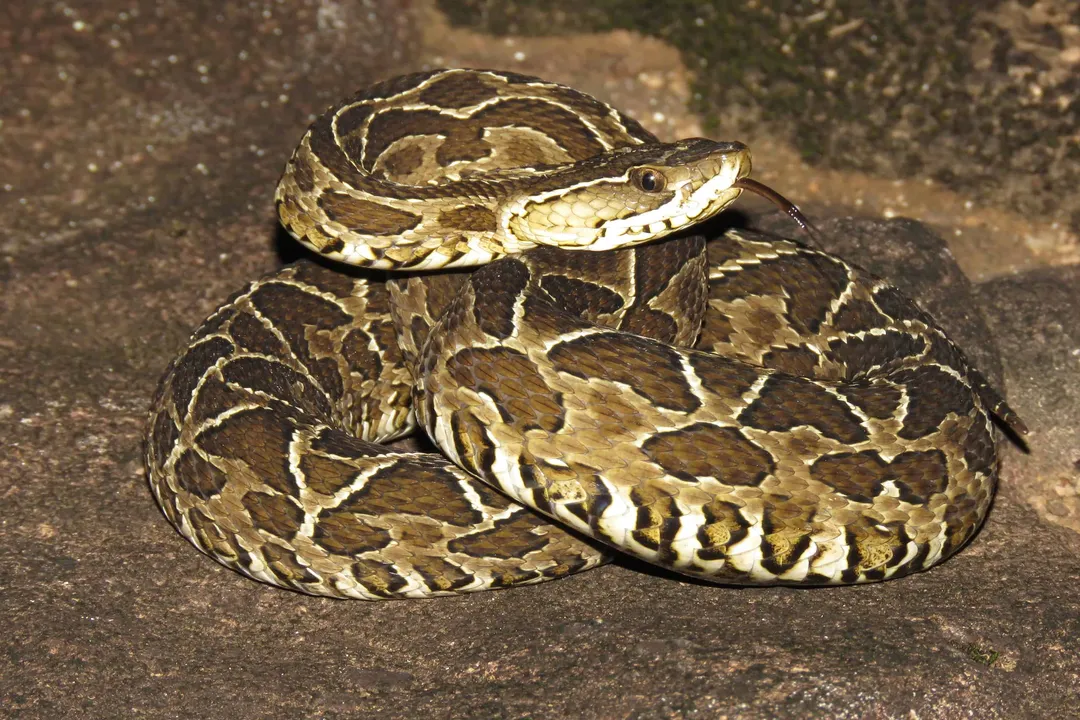
What ontogenetic shift in venom composition occurs in *B. jararaca* juveniles compared to adults, and what dietary change correlates with this?
Juvenile venom has a greater anticoagulant effect, correlating with their primary diet of ectothermic prey like frogs and arthropods, unlike adults who focus on endothermic rodents.
The venom profile of *B. jararaca* changes significantly as the snake develops, which is directly linked to shifts in diet, demonstrating an elegant evolutionary tuning process. Juvenile snakes primarily consume ectothermic prey, such as arthropods and frogs, which constitute up to 75% of their early diet. Their venom reflects this, exhibiting a greater anticoagulant effect, optimizing the neutralization of the circulatory systems of cold-blooded meals. As the snake matures into adulthood, their diet shifts heavily towards endothermic prey, particularly rodents (up to 80% of the adult diet). Consequently, the adult venom profile adapts to this warmer, faster-recovering prey base, becoming less anticoagulant and more tailored for immobilizing and processing larger mammals. This differential venom composition minimizes competition between the young and the adults of the same species for resources.