What specialized function does the *Xerus* tail serve regarding intense solar radiation?
Answer
Functioning as an active thermal shield, held erect over the body
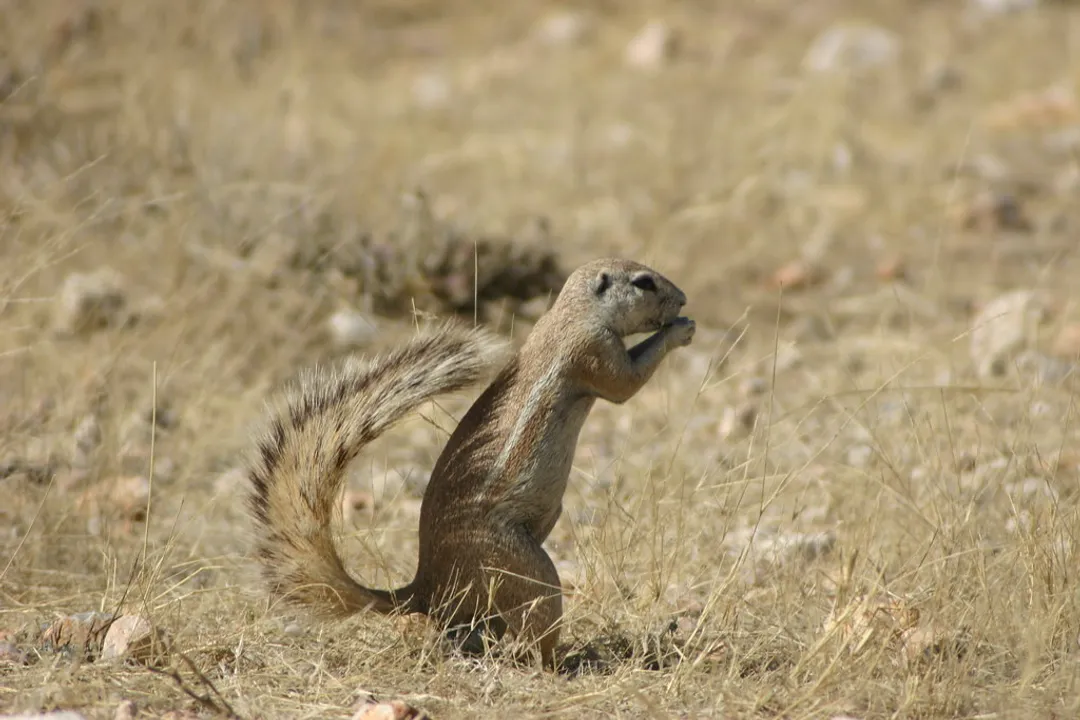
The tail of *Xerus* species exhibits a highly specialized behavioral adaptation crucial for survival under intense sunlight, classifying it as an active thermal shield. When exposed, these squirrels deliberately hold their tails vertically over their backs. This posture creates a portable awning or shade, effectively blocking direct solar radiation from hitting the sensitive dorsal skin. This action is a direct evolutionary response to the necessity of foraging in exposed areas where temperatures are extremely high, helping to prevent overheating and manage body temperature fluctuations during the hottest parts of the day.
Related Questions
What is the Greek origin of the name *Xerus* used for African ground squirrels?What specialized function does the *Xerus* tail serve regarding intense solar radiation?What specific marking distinguishes the Cape ground squirrel (*Xerus inauris*) coat?What describes the typical daily activity pattern for squirrels belonging to the genus *Xerus*?What physiological adaptation allows *Xerus* species to manage water scarcity efficiently?Why does establishing a *Xerus* colony represent a significant, long-term investment in territory?Which characteristic identifies the Striped Ground Squirrel (*Xerus erythropus*)?In *Xerus inauris* colonies, what cooperative behavior is observed during foraging times?How does the lifestyle of the *Xerus* genus contrast significantly with many tree squirrels?In which general region of Southern Africa is the Cape ground squirrel (*Xerus inauris*) predominantly found?