How does the lifestyle of the *Xerus* genus contrast significantly with many tree squirrels?
Answer
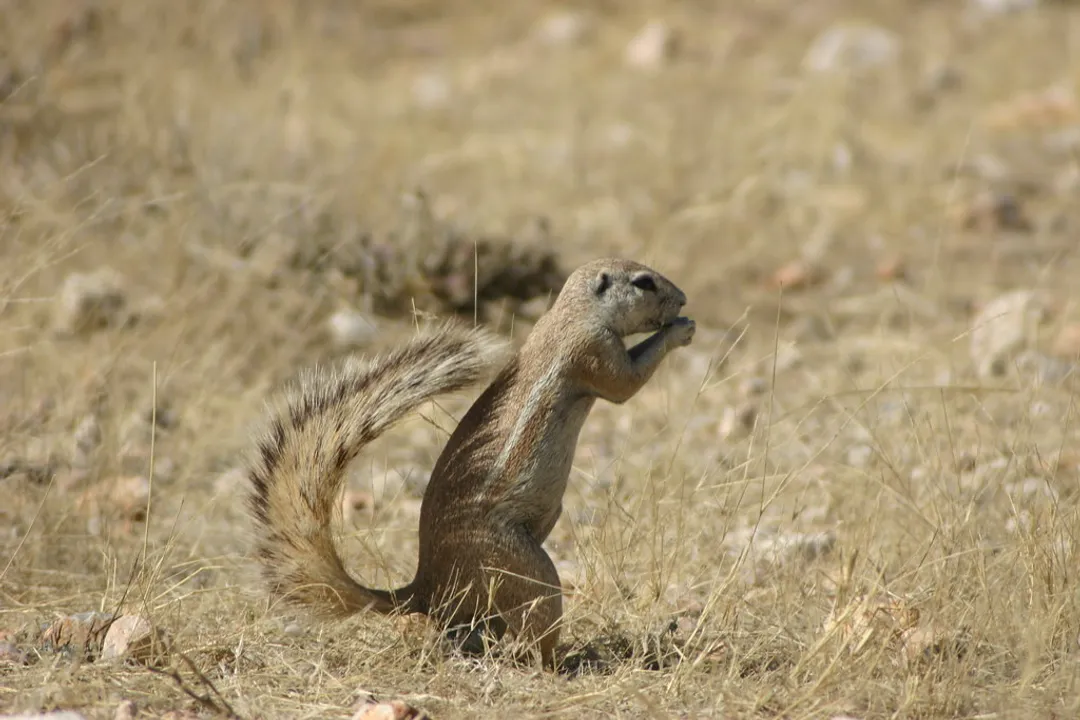
*Xerus* is almost exclusively terrestrial, spending its life near or in the ground
A fundamental distinction between the *Xerus* genus and many other squirrels found in the Old World lies in their preferred domain. While numerous Old World squirrel species are arboreal, meaning they spend the majority of their lives in trees, *Xerus* are fundamentally terrestrial. Their entire existence is centered around the ground, utilizing extensive, self-constructed burrow networks for shelter, temperature regulation, and raising young. This commitment to the ground necessitates different survival strategies, especially concerning thermoregulation and defense against ground-based predators, compared to their climbing counterparts.
Related Questions
What is the Greek origin of the name *Xerus* used for African ground squirrels?What specialized function does the *Xerus* tail serve regarding intense solar radiation?What specific marking distinguishes the Cape ground squirrel (*Xerus inauris*) coat?What describes the typical daily activity pattern for squirrels belonging to the genus *Xerus*?What physiological adaptation allows *Xerus* species to manage water scarcity efficiently?Why does establishing a *Xerus* colony represent a significant, long-term investment in territory?Which characteristic identifies the Striped Ground Squirrel (*Xerus erythropus*)?In *Xerus inauris* colonies, what cooperative behavior is observed during foraging times?How does the lifestyle of the *Xerus* genus contrast significantly with many tree squirrels?In which general region of Southern Africa is the Cape ground squirrel (*Xerus inauris*) predominantly found?