In *Xerus inauris* colonies, what cooperative behavior is observed during foraging times?
Answer
Individuals often cooperate in watching for danger while others forage
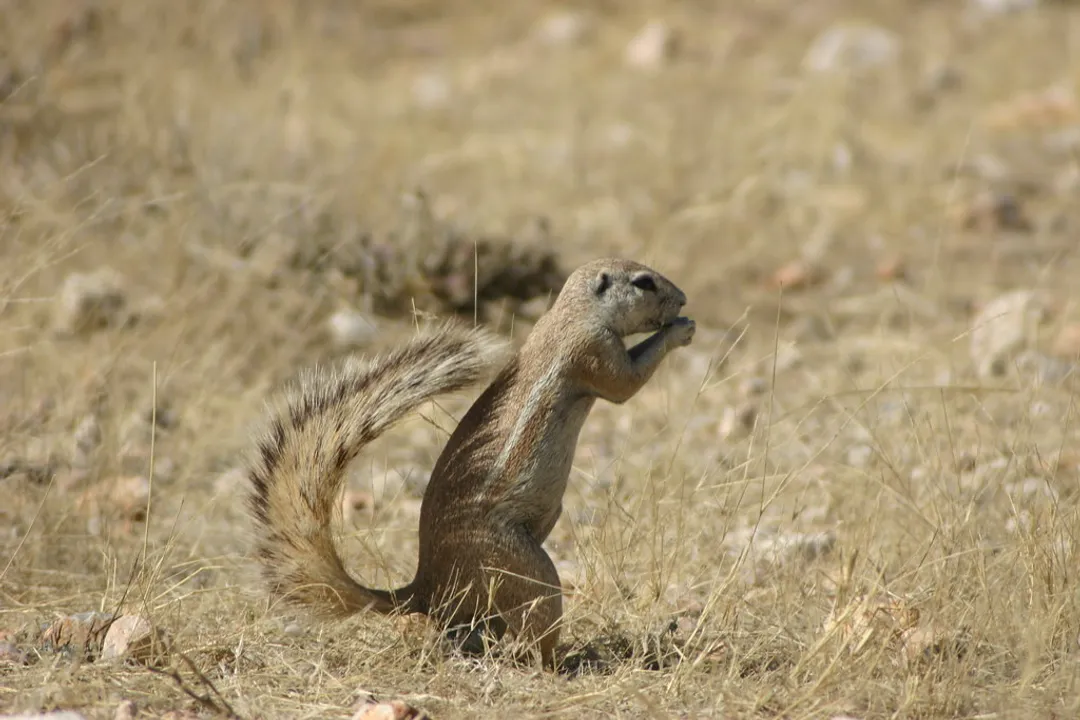
The *Xerus* genus, particularly the Cape ground squirrel (*Xerus inauris*), exhibits a high degree of social cooperation within its colony structure. This cooperation is evident during the risky activity of foraging above ground. While some members are engaged in feeding on surface vegetation or searching for roots, other individuals will take on sentinel duty, remaining upright to scan the surrounding environment actively for potential threats, such as birds of prey or terrestrial carnivores. Upon spotting danger, the sentinel emits sharp alarm calls, prompting the foraging members to retreat rapidly into the safety of their burrows.
Related Questions
What is the Greek origin of the name *Xerus* used for African ground squirrels?What specialized function does the *Xerus* tail serve regarding intense solar radiation?What specific marking distinguishes the Cape ground squirrel (*Xerus inauris*) coat?What describes the typical daily activity pattern for squirrels belonging to the genus *Xerus*?What physiological adaptation allows *Xerus* species to manage water scarcity efficiently?Why does establishing a *Xerus* colony represent a significant, long-term investment in territory?Which characteristic identifies the Striped Ground Squirrel (*Xerus erythropus*)?In *Xerus inauris* colonies, what cooperative behavior is observed during foraging times?How does the lifestyle of the *Xerus* genus contrast significantly with many tree squirrels?In which general region of Southern Africa is the Cape ground squirrel (*Xerus inauris*) predominantly found?