What percentage of Blue Wildebeest calves are born within the tight two-to-three-week calving period?
Answer
Approximately 80 percent
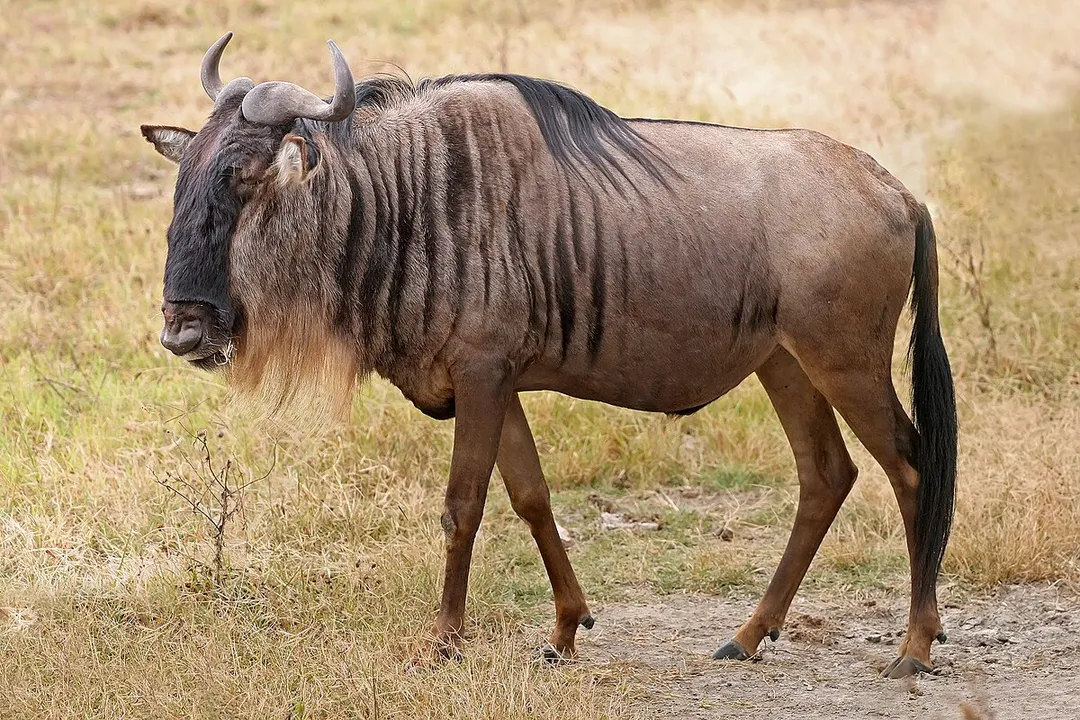
The reproductive strategy of the blue wildebeest involves a highly synchronized calving period designed to overwhelm predator capacity. Females time their conception seasonally so that births coincide with the onset of the rainy season when grass resources are plentiful for nursing mothers. This results in a dramatic mass birthing event where approximately 80 percent of all calves arrive within a very narrow window, typically spanning just two to three weeks. During the peak of this rush, output can reach approximately 8,000 newborns every single day.
Related Questions
What Ancient Greek roots define the genus name Connochaetes for wildebeest?How do the horns of the Blue Wildebeest differ from the Black Wildebeest?What dietary classification applies to wildebeest based on their reliance on grasses?What is distinctive about the body structure of the wildebeest, featuring high shoulders?What percentage of Blue Wildebeest calves are born within the tight two-to-three-week calving period?What ecological role describes the wildebeest's disproportionately large influence on savanna structure?Within which ecosystem does the Great Migration of blue wildebeest occur?What primary modern challenge threatens the mass movement of wildebeest populations?Besides vocalizations, what scent-based method do wildebeest use to guide the herd during movement?What specific food product is made from wildebeest flesh for local populations?