Wildebeest Facts
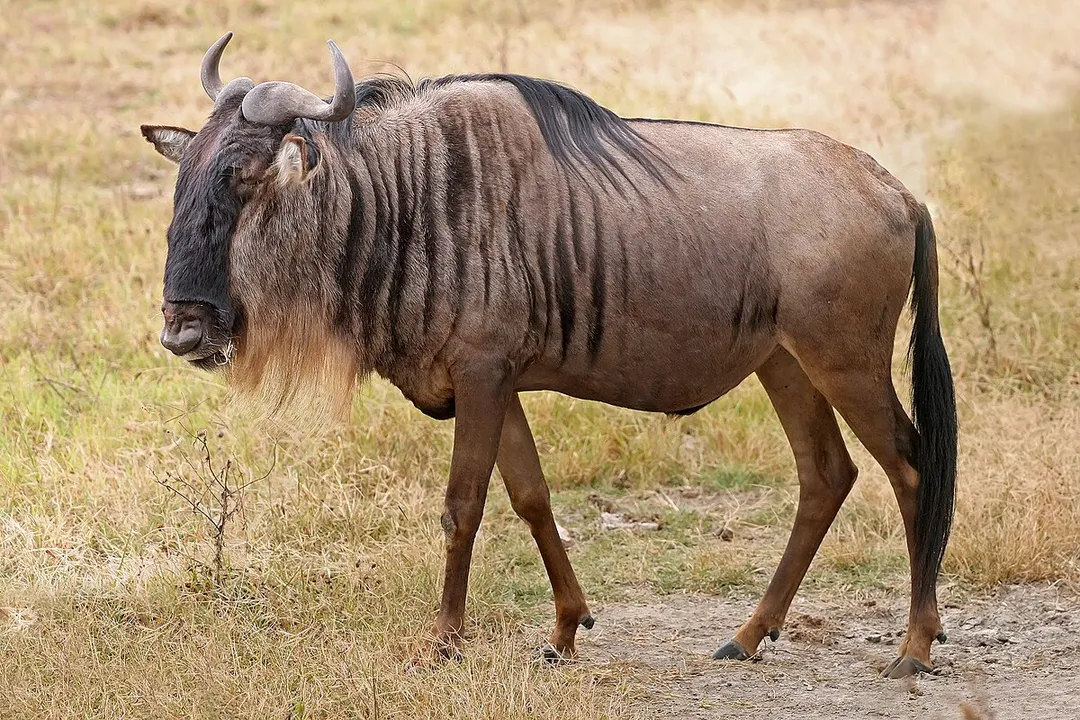
The wildebeest, frequently called the gnu, stands as one of the most emblematic herbivores of the African savanna, instantly recognizable by its unusual build and its association with one of the world's greatest wildlife spectacles. These large antelopes belong to the family Bovidae. [5][10] While they look like a composite of several animals, their sheer numbers and annual movements dictate much of the ecological health of the plains they inhabit. [2] It is important to note that "wildebeest" refers to a genus (Connochaetes) containing two distinct species: the Blue Wildebeest (Connochaetes taurinus), also known as the brindled gnu, and the Black Wildebeest (Connochaetes gnou), or white-tailed gnu. [2][5][6][10]
# Nomenclature and Lineage
The name wildebeest itself is rooted in the first encounters European settlers had with the animal in South Africa around the year 1700, deriving from the Dutch words meaning “wild beast” or “wild ox”. [2][3][5] The scientific genus name, Connochaetes, has a different origin, stemming from Ancient Greek words for “beard” (kónnos) and “flowing hair” or “mane” (khaítē), accurately describing their shaggy appearance. [2][5] Fossils indicate that wildebeest are ancient members of the antelope group, with blue wildebeest lineages dating back perhaps 2.5 million years. [2][5] A close relative, the now-extinct Rusingoryx atopocranion, possessed a strikingly unique hollow, trumpet-like nasal dome, hypothesized to be used for producing low-frequency communication sounds. [2]
# Species Divergence
While both species share the Connochaetes genus, they have diverged ecologically and morphologically. [5] The Blue Wildebeest is generally the larger of the two types. [5] The Blue Wildebeest, which includes five recognized subspecies such as the western white-bearded wildebeest, has a coat that appears dark grey or bluish-grey, overlaid with dark vertical stripes along the flanks. [1][3][6] This species dominates the East African ecosystems like the Serengeti and Maasai Mara. [1] In contrast, the Black Wildebeest is smaller, dark brown to black, and is distinguished by its white tail and mane. [4][6] The primary physical distinction, aside from color, lies in the horns: the blue wildebeest’s horns protrude sideways before curving downward and then back up toward the skull, whereas the black wildebeest’s horns curve forward, then downward, curving upward at the tips. [5] The distribution also differs; blue wildebeest are found across eastern and southern Africa, while the black wildebeest is naturally confined to open grasslands in southern Africa, notably South Africa, Eswatini, and Lesotho. [5][6] This split seems driven by adaptation to different ecological niches rather than resource competition. [5]
The movement patterns are a key differentiator, too. Many blue wildebeest populations engage in long-distance annual migrations, famously in the Serengeti-Mara ecosystem. [5] However, some blue wildebeest populations, like those in the Ngorongoro Conservation Area, are sedentary, maintaining territories year-round. [2][5] The Black Wildebeest, on the other hand, is generally nomadic or maintains a defined home range but does not undertake the massive, epic migrations seen in their northern cousins. [5] Interestingly, when forced into confined areas, hybridization between the two species can occur, which presents a risk to the genetic integrity of the black wildebeest, sometimes resulting in abnormal bone structures in the offspring. [5][6]
# Body Shape
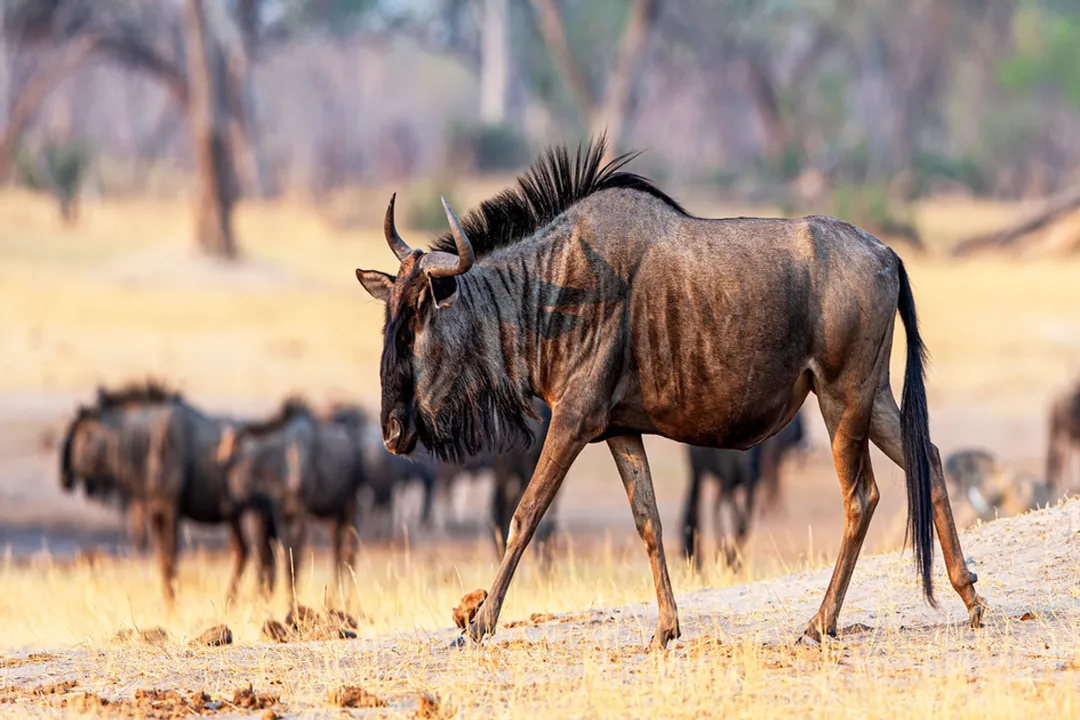
Despite their reputation for endurance running, wildebeest possess a build that can appear ungainly to the casual observer. [2] They are large antelopes, typically standing between 45 to 55 inches high at the shoulder and measuring five to eight feet in length. [3] Their body structure is notable for being heavily built in the front, featuring high shoulders and a distinct hump, which contrasts sharply with their relatively slender hindquarters and thin legs. [3][6][7] Both sexes bear horns that spring outward from the head in curved semicircles. [3] Males are typically larger than females across both species. [5]
| Characteristic | Blue Wildebeest (Adult Male Approx.) | Black Wildebeest (Adult Male Approx.) |
|---|---|---|
| Shoulder Height | Up to 150 cm (59 in) | 111–120 cm (44–47 in) |
| Weight | Around 250 kg (550 lb) | About 180 kg (400 lb) |
| Coat Color | Dark grey to brownish-grey with stripes | Dark brown to black with white tail/mane |
| Horn Shape | Outward, then downward/curving up | Forward, then downward/curving up at tips |
| Source | [5] | [5] |
This physical adaptation—powerful forequarters—is necessary for powering their incredible speeds when needed. [2] Furthermore, their shaggy manes and beards, along with the brindle markings on their coats, actually help them blend into the heat haze shimmering off the savannah, offering a degree of natural camouflage against predators. [1]
# Grass Diet
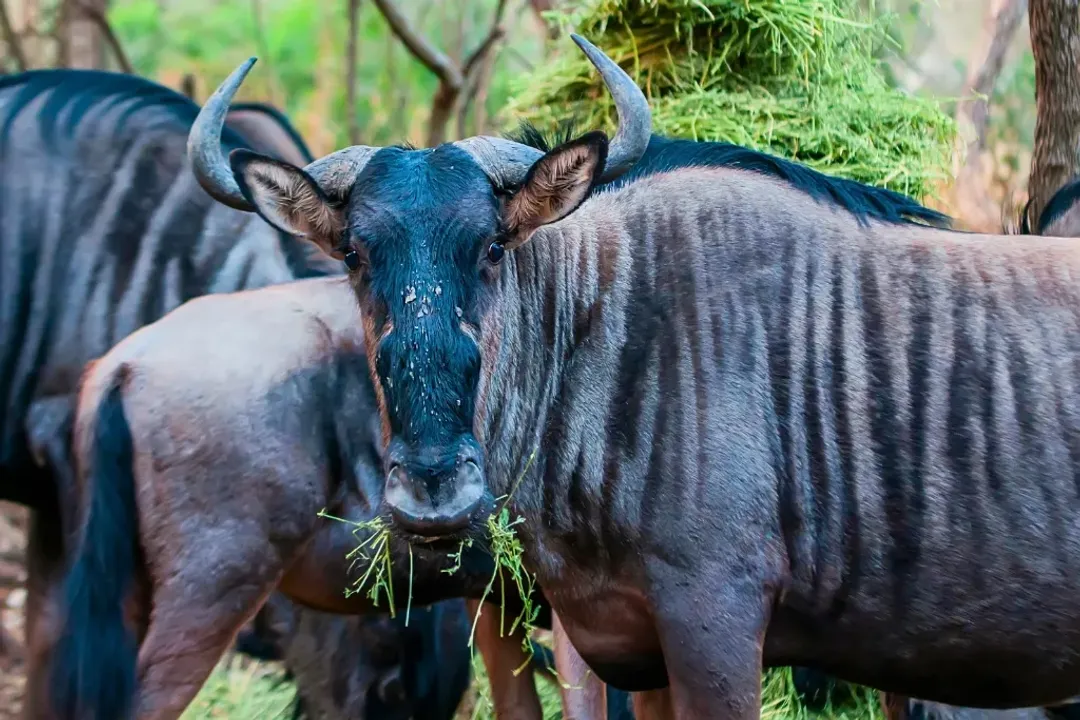
Wildebeest are categorized as strictly grazers. [3] Their diet relies almost entirely on grasses, a preference reflected in their blunt muzzle and wide row of incisor teeth, adapted for clipping short, dense vegetation. [2] They have a particular fondness for sweeter, stocky grasses, often favoring areas where recent fires have cleared away older brush to allow new growth. [3] When preferred grazing is scarce, they will follow other grazers that consume drier, longer grasses. [3] This constant search for food is a primary driver of their movement patterns. [7] A single blue wildebeest drinks about 9 to 12 liters of water every one to two days, highlighting their significant reliance on water sources, which is another major factor dictating their yearly route. [3][7] Collectively, all wildebeest consume massive quantities of forage; combined, they eat well over 4,000 to 4,500 US tonnes of grass daily. [2][6] This grazing pattern is not just for survival; it is vital for ecosystem function. By keeping grass growth in check, they help prevent the overgrowth of grasslands, which in turn supports greater biodiversity. [2]
# Annual Journey
The most famous aspect of blue wildebeest life is the Great Migration, an annual, perilous circuit covering between 500 to 1,000 miles (800 to 1,610 kilometers) within the Serengeti-Mara ecosystem spanning Tanzania and Kenya. [2][6][9] This movement is not random; it is a collective search for two essentials: sufficient water and fresh grazing, which follows the seasonal pattern of rainfall. [5][6] Herds of over 1.5 million wildebeest, often joined by hundreds of thousands of zebras and thousands of gazelles, move together in long columns, sometimes stretching for thousands of miles. [2][5][8][9]
While the river crossings—especially the dramatic Mara River crossings—are the most coveted sights for observers, the journey is exceptionally hazardous. [5][9] Predators like lions, hyenas, and crocodiles actively stake out these bottleneck points. [2][5] It is estimated that over 250,000 animals perish during the entire migratory cycle due to predation, starvation, exhaustion, or drowning. [2][9] In a stark example of the impact of human development, fencing placed across historic migratory routes in Botswana has previously caused tens of thousands of deaths when the animals were unable to reach essential water holes. [5][6] It is interesting to note that in the East African context, the wildebeest spend about nine months migrating and grazing in Tanzania, with only two to three months spent on the Kenyan side of the ecosystem. [9]
# Herd Dynamics
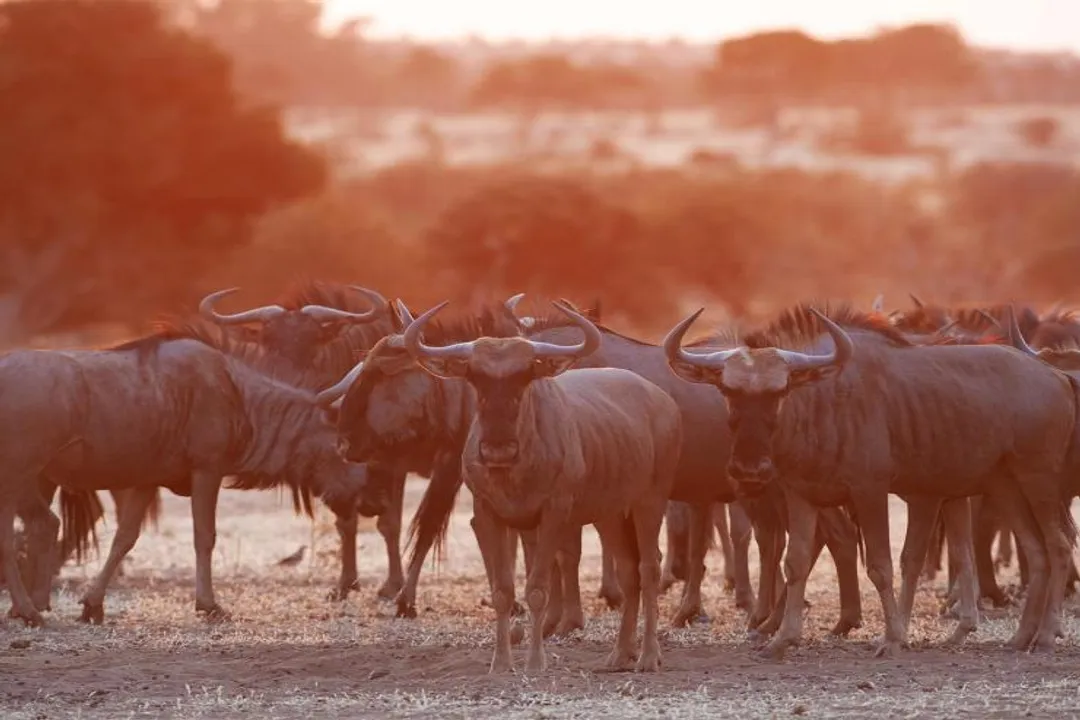
Wildebeest are intensely social animals, living in vast herds for defense and support. [5][6] They rely heavily on communication. They are noted for their vocalizations, emitting loud grunts and moans that serve as herd signals. [2][5] However, scent is just as crucial. They utilize secretions from pedal glands on their feet to lay scent trails for the herd to follow during movement, and preorbital glands near the eyes for social bonding, often involving rubbing behavior with other herd members. [1]
The collective movement itself is a manifestation of complex group behavior known as swarm intelligence. [2] This decentralized system allows the herd to make decisions—like navigating obstacles or choosing a direction—without a single leader giving orders. Individuals follow simple local rules, which results in organized group behavior that reduces individual risk. [2][5] During the mating season, or rut, males become highly territorial, defending small areas (around 3,000 square meters) against other bulls using ritualized challenges like pawing the ground, grunting, and eventually clashing heads. [3][5] These dominant bulls attempt to gather and mate with females moving through their established territories. [5]
# Calving Rush
The reproductive timing of the blue wildebeest is a masterclass in maximizing survival probability through sheer numbers. [2] Females are fertile and conceive seasonally, typically around the end of the rainy season, leading to a gestation period of roughly 250 to 260 days. [3][5] This timing ensures that the births coincide with the start of the next rainy season when grass is most abundant, providing vital nutrients for lactating mothers. [2][5]
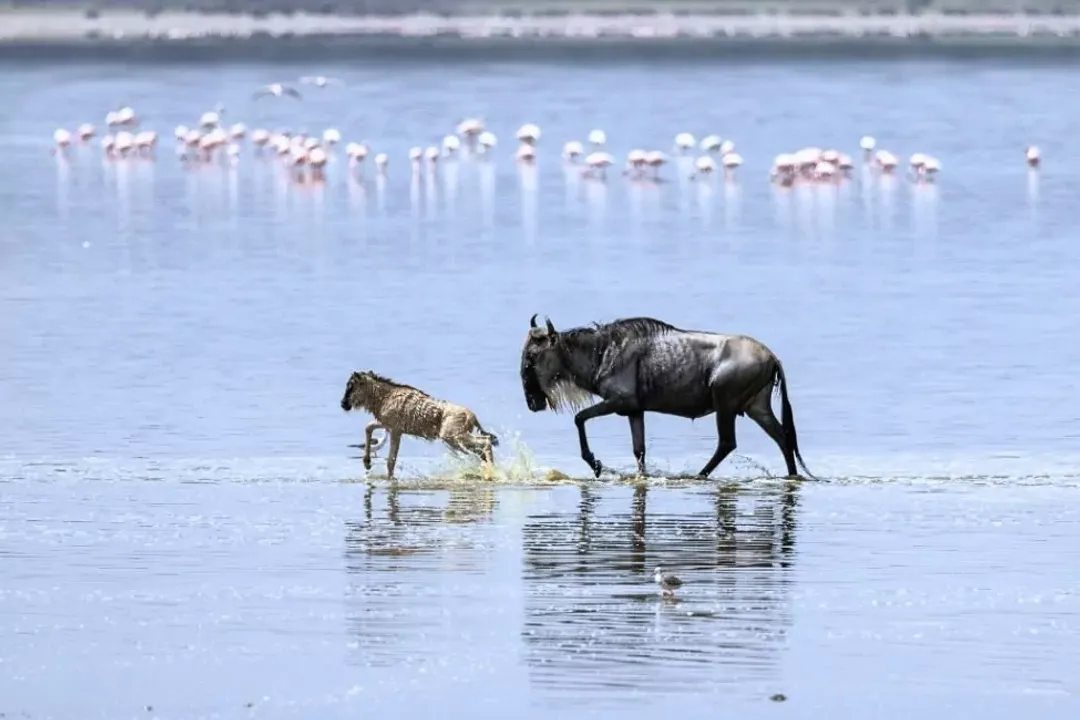
The result is a dramatic, synchronized calving period, with approximately 80 percent of calves being born within a tight two-to-three-week window. [2][3][5][8] At the peak, this can mean around 8,000 calves arriving daily. [2][9] To survive the intense predator pressure from lions and hyenas, the calves are effectively born ready to run; they can stand within minutes—sometimes less than five—of birth and quickly join the moving herd. [1][2][8] Mothers remain close for the first couple of days to ensure the critical imprinting process occurs through successful nursing. [3] A calf will rely on its mother's milk, rich in necessary phosphorus and calcium, for about four months before fully transitioning to grass, though they begin nibbling grass after only about ten days. [1][2]
If you are planning to witness wildebeest behavior on a safari, choosing the wrong time means risking seeing only a fraction of the action. For instance, while river crossings are dramatic, they are unpredictable. A more reliable event to observe mass behavior driven by instinct is the calving season in the Southern Serengeti/Ndutu area, usually spanning January to March, where the spectacle is guaranteed by the near-simultaneous arrival of nearly half a million newborns. [9]
# Keystone Impact
Wildebeest are far more than just prey; they function as a keystone species in the savanna ecosystem, meaning their presence has a disproportionately large influence on the structure and function of the environment. [6] Their grazing is essential for maintaining the grasslands, preventing woody encroachment, and promoting the growth of new vegetation. [2][6] Their migratory paths also act as an indirect aid to other herbivores, like Thomson's gazelles, which often graze on the fresh shoots stimulated by wildebeest foraging. [5]
Perhaps most surprisingly, their deaths contribute significantly to ecosystem health. The massive number of carcasses left behind after migrations, drownings, and predation events act as a slow-release fertilizer, returning crucial elements like phosphorus, nitrogen, and carbon back into the soil for the next growth cycle. [2][6] This relationship underpins the entire system. Their large numbers make them a reliable food source for major predators like lions, hyenas, cheetahs, and leopards, balancing predator populations. [2][5] Even scavengers like vultures depend on the steady supply of remains provided by the migration. [5] Furthermore, wildebeest demonstrate an ability to benefit from the vigilance of others, sometimes reacting to the alarm calls of different species, such as baboons, thereby reducing their own risk of predation. [5]
# Conservation Status
The overall conservation outlook for the genus is relatively stable, with both species currently listed as Least Concern by the IUCN Red List. [5][6] The Blue Wildebeest population is estimated to be quite high, approaching 1.5 million individuals, largely due to successful protection in parks like the Serengeti. [6] The Black Wildebeest population is smaller but increasing, with over 18,000 thought to remain, many thriving on private farms and in reserves in Namibia, where they were successfully reintroduced. [5][6]
However, the very nature that makes them famous—mass movement—is under severe modern threat. The primary conservation challenge is habitat fragmentation caused by human expansion, agriculture, and the installation of fences. [5][6] These barriers disrupt ancient migration routes, sometimes cutting off access to vital water and grazing areas, leading to mass die-offs during drought periods. [5][6] Furthermore, the reduction in available land increases the chance of the two species interbreeding, which poses a genetic threat, particularly to the Black Wildebeest subspecies. [5][6] Restricting their range also reduces overall genetic diversity, potentially making the remaining populations more susceptible to widespread disease. [6]
# Human Link
Wildebeest maintain an important economic and cultural link with humans across their range. [2] They are significant for wildlife tourism, drawing international visitors to witness their migrations. [2][5] For local populations, the animals are hunted for food; their flesh is used to make biltong (dried game meat), with female meat generally being more tender. [2][5] Their hides also yield good quality leather. [2][5] On the downside, they can compete with domesticated livestock for grazing and are known to transmit various parasites and diseases to cattle. [2][5] Culturally, the animal's distinctive image has been recognized on South African coinage and coats of arms, and they have found their way into popular culture, even serving as the mascot for the GNU Project in computer science. [2][5]
Related Questions
#Citations
Wildebeest Facts | Southern Africa Wildlife Guide
10 Fun Facts About Wildebeests | Ultimate Kilimanjaro
wildebeest - Kids | Britannica Kids | Homework Help
Wildebeest - African Wildlife Foundation
Wildebeest - Wikipedia
Wildebeests: Facts, Behaviours, Threats, and Diet | IFAW
5 Interesting Facts About The Blue Wildebeest - Mara Siria Camp
Wildebeest Facts for Kids
Eastern White-Bearded Wildebeest (Gnu) Facts and Information
Wildebeest Migration Facts - What To Know 2025 | [next_year]