What ecological role describes the wildebeest's disproportionately large influence on savanna structure?
Answer
Keystone species
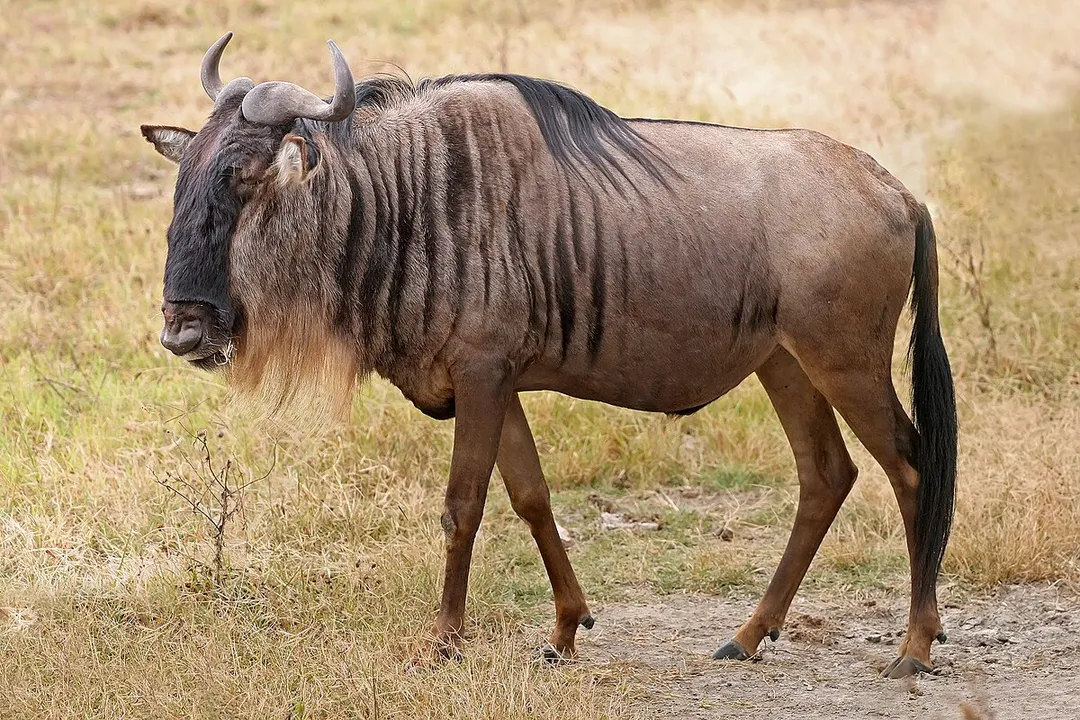
The wildebeest functions as a keystone species within the savanna ecosystem, meaning its existence and activities exert an influence on the environment that is disproportionately large relative to its biomass. Their continuous grazing prevents woody encroachment, helps maintain the health of the grasslands, and stimulates new vegetation growth. Furthermore, the massive return of nutrients via their carcasses after migrations, predation, or drowning events acts as a slow-release fertilizer, cycling phosphorus, nitrogen, and carbon back into the soil, which fundamentally underpins the system.
Related Questions
What Ancient Greek roots define the genus name Connochaetes for wildebeest?How do the horns of the Blue Wildebeest differ from the Black Wildebeest?What dietary classification applies to wildebeest based on their reliance on grasses?What is distinctive about the body structure of the wildebeest, featuring high shoulders?What percentage of Blue Wildebeest calves are born within the tight two-to-three-week calving period?What ecological role describes the wildebeest's disproportionately large influence on savanna structure?Within which ecosystem does the Great Migration of blue wildebeest occur?What primary modern challenge threatens the mass movement of wildebeest populations?Besides vocalizations, what scent-based method do wildebeest use to guide the herd during movement?What specific food product is made from wildebeest flesh for local populations?