How do the horns of the Blue Wildebeest differ from the Black Wildebeest?
Answer
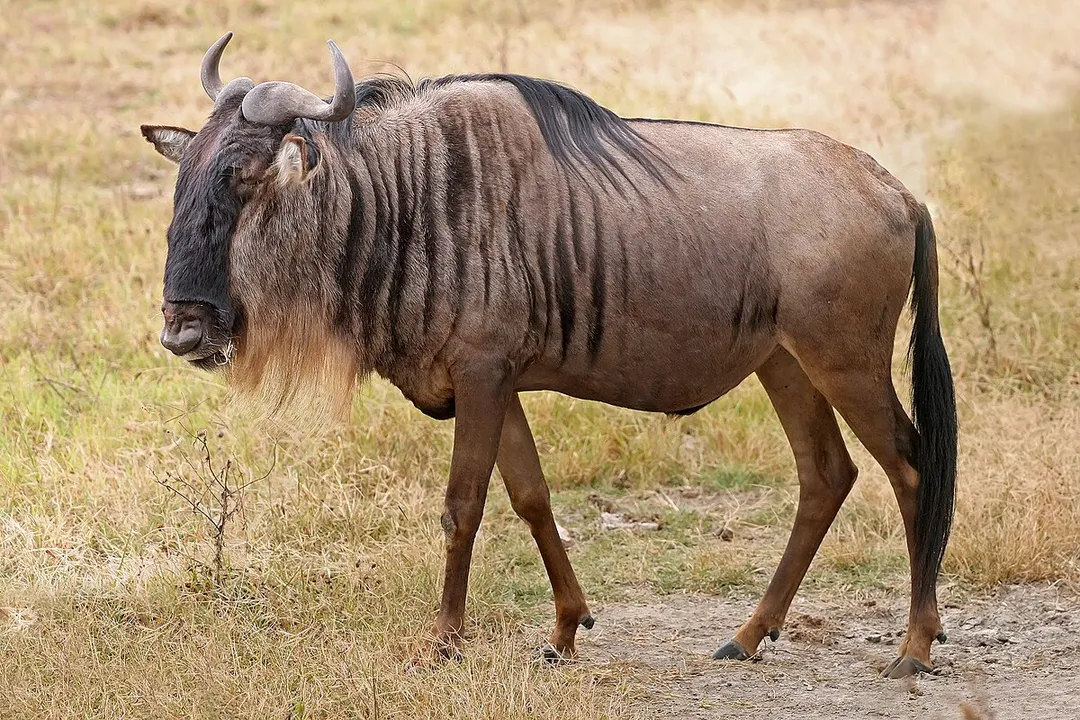
Blue wildebeest horns protrude sideways before curving downward and then back up toward the skull, whereas black wildebeest horns curve forward, then downward, curving upward at the tips.
A primary morphological distinction between the two *Connochaetes* species lies in the configuration of their horns. The Blue Wildebeest features horns that initially spring outward from the head, then curve downward before curving back upward toward the skull. In contrast, the Black Wildebeest has horns that exhibit a different trajectory, curving distinctly forward first, then sweeping downward, and finally curving upward only at the very tips. This structural difference aids in ecological separation despite both sexes possessing horns.
Related Questions
What Ancient Greek roots define the genus name Connochaetes for wildebeest?How do the horns of the Blue Wildebeest differ from the Black Wildebeest?What dietary classification applies to wildebeest based on their reliance on grasses?What is distinctive about the body structure of the wildebeest, featuring high shoulders?What percentage of Blue Wildebeest calves are born within the tight two-to-three-week calving period?What ecological role describes the wildebeest's disproportionately large influence on savanna structure?Within which ecosystem does the Great Migration of blue wildebeest occur?What primary modern challenge threatens the mass movement of wildebeest populations?Besides vocalizations, what scent-based method do wildebeest use to guide the herd during movement?What specific food product is made from wildebeest flesh for local populations?