What Ancient Greek roots define the genus name Connochaetes for wildebeest?
Answer
Words for “beard” (kónnos) and “flowing hair” or “mane” (khaítē)
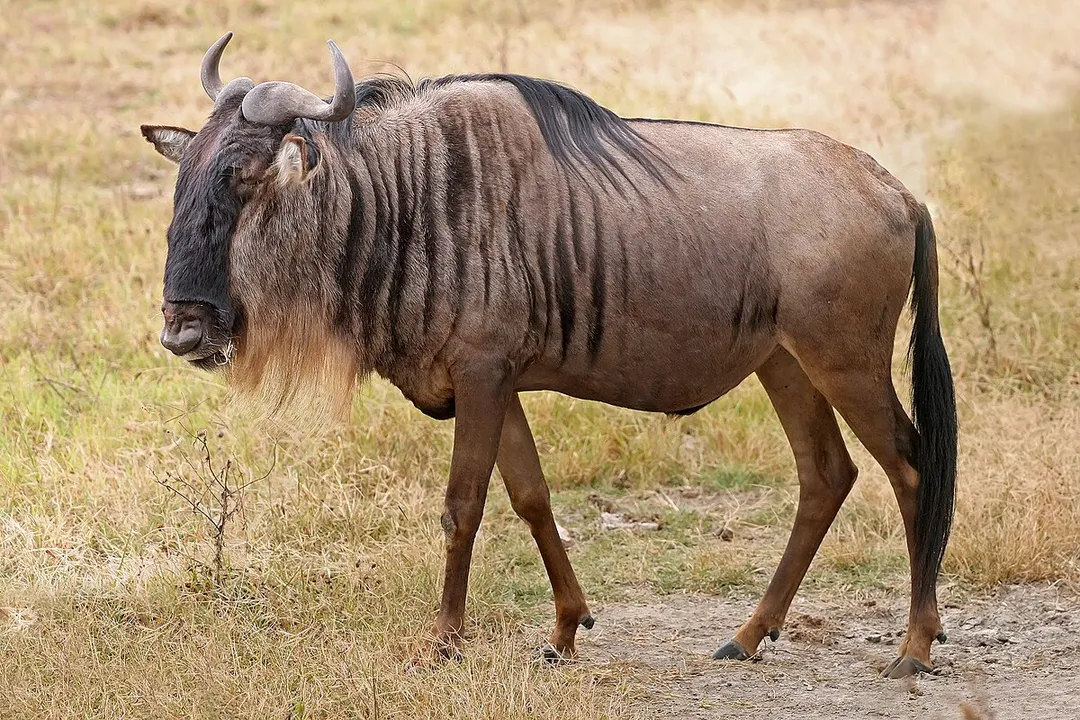
The scientific genus name, *Connochaetes*, is derived from Ancient Greek linguistic origins. Specifically, it combines the Greek word *kónnos*, meaning “beard,” and *khaítē*, meaning “flowing hair” or “mane.” This nomenclature is descriptive, accurately reflecting the distinctive shaggy appearance characterized by the beards and manes present on these large antelopes.
Related Questions
What Ancient Greek roots define the genus name Connochaetes for wildebeest?How do the horns of the Blue Wildebeest differ from the Black Wildebeest?What dietary classification applies to wildebeest based on their reliance on grasses?What is distinctive about the body structure of the wildebeest, featuring high shoulders?What percentage of Blue Wildebeest calves are born within the tight two-to-three-week calving period?What ecological role describes the wildebeest's disproportionately large influence on savanna structure?Within which ecosystem does the Great Migration of blue wildebeest occur?What primary modern challenge threatens the mass movement of wildebeest populations?Besides vocalizations, what scent-based method do wildebeest use to guide the herd during movement?What specific food product is made from wildebeest flesh for local populations?