What mechanism is suggested for how the UV-reflective silk in the stabilimentum might attract insect prey?
Answer
The UV-reflective silk mimics nectar guides found on flowers.
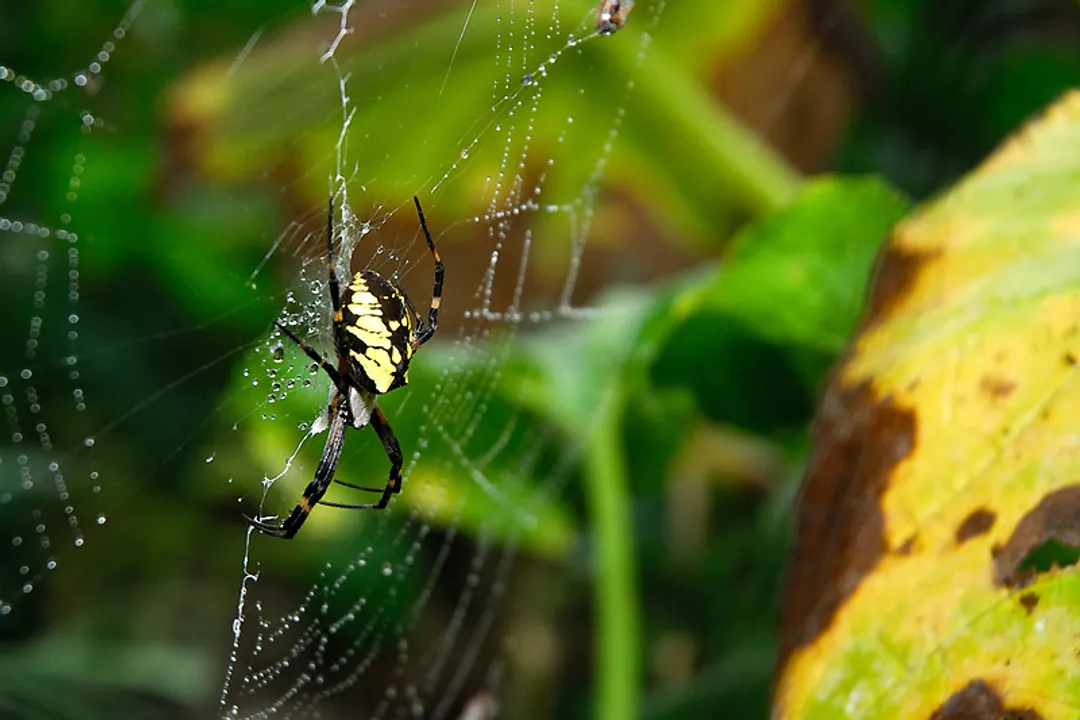
An alternative, counterintuitive hypothesis suggests that the stabilimentum functions to attract the spider's food source rather than deterring threats. Research indicates that the silk used in this structure possesses UV-reflective properties. This reflection pattern is hypothesized to mimic the appearance of nectar guides—visual cues found on flowering plants—which draw in small insects that mistake the web's center for a rich food source. This mechanism implies an evolutionary co-development where the spider exploits the visual systems of its prey.
Related Questions
Which genus does the writing spider, frequently called the black and yellow garden spider, belong to?What is the scientific term for the conspicuous silk decoration built into the hub of the writing spider's web?What characteristic defines the structural foundation of the classic orb-weaver web blueprint?What is the major distinguishing feature regarding size disparity between male and female *Argiope* spiders?According to one strong theory, how does the stabilimentum function primarily in relation to birds?What mechanism is suggested for how the UV-reflective silk in the stabilimentum might attract insect prey?What observation about web structure variation links the function of the stabilimentum to habitat lighting conditions?What evolutionary clue is provided by the developmental pattern of the stabilimentum in spiderlings versus mature spiders?Why does building the stabilimentum represent a significant evolutionary trade-off for the writing spider?What does the maintained presence of the stabilimentum across many, though not all, *Argiope* species imply about its evolutionary history?