What familiar sound is the male Lithobates sylvaticus's breeding call often described as resembling?
Answer
A quack, remarkably similar to a duck.
The initiation of breeding activity in early spring is signaled by the loud vocalizations of the male wood frogs gathering at the vernal pools. This distinctive call is frequently compared in character to the sound made by a duck—specifically described as a quack. This auditory signal is essential for attracting females to the breeding site during the brief window when water is available before evaporation or canopy closure. Hearing this duck-like chorus, sometimes while ice is still present nearby, is an unmistakable sign that the wood frog breeding season has begun, particularly in the forested uplands feeding areas like the Chesapeake Bay watershed.
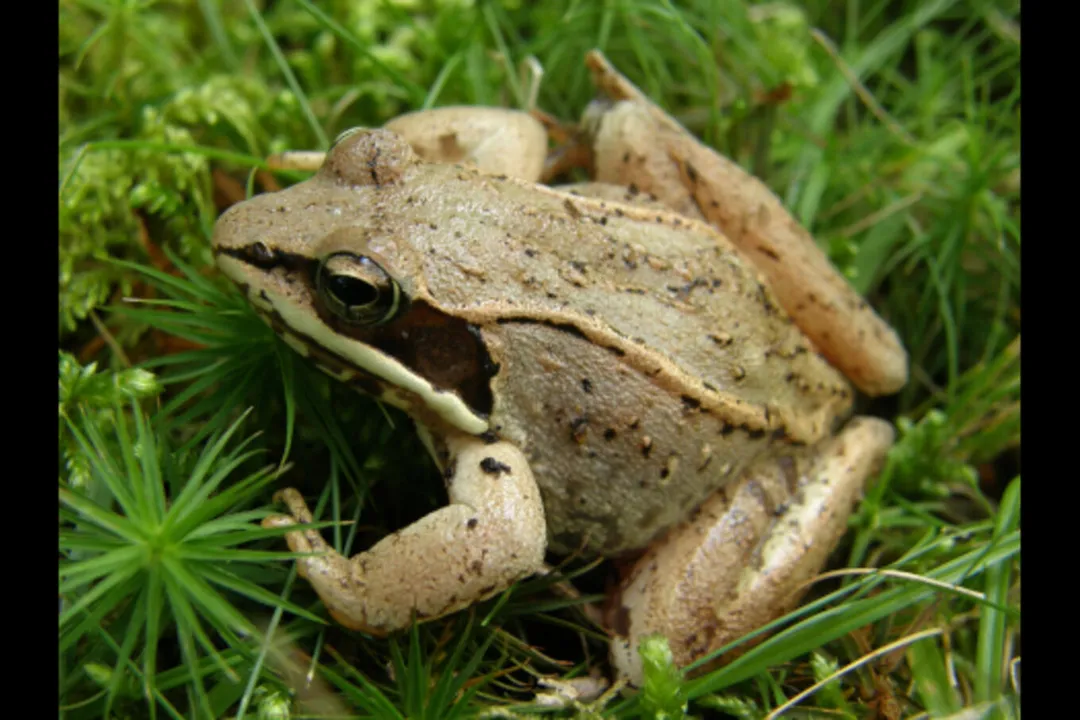
#Videos
Wood Frog Facts for Kids - YouTube
Related Questions
What natural cryoprotectant protects vital organs in the Wood Frog during freezing?Why are temporary vernal pools crucial for Lithobates sylvaticus breeding success?Where does the dark brown or black "mask" of the Wood Frog typically terminate relative to the ear structure?What familiar sound is the male Lithobates sylvaticus's breeding call often described as resembling?Approximately how long does the aquatic tadpole stage of the Wood Frog usually last before metamorphosis?How does the size of Wood Frogs typically vary between the northern and southern portions of their range?What water source requirement differentiates Wood Frog breeding from the Northern Leopard Frog (*Lithobates pipiens*)?Approximately what percentage of the Wood Frog's body water can form ice crystals during its frozen state?What does the appearance of the Wood Frog chorus signify for citizen scientists monitoring the Chesapeake Bay watershed uplands?How do the hind legs of the Wood Frog typically compare to those of a typical leopard frog regarding locomotion?