What are fun facts about red-eyed tree frogs?
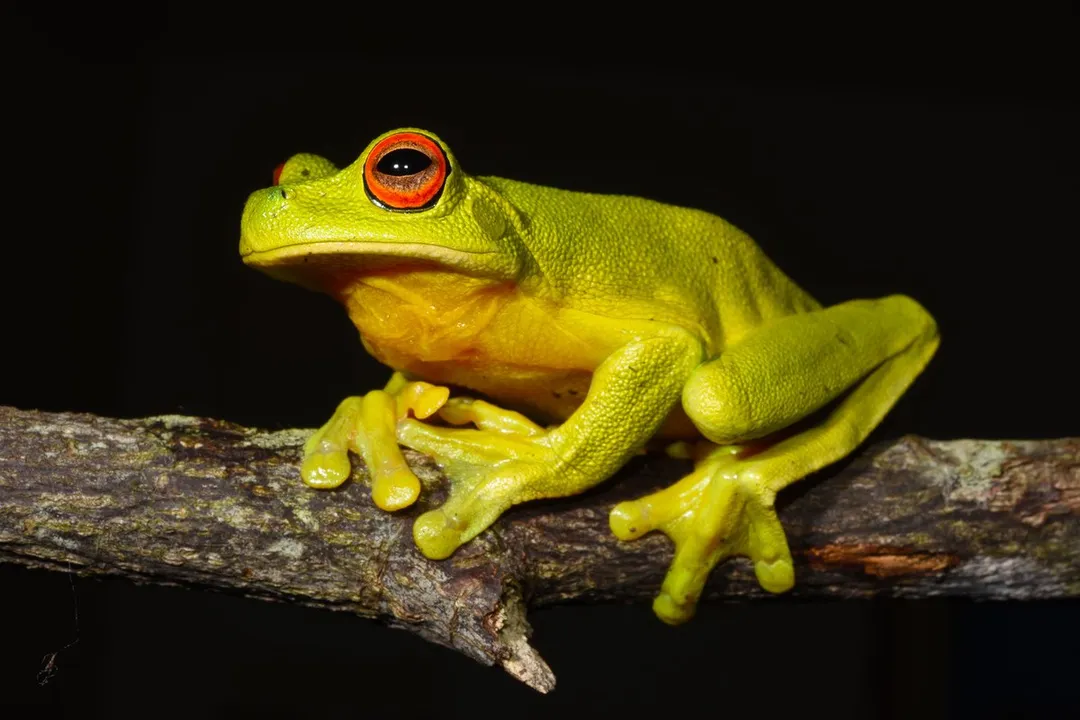
The red-eyed tree frog, Agalychnis callidryas, is perhaps one of the most instantly recognizable amphibians globally, thanks to a palette of colors so vibrant they seem pulled straight from an artist’s fantasy. While they are small creatures, typically measuring between two and three inches in length, their visual impact is enormous. [1][4] These frogs are native to the tropical lowlands and humid rainforests spanning from Southern Mexico through Central America and into northern South America. [1][3][5][9]
# Striking Hues

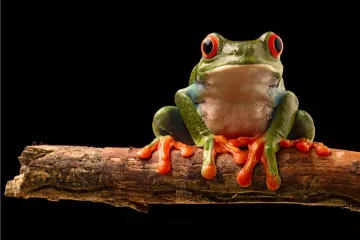
The combination of colors displayed by this species is an evolutionary masterpiece. The dorsal side, or back, is generally a brilliant, striking green, often providing excellent camouflage among the dense foliage of their arboreal existence. [1][5][9] However, the true spectacle lies in their extremities and defining features. Their large, bulbous eyes possess incredibly vivid red irises, often with a vertical pupil, which is a hallmark of the species. [1][5] The sides of the frog, just behind the limbs, are typically marked with bright blue or white vertical stripes, often edged in yellow or black. [5][8] Perhaps most surprisingly, their delicate feet and toes are often a shocking shade of bright orange or red. [2][5]
This dramatic color scheme isn't just for show; it serves essential functions related to survival. A key element of their daytime camouflage is their ability to essentially "shut down" their visual warning signs. When resting, the frog pulls its limbs tight against its body, closes its bright red eyes, and tucks its colorful feet beneath it. [2][5] In this state, all that remains visible is the solid green of its back, allowing it to blend almost perfectly with a green leaf. [1][5]
# Startling Eyes

The famous red eyes are the cornerstone of their defense strategy, known scientifically as startle coloration or aposematism, though the term is used loosely here. [1][5] When a predator, such as a snake or a bird, approaches a sleeping frog, the frog will suddenly flash open its enormous, bright red eyes. [1][5][8] This sudden burst of intense color is intended to momentarily shock or confuse the predator, giving the frog a precious second or two to leap to safety into the dark undergrowth. [1][5]
It’s interesting to observe how this defense differs from truly poisonous species. Many frogs that are dangerously toxic display bright colors constantly to warn predators away—a signal that says, "Don't eat me, I taste bad or will hurt you". [5] The red-eyed tree frog, conversely, employs a deceptive warning system. They rely on the surprise of the flash rather than constant advertising. This suggests a balancing act in their evolutionary path: they must be colorful enough to startle a predator momentarily but cryptic enough (when sleeping) to avoid being targeted in the first place, a strategy that minimizes energy spent on conspicuous warning signals when rest is required. [2]
# Mild Venom

Despite the dramatic visual signals, red-eyed tree frogs are not considered highly poisonous to humans, distinguishing them significantly from notorious relatives like the poison dart frogs. [1][5] The skin of the red-eyed tree frog does contain mild toxins, which can cause slight skin irritation or potentially mild nausea if ingested. [1][5] However, they lack the potent neurotoxins found in truly dangerous amphibians. [6] In the realm of amphibians, where skin secretions can instantly incapacitate large predators, the red-eyed tree frog sits on the less toxic end of the spectrum, making their intense coloration more about startling than outright poisoning. [5]
# Nocturnal Habits
These amphibians are quintessential nocturnal creatures. [1][4] As the sun sets over the Central American rainforest, the forest floor and canopy come alive with their activity. During the day, they are almost entirely inactive, remaining rigidly still while clinging to the underside of leaves or tucked into bromeliads. [4][5] When night falls, they become active hunters. Their diet consists mainly of insects they can catch while climbing among the branches. [1][4] This diet primarily includes moths, crickets, flies, and other small invertebrates. [5]
Their climbing prowess is enabled by specialized toe pads, which are equipped with microscopic ridges that allow them to adhere securely to smooth surfaces, even upside down. [5] This arboreal lifestyle means they spend nearly their entire adult lives off the ground, rarely venturing down unless it is time to breed or if environmental conditions force a change.
# Egg Placement
The reproductive cycle of the red-eyed tree frog offers another fascinating look into their adaptation to a humid, yet sometimes risky, environment. Unlike many frogs that deposit their eggs directly into standing water, female red-eyed tree frogs lay their clutches of eggs—often 20 to 50 eggs—on the underside of leaves hanging directly over small bodies of water, such as ponds or slow-moving streams. [1][3][5]
The eggs are encased in a jelly-like substance that keeps them moist. [3] When the tadpoles are ready to hatch, usually within about a week or so, they simply wriggle free of the jelly and drop directly into the water below to complete their metamorphosis. [1][3][5] This strategy is an ingenious way to keep the aquatic young safe from predators that might frequent the water's edge, while still ensuring they land in a suitable environment. However, this method is also very sensitive to changes in humidity and temperature, as the exposed eggs must not dry out before the aquatic stage begins. Any prolonged drought during this period can lead to the entire clutch desiccating before hatching can occur, underscoring the delicacy of their reliance on consistent tropical moisture.
# Sensory World
Beyond their visible coloration, their method of sensing the world is highly specialized for the dark. As nocturnal hunters, their large eyes are perfectly adapted for low light conditions, helping them spot the slightest movement of prey. [1][5] Furthermore, like many amphibians, their skin is permeable, playing a major role in their survival through cutaneous respiration—breathing partially through their skin. [1] This requires their skin to remain consistently moist, which is why they inhabit the humid microclimates of the tropical canopy. A simple calculation based on their small surface area relative to their mass suggests that even a small drop in environmental humidity translates to a significant stressor on their ability to absorb necessary oxygen.

# Amphibian Relatives
It is worth noting how the red-eyed tree frog fits into the larger amphibian family tree. They belong to the family Hylidae, commonly known as "tree frogs," which is a very diverse group. [5] While they share the general characteristics of arboreal life and adhesive toe pads with other tree frogs, their specific genus, Agalychnis, groups them with other leaf frogs known for similar reproductive strategies, like laying eggs on foliage over water. [5] Recognizing their placement helps explain why their life cycle includes this specialized overhead egg-laying, setting them apart from ground-dwelling or pond-spawning cousins.
The sheer visual contrast between their sleeping state and their active state makes them a compelling subject. To see one sleeping is to see a master of stillness and green camouflage; to see one awake, especially when startled, is to witness one of nature's most brilliant, momentary light shows. They truly embody the rich, often hidden, biodiversity of the neotropical rainforests. [9]
#Videos
Red Eyed Tree Frog - Amazing Facts 1 - YouTube
Related Questions
#Citations
Red-Eyed Tree Frog | National Geographic Kids
10 Mind Blowing Facts About The Red-Eyed Tree Frog - Tentree
Red-Eyed Tree Frog | Rainforest Alliance
Red-eyed tree frog - San Francisco Zoo & Gardens
Agalychnis callidryas - Wikipedia
Red Eyed Tree Frog - Amazing Facts 1 - YouTube
Red-eyed tree frog fun facts and habitat information - Facebook
11 Colorful Facts About the Red-Eyed Tree Frog - Mental Floss
Red-eyed Tree Frog - The Australian Museum