What factor appears more critical than proximity to the open ocean for inland stopovers?
Answer
Availability of suitable, exposed substrate
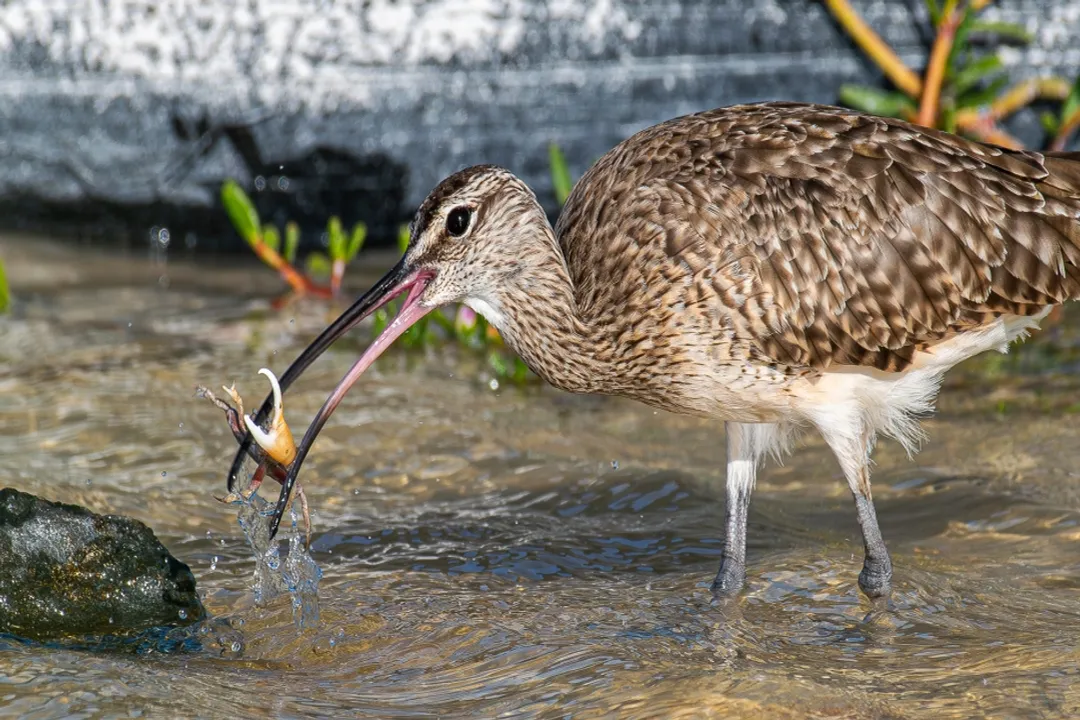
Although Whimbrels forage heavily on exposed mudflats and sandy beaches along the coast, their inland stopover behavior indicates a pragmatic focus on resource availability over strict geographical location. When they utilize environments like flooded fields or inland estuaries during migration, the determining factor appears to be substrate condition rather than being right next to the open ocean itself. The critical element enabling them to feed effectively in these inland areas is the availability of suitable, exposed substrate where they can probe for invertebrates, demonstrating that the ability to access buried prey outweighs the need for constant proximity to the vast expanse of the sea.
Related Questions
What feature accentuates the Whimbrel's long, decurved bill?What specific Whimbrel type do many North American birders observe?Where are the Whimbrel breeding territories typically situated?Besides coastal mudflats, what inland habitats do migrating Whimbrels frequent?Where is the majority of the Whimbrel population located for the non-breeding season?When does the fall migration often see larger concentrations of Whimbrels on the New England coast?What tidal condition maximizes Whimbrel foraging success on coastal mudflats?In Wisconsin, during which month does the Whimbrel typically appear during the spring northward push?What gives the Whimbrel's brown-gray back feathers a scaled appearance?What feature is a hallmark for identifying the Whimbrel's head pattern?What factor appears more critical than proximity to the open ocean for inland stopovers?