What is the difference between Whimbrel and Eurasian Whimbrel?

The distinction between the bird commonly called the Whimbrel and the one specifically termed the Eurasian Whimbrel is often a matter of geography and taxonomy, centered around the species Numenius phaeopus. [3][8] While in many contexts, especially for birders in the Old World, the two terms might be used interchangeably to refer to the same species group, the real division lies in recognizing the different subspecies that inhabit different continents. [3] Fundamentally, the Eurasian Whimbrel is simply the population of Numenius phaeopus found across Eurasia. [3]
# Species Definition

The Whimbrel, in its broad sense, belongs to the genus Numenius, known for its distinctively long, downcurved bill, making them easily recognizable shorebirds. [10] They are smaller than their larger relatives, the Curlews (such as the Eurasian Curlew, Numenius arquata). [2][5][9]
The species Numenius phaeopus is recognized as having several subspecies distributed across the Northern Hemisphere, breeding in the Arctic and subarctic regions. [3] When birders use the non-geographic term "Whimbrel," they are typically referring to N. phaeopus overall, or perhaps specifically the North American subspecies, sometimes called the Hudsonian Whimbrel. [4][7]
The Eurasian Whimbrel specifically refers to the populations breeding across the Palearctic, primarily represented by the nominate subspecies, Numenius phaeopus phaeopus, which breeds in northern Europe and Asia. [3] Therefore, the primary difference is one of scope: "Eurasian Whimbrel" designates the Old World population group, whereas "Whimbrel" can be the general species name or refer to the New World populations. [4][8]
# Geographic Distribution
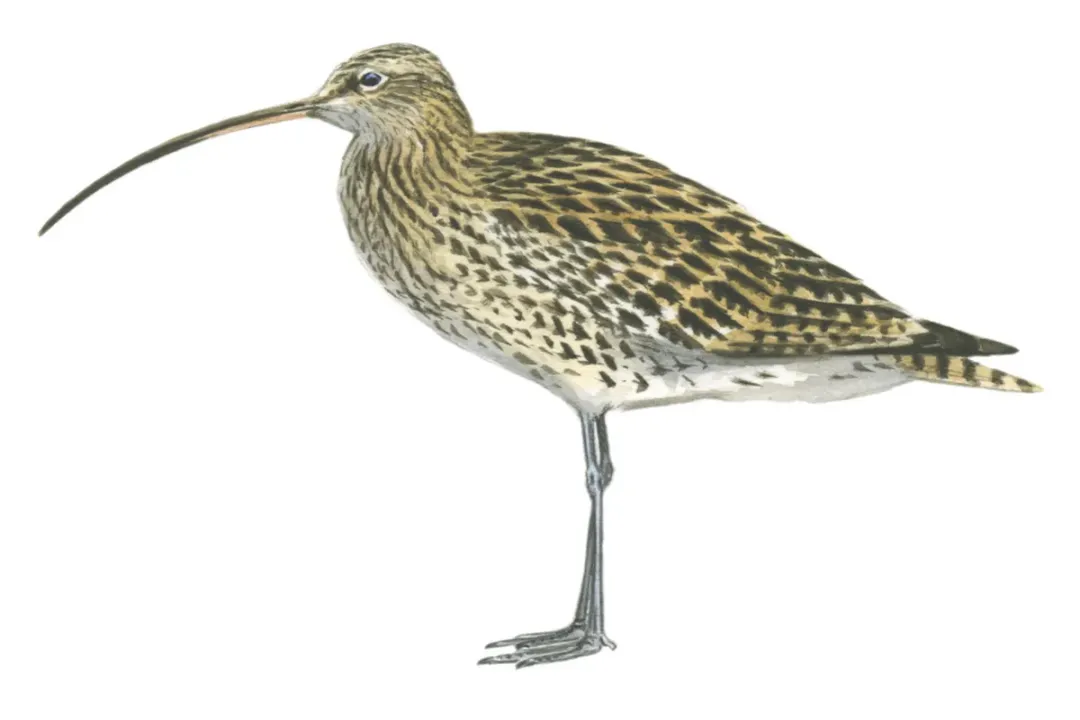
Understanding where these birds are found is the most straightforward way to separate the terms in practice. The Eurasian Whimbrel is the Old World resident of the species N. phaeopus. [3] Its breeding range covers the northern coasts and tundra of Europe and Asia. [3] These birds undertake significant migrations, wintering along the coasts of Africa, South Asia, and Australasia. [3]
Conversely, the populations breeding in North America—often designated as the Hudsonian Whimbrel (Numenius phaeopus hudsonicus)—are the New World contingent of the species. [4][7] These American breeders migrate south to winter along the coasts of Central and South America, as well as the Caribbean. [4][7] When an observer sees a bird fitting the N. phaeopus description on a shore in, say, the United Kingdom or Siberia, they are observing a Eurasian Whimbrel. If the same bird is seen on a mudflat in Massachusetts or Costa Rica, it is often referred to as a Hudsonian Whimbrel, though the general term Whimbrel is commonly applied. [4][8]
This geographical segregation means that unless a bird is seen on its specific breeding grounds, identification relies on careful tracking of migration routes or relying on very subtle physical markers, especially if the bird is a vagrant outside its usual flyway. [8]

# Subspecies Variation
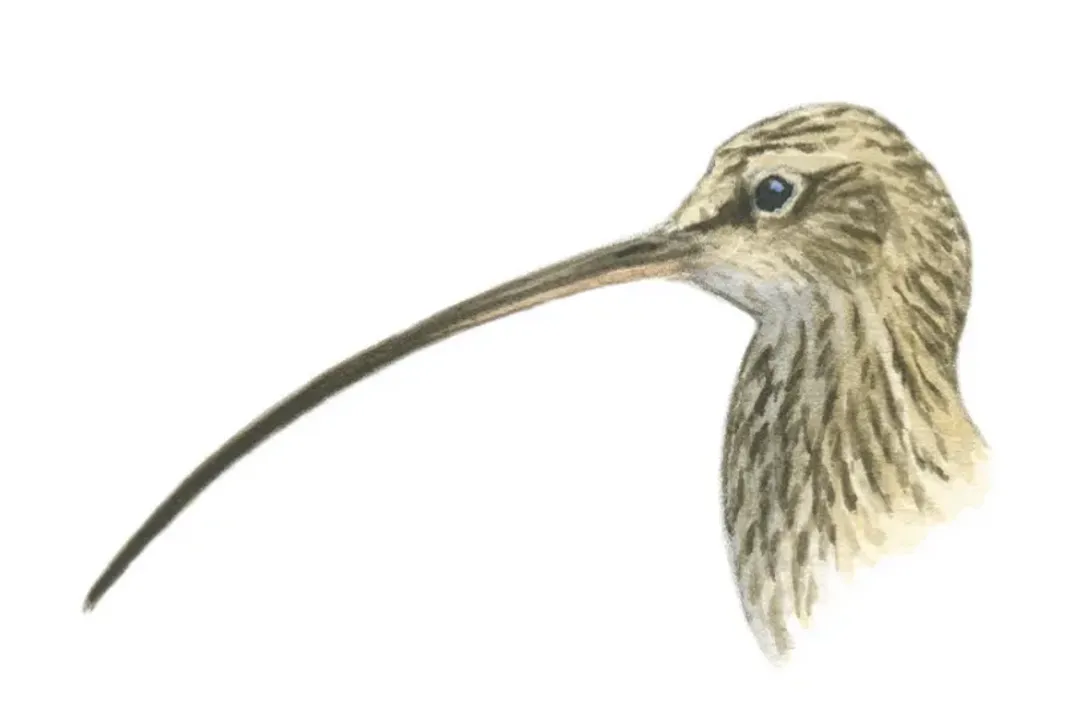
While the species Numenius phaeopus is unified by key characteristics—size, shape, and that signature downcurved bill—the subspecies exhibit minor variations, which is where the subtle differentiation between the "Whimbrel" (implying the American form) and the "Eurasian Whimbrel" emerges. [4][8]
The most common American bird, the Hudsonian Whimbrel, is often described as having slightly richer or darker tones to its plumage compared to its Eurasian counterpart. [4] Furthermore, the bill length can sometimes offer a clue, though this is notoriously difficult to judge in the field unless seen side-by-side with a known reference. [2][5] Generally, the Eurasian forms may sometimes appear slightly paler overall than the Hudsonian form. [4]
It is important to note that the distinction between the two is not always clear-cut due to individual variation and wear of plumage. For instance, the dark crown stripe, which is a hallmark feature across all N. phaeopus, can vary in how strongly it contrasts with the paler supercilium (eyebrow stripe) between the subspecies. [3][8] A consistent identification between a specific Eurasian bird and a specific American bird is often impossible without knowing the precise location or observing a combination of traits that are best viewed in ideal conditions.
If you are observing a vagrant bird in a location far from either primary breeding range, such as an unusual autumn visitor to the eastern coast of North America, you might be looking at a stray Eurasian individual alongside the expected Hudsonian birds. In these rare overlap scenarios, plumage saturation and the precise structure of the head stripes become critical, though they remain unreliable as standalone features. [1]
| Feature | Eurasian Whimbrel (Old World) | Hudsonian Whimbrel (New World) |
|---|---|---|
| Primary Range | Eurasia (Breeding) [3] | North America (Breeding) [4] |
| Wintering Range | Africa, South Asia, Australasia [3] | Central/South America, Caribbean [4] |
| General Plumage | Often described as slightly paler/duller [4] | Often described as slightly richer/darker [4] |
| Species Name | N. p. phaeopus (nominate) [3] | N. p. hudsonicus [4] |
# Vocalizations
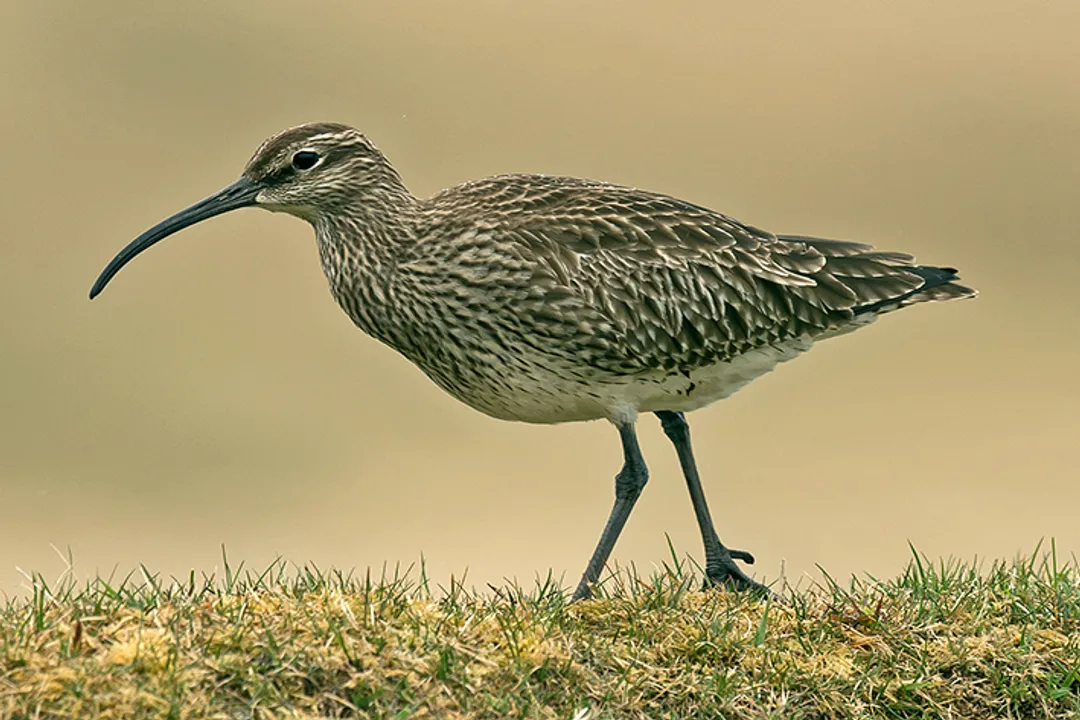
Vocalizations are often more consistent across the species than plumage details, though even here, subtle variations exist between subspecies, making them a crucial tool for the experienced birder. [8] Both forms share a characteristic, loud, bubbling call, often transcribed as a series of rolling, fluting notes. [8]
The overall structure of the call sequence is similar, typically involving a rising and falling cadence. However, some observers suggest that the calls of the Eurasian population might have a slightly different quality or rhythm compared to the Hudsonian population, though this is anecdotal and context-dependent. [1] For the general observer trying to differentiate a Whimbrel from a Curlew, the Whimbrel’s call is distinctly higher-pitched and more rapid than the deep, drawn-out whistle of a Eurasian Curlew. [2][5] In the case of differentiating the two N. phaeopus forms, sound identification is far less reliable than for distinguishing the species from the Curlew. [8]

# Field Identification Tips
When you encounter a Whimbrel, the first task is usually confirming it is Numenius phaeopus and not Numenius arquata (the Curlew). [2][5][9] Once you've established that, if the location suggests you are observing a vagrant or straggler far outside the expected flyway, looking for subtle differences between the Eurasian and Hudsonian forms becomes the challenge.
A useful field check, though requiring good light and distance viewing, relates to the dark markings on the back. While both birds show dark centers to their mantle feathers, the contrast against the paler edges can sometimes appear sharper on the Eurasian bird than on the darker-toned Hudsonian, but this is highly dependent on the light angle and how recently the bird has molted.
Here is a helpful way to frame your expectation based on location: If you are birding the coasts of Western Europe during migration, any N. phaeopus you see is expected to be Eurasian, and any subtle variation you note is likely individual idiosyncrasy rather than a subspecific marker. If you are on the Atlantic coast of the Americas in August, the bird is expected to be Hudsonian, and you are looking for evidence of a Eurasian vagrant. [4][7] If you find yourself in a location like eastern Asia during migration, the situation becomes complex, as the ranges of the Asian subspecies and the far-ranging Hudsonian birds can overlap or intersect in unusual ways. [3]
My personal observation, honed from viewing recordings across different continents, suggests that the overall impression in the field is key. The Eurasian bird often seems to present a slightly 'cleaner' or more 'contrast-heavy' head pattern because the general body tone is not as heavily saturated as the darkest North American individuals. However, never rely on this alone; it's a supporting detail when structure and location point toward a possibility. [1]
# Comparing with Curlews
To fully appreciate the Eurasian Whimbrel, it helps to contrast it against the bird it is most frequently confused with—the Curlew. [2][5][9][10] The most obvious difference is size and bill length. Whimbrels are noticeably smaller than Eurasian Curlews. [2][5] A quick way to estimate bill length in the field without a ruler is to compare it to the head. A Curlew's bill is significantly longer than its head, whereas the Whimbrel’s bill is closer to the length of its head, perhaps only slightly longer. [5][10] Furthermore, the pale stripe running over the crown of the Whimbrel is often broader and more pronounced than the narrower central stripe seen on the Curlew. [2][9] The Whimbrel's call, as noted before, is higher-pitched than the Curlew's mournful cry. [2][5]
If you are observing a shorebird in North America and it is smaller than a Great Blue Heron but larger than a Sanderling, and it has a downcurved bill, it is a Whimbrel (Hudsonian). If you are in Europe and the bird is larger, stockier, and has a much longer bill, it is likely a Curlew. If it is smaller, with a bill less than twice the length of its head, you are looking at a Eurasian Whimbrel. [2][10]

# Observer Context and Interpretation
The way we apply these names—Whimbrel versus Eurasian Whimbrel—is often a direct result of the observer's background. A birder in New York who sees a Numenius phaeopus during migration will almost certainly record it as a Hudsonian Whimbrel. Their mental library is tuned to the North American standard. [4] A birder in Amsterdam seeing the same bird would label it a Eurasian Whimbrel because that is the local representative of the species. [3] This linguistic distinction is often a marker of where the observer is standing rather than an absolute physical difference recognized in the field by the bird itself. [8]
When reading older literature or checklists, one must be aware that Numenius phaeopus was sometimes treated as a single species with just subspecies, leading to ambiguity. Modern birding guides and taxonomic authorities tend to use these regional names to reflect distinct migratory populations, even if the physical divergence is slight. [3][4] For the serious birder documenting vagrants, determining if an aberrant bird is an out-of-range Eurasian individual requires significant expertise and often remains inconclusive without photographic evidence showing highly diagnostic features, such as the exact extent of the pale breast smudging which can vary by age and season across all subspecies. [1]
Ultimately, the difference between a Whimbrel and a Eurasian Whimbrel is geographical classification within the single species Numenius phaeopus. The Eurasian bird represents the populations of the Old World, while the general term often defaults to the Hudsonian bird when discussed in a New World context. [3][4] They share the same fundamental structure, habit, and primary ecological role as a medium-to-large migratory shorebird, distinct from the larger Curlews by their smaller stature and shorter, though still significantly curved, bill. [2][7][10]
Related Questions
#Citations
Shorebird ID: Whimbrel or Eurasian Whimbrel?
How to Distinguish Between the Eurasian Curlew and ...
Eurasian whimbrel
Hudsonian Whimbrel Similar Species Comparison
August ID tips: Eurasian Curlew and Eurasian Whimbrel
Whimbrel (Eurasian) (Numenius phaeopus ...
Whimbrel | Audubon Field Guide
Field Identification - Eurasian Whimbrel - Numenius ...
Differentiating the Eurasian Curlew (Numenius arquata) ...
How to tell the difference between curlews and whimbrels