Whimbrel Locations
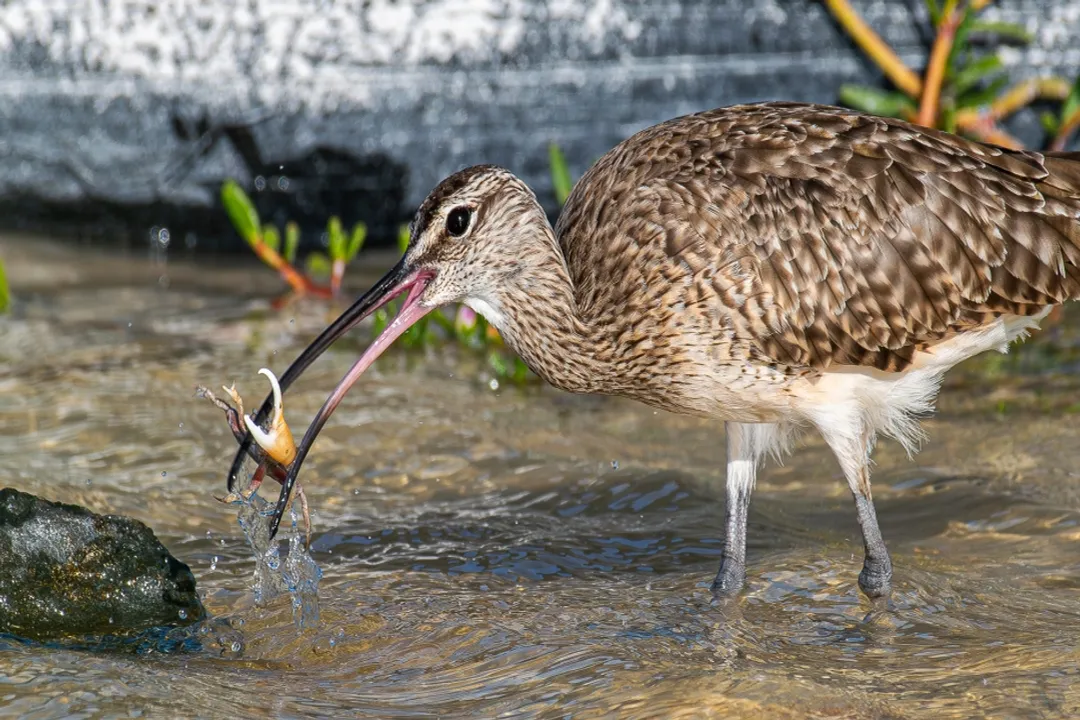
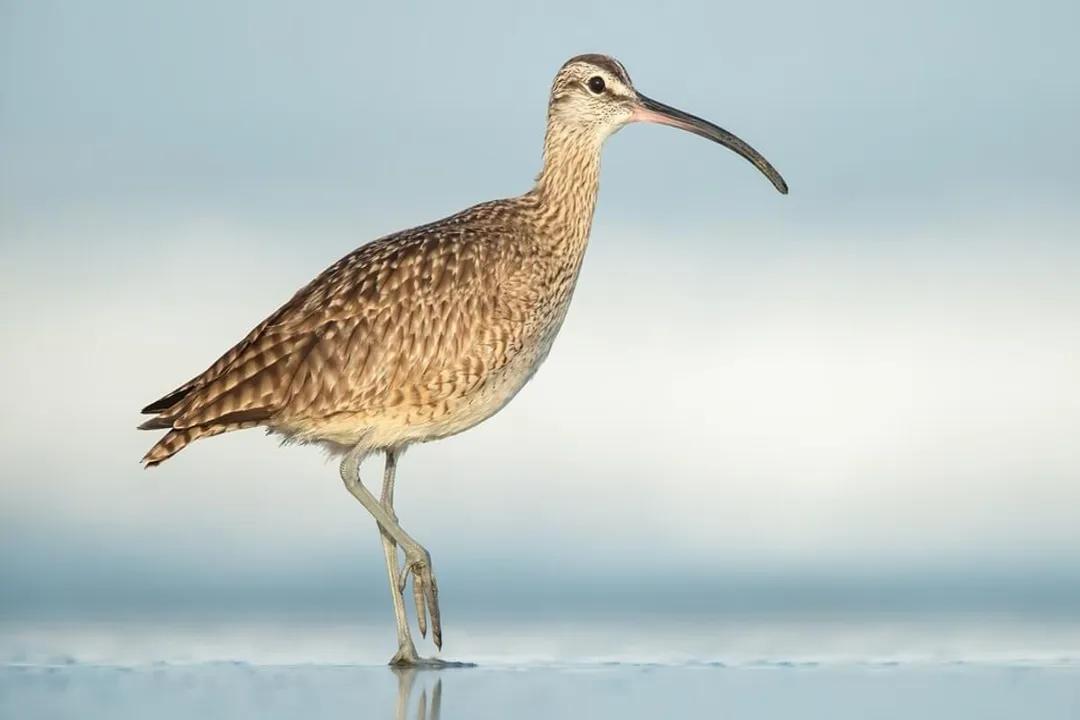
Tracking the movement of shorebirds can be one of the most rewarding, yet challenging, pursuits in birding. Among these migratory travelers, the Whimbrel (Numenius phaeopus) offers a fascinating study in long-distance navigation, with its distinctive, decurved bill making it relatively easy to identify once you know where and when to look. [2][7][9] This medium-large shorebird possesses a stocky body and relatively short legs for a curlew, and its most striking feature, the long, downward-curving bill, is accentuated by prominent dark stripes on its crown. [2][7] It is important to note that the species is complex; what many North American birders observe is the Hudsonian Whimbrel, sometimes classified as a distinct species, which follows a specific migratory path between the North American Arctic breeding grounds and South American wintering areas. [1][5]
# Range and Habitat
The global distribution of the Whimbrel is extensive, though it generally favors northern latitudes for breeding. [1][7] Their breeding territories are typically situated in the Arctic tundra across the northern hemisphere. [1][7] For the Hudsonian subspecies, the breeding range is confined to the North American Arctic regions. [5] In contrast to these remote, high-latitude nesting sites, the habitats they frequent during migration and winter are significantly different, indicating a remarkable degree of ecological flexibility across their annual cycle. [6]
When traversing continents, these birds utilize specific environments that offer reliable foraging opportunities. They are most commonly found along coasts, utilizing exposed mudflats and sandy beaches where they probe for invertebrates. [9] However, during migration, they are not strictly coastal birds. They often stop over in estuaries, flooded fields, or other shallow, inundated areas inland, suggesting that the availability of suitable, exposed substrate is more critical than proximity to the open ocean itself. [6][8]
# North American Migration
The migratory patterns of the Whimbrel highlight impressive feats of endurance. Populations that breed in the Arctic will travel considerable distances to reach their wintering grounds, primarily located in South America. [1] This long haul means that observers across North America have opportunities to spot them as transient visitors during both spring and fall movements. [3]
For birders hoping to catch a glimpse of them moving through the United States, coastal areas along the Atlantic and Gulf coasts are prime locations. [3] Inland birders also have a chance, though the timing must be precise. In states like Wisconsin, for example, the Whimbrel is recorded only as a transient, appearing typically in May during the spring push northward, and again in August or September as they head south for the winter. [8] This suggests that timing your coastal visits to coincide with these general migratory periods is key to finding them outside the breeding or wintering seasons. [4]
A comparative look at migration timing reveals that while the journey is long, the stopover behavior concentrates the birds in specific areas for brief periods. For those focusing on the New England coast, the fall migration period often sees larger concentrations of Whimbrels compared to the spring passage. [4] This concentration in the autumn might suggest that birds are feeding heavily before attempting the arduous journey southward, making late summer and early fall the most reliable window for coastal observation in the Northeast. [4] While the general knowledge points to spring and fall passage, paying close attention to late August and early September along the Atlantic seaboard often yields better results than looking in late April or early May.
# Coastal Hotspots
Focusing on the coastline illuminates where birders have the best success spotting these waders. Across their range, the preference is for areas that expose the substrate at low tide. [4][9] This behavior maximizes their access to buried prey, which they locate using their long bills to probe deep into the mud or sand. [2]
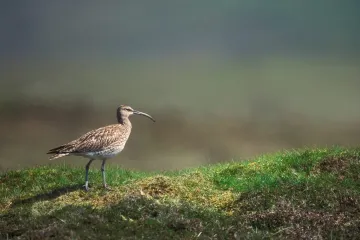
In specific regional contexts, the New England area presents clear guidelines for observers. The best places to find Whimbrels there are typically on the outer coast, often in greater numbers than one might expect for a less common shorebird. [4] They favor the exposed mudflats, which offer the necessary foraging ground. [4] If you are looking at a tidal area, low tide is your cue; high tide pushes them into less predictable roosting areas, often out of prime viewing range. [4]
When comparing general habitat preference across various guidebooks, a consistency emerges regarding the intertidal zone. [4][6][9] Whether it's a vast expanse of coastal mud in the South or a smaller tidal flat in the North, the critical element is the exposed, invertebrate-rich substrate left behind by the receding water. [6]
# Species Variation and Identification Nuances
While the focus here is generally on the species as a whole, acknowledging the presence of the Hudsonian Whimbrel is essential for accurate North American field identification, as their ranges and movements overlap significantly within the continent. [5] Distinguishing between the Hudsonian and the Eurasian Whimbrel (which occasionally strays to North America) often relies on subtle features, though the Hudsonian's migration route is the most frequently mapped for the US and Canada. [5]
For practical field identification, observers look at several key features:
- Bill Shape: Long, strongly downcurved, essential for probing. [2][7]
- Plumage: Generally brown-gray, sometimes appearing mottled. [9] The back feathers often have pale edges, giving a scaled appearance. [3]
- Head Pattern: A dark cap separated by a pale central crown stripe is a hallmark feature, highly visible even from a distance. [2][7]
A useful comparison point often arises when identifying them near gulls or dowitchers. Their size, though medium-large, is dwarfed by truly large curlews like the Long-billed Curlew, but they are noticeably larger and longer-billed than many sandpipers they might associate with on a mudflat. [9] Trying to judge the bill length in context with the bird’s body mass is crucial; the bill appears disproportionately long relative to the stocky body. [2]
# Locating Winter Quarters
The conclusion of the annual migration sees the majority of the population settling in South America for the non-breeding season. [1] This massive southward movement underpins the necessity for the abundant stopover sites utilized along the migration corridors, from the Arctic coasts down through the Caribbean and South American shores. [1] Understanding that the birds travel this far emphasizes the importance of preserving coastal habitats across the entire hemispheric flyway, not just in their breeding or immediate migratory paths near the US and Canada. [1]
If one were to map the distribution based purely on non-breeding concentration, the coastal ecosystems of countries like Brazil, Argentina, and Chile become as vital to the species' survival as the remote Arctic breeding tundra. [1] This geographical disparity—from the extreme cold of the high Arctic to the tropical or temperate zones of South America—is what makes studying their location requirements so important for conservation efforts. [1] Preserving both ends of this spectrum, along with the critical stopover points like the flooded fields of the interior or the Atlantic mudflats, ensures the continuation of this spectacular avian voyage. [8][4] The management of these varied locations, from remote tundra managed by federal agencies to accessible coastal zones, requires a unified, international approach due to the sheer scale of their annual territory. [1]
Related Questions
#Citations
Whimbrel (Numenius phaeopus) | U.S. Fish & Wildlife Service
Whimbrel | Audubon Field Guide
Whimbrel (American) (Numenius phaeopus hudsonicus) - WHIM
Whimbrel photographic identification guide - Bird Observer
Hudsonian Whimbrel Range Map - All About Birds
Whimbrel - Port Royal Sound Foundation
Whimbrel - BirdWeb
Whimbrel - Wisconsin All-Bird Conservation Plan
Whimbrel (Numenius phaeopus) - SIMoN :: Species Database