Whimbrel Facts
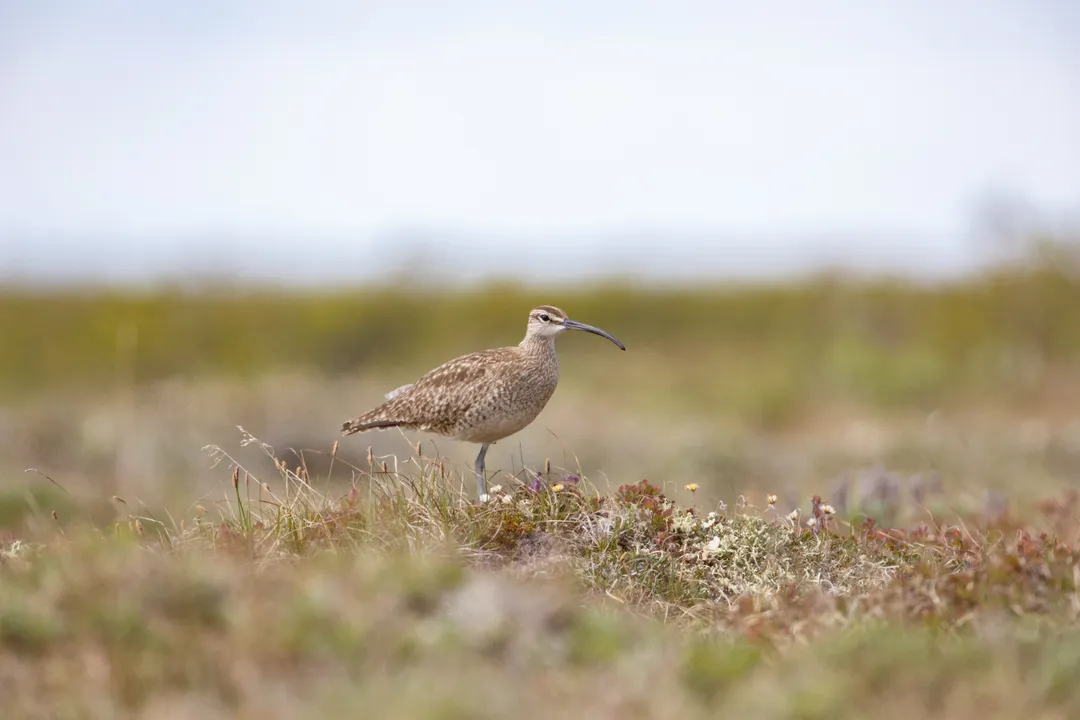
The Whimbrel, a striking shorebird recognizable by its silhouette alone, cuts a distinctive figure against coastal landscapes across the globe. Its most remarkable physical characteristic is that long, gracefully down-curved bill, which it uses with surgical precision to probe deep into sand and mud for hidden sustenance. [1][4][5] While it shares the general brownish-gray plumage and long legs common to many sandpipers and curlews, the Whimbrel possesses unique facial markings that help dedicated birders distinguish it from its relatives, such as the larger Long-billed Curlew. [1][5]
# Looks Distinct
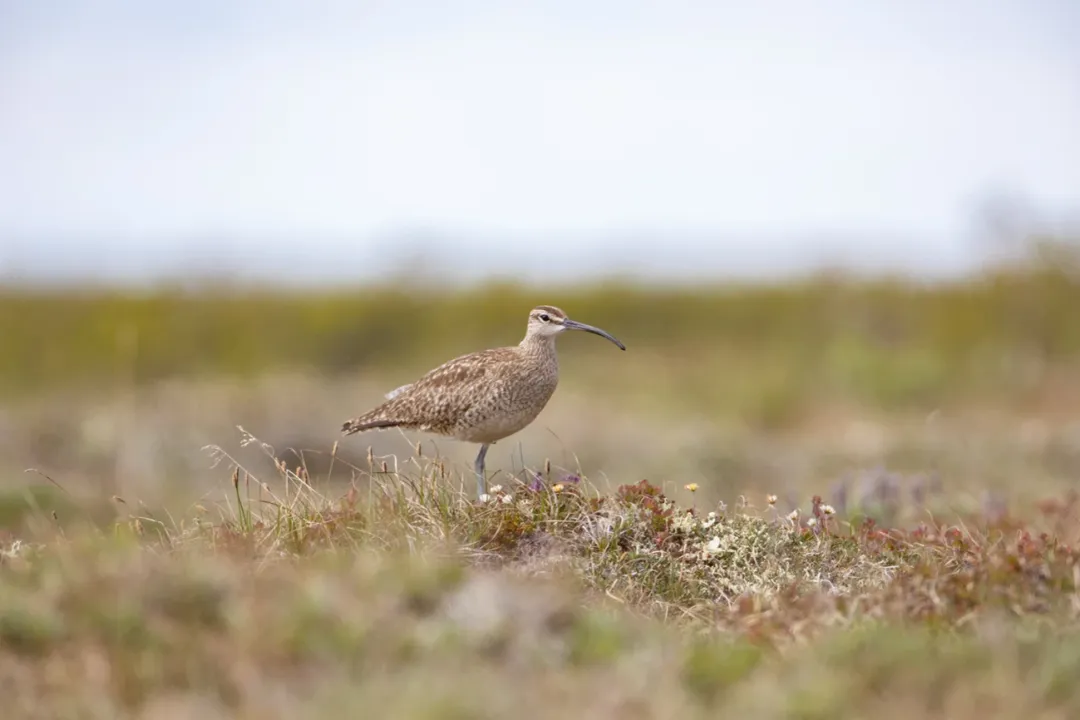
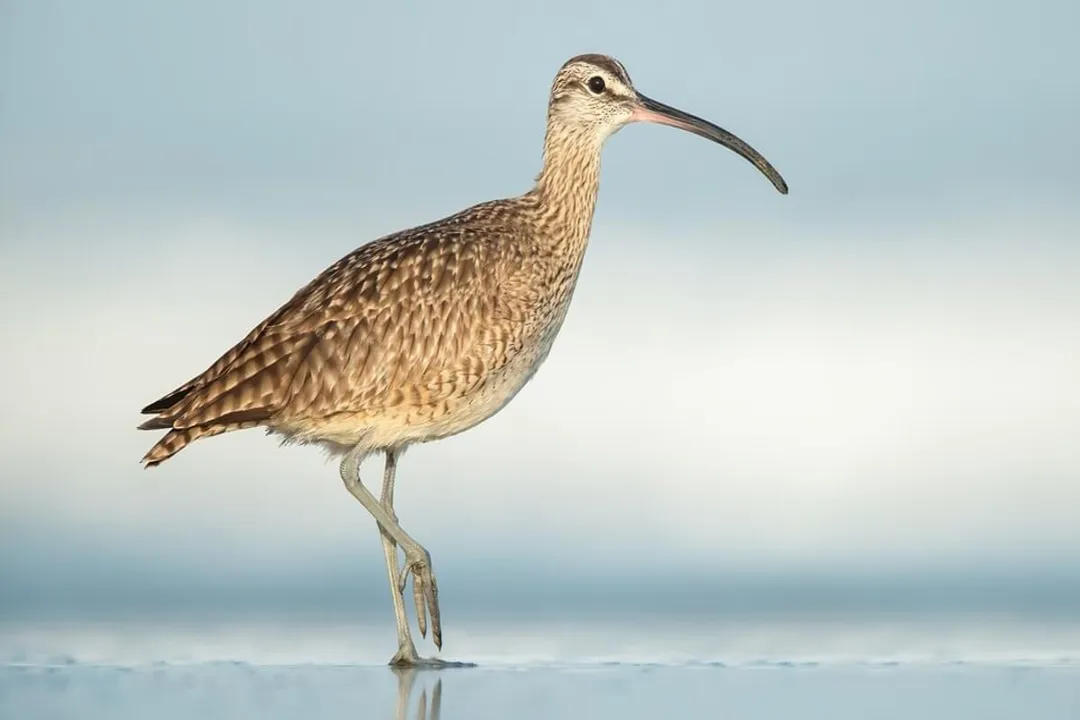
Adult Whimbrels typically measure around 17 to 19 inches in length, placing them solidly in the medium-to-large shorebird category. [1][5] Their overall coloration is a mottled brown and gray above, fading to paler underparts, though the extent of the streaking can vary. [5][7] A key field mark is the head pattern: a dark crown is bisected by a pale stripe running down the center, accompanied by a dark eye line contrasting sharply with a light eyebrow stripe. [1][5] This facial pattern is critical for field identification. [5]
The bill structure is perhaps the most memorable feature. It is dark, long, and distinctively decurved, meaning it curves downward towards the tip. [1][5] This specialized tool is essential for the bird's foraging strategy. [1] In the field, birders should also note the leg color, which is generally a dark gray or blackish tone. [1][5] While both sexes look similar, the bill length can sometimes differ slightly, though this is not a reliable field marker for casual observation. [1] In North America, the subspecies most commonly encountered is the Hudsonian Whimbrel (Numenius phaeopus hudsonicus), which undertakes one of the most phenomenal migrations on the planet. [2]
# Calling Out
The sound a Whimbrel makes is often what alerts observers to its presence before the bird itself comes into view, particularly when flying overhead during migration. [1] Its voice is best described as a series of musical, bubbling notes or a distinct, rolling whistle. [1][5] This characteristic call is often rendered as "pip-pip-pip-pip-pip-pip-pip-peeeeuuu" or similar rhythmic variations, ascending in pitch before trailing off. [5] During the breeding season on the Arctic tundra, males use their calls as part of territorial displays. [5] Listening for this rolling, somewhat melancholy sound can be an excellent way to locate them when they are present, especially along migratory routes where they may stop over in large, noisy flocks. [1]

# World Travel
Whimbrels are true cosmopolitans, breeding across the northern reaches of the globe and wintering on temperate and tropical coastlines spanning multiple continents. [3][7] Their breeding grounds are typically the open, treeless expanses of the Arctic tundra in the Northern Hemisphere. [7][9] This harsh environment serves as their nesting laboratory before the great journey south begins. [7]
The migration routes undertaken by the species are staggering. For example, North American breeders, particularly the Hudsonian Whimbrel, travel thousands of miles from their Arctic nests to spend the non-breeding season along the coasts of the United States, Central America, and South America, frequently favoring the coasts of the Caribbean, the Gulf of Mexico, and the Pacific coast down to southern South America. [2][3][4] For a bird that weighs only about one pound, this distance represents an incredible physiological feat. [7] When observing these birds on their southern stopovers, remember that the specific habitat they choose is highly dependent on the local food supply, which is often dictated by the tidal cycles. [9] A practical tip for locating large numbers of these migrants is to target large, relatively undisturbed coastal mudflats during the peak spring and fall migration windows, as they tend to congregate in predictable areas known for rich foraging. [6]
In stark contrast to their breeding season, which might involve temporary, marshy inland pools, their winter habitat overwhelmingly consists of seashores, estuaries, mudflats, and sand beaches. [1][3][9] They demonstrate a preference for coastlines that offer extensive intertidal zones suitable for probing. [9]
# Feeding Style
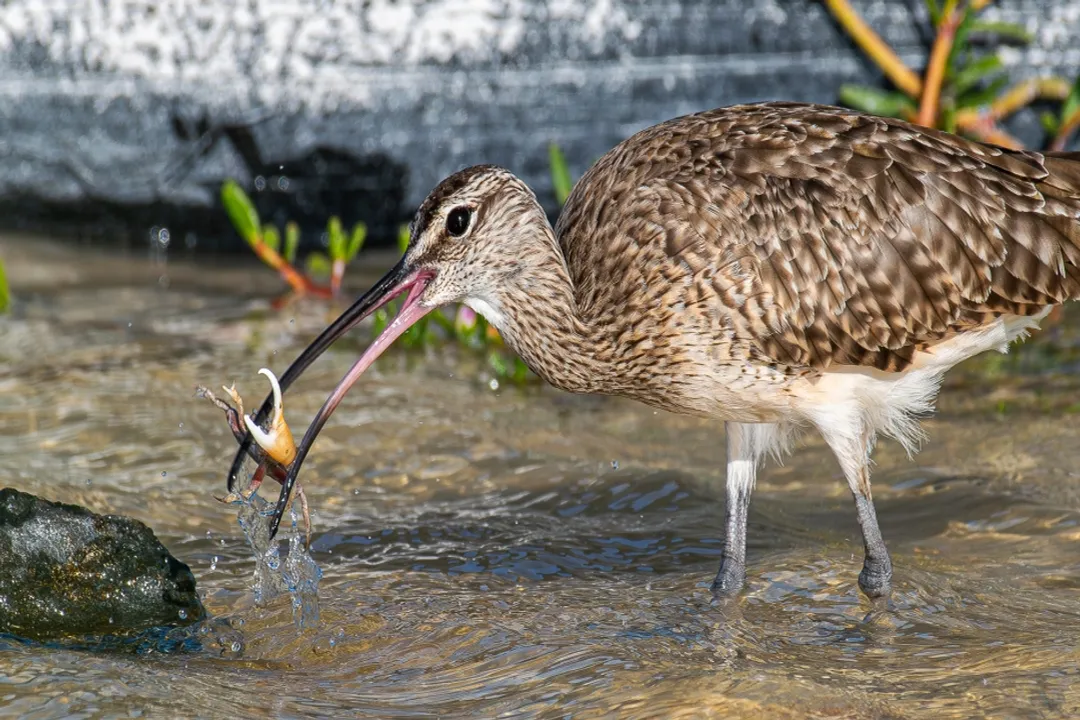
The specialized, down-curved bill directly dictates the Whimbrel’s foraging strategy. [1] They are masters of extracting prey buried beneath the substrate, a behavior known as probing. [4] Their diet is primarily composed of invertebrates found in the mud and sand. [9] This commonly includes small crabs, various marine worms, small mollusks, and occasionally insects or crustaceans found in terrestrial or brackish environments. [1][4][5]
Unlike some plovers that snatch prey from the surface, the Whimbrel often walks methodically, stopping frequently to rapidly jab its bill deep into the sediment. [4] The curve of the bill allows them to feel for and grasp prey items that other shorebirds with straight bills might miss. [4] This ability to access subsurface food sources gives them a competitive advantage in rich intertidal zones. When thinking about the energy requirements for their long migrations, understanding this efficient feeding method is key; they must rapidly replenish fat reserves using these rich, concentrated coastal feeding grounds. [7]
# Population Trend
The conservation status of the Whimbrel requires attention, particularly for the North American populations. [4] While the global species, Numenius phaeopus, is generally considered "Least Concern" by some organizations, specific regional assessments can vary. [3][8] For instance, the species has experienced significant declines in the United States, leading to its designation as a species of concern by several regional conservation groups. [4][8]
Several factors contribute to these observed declines. Historically, direct shooting during migration posed a major threat. [3] Today, habitat degradation and loss present the most pressing issues. [4][6] The specialized feeding grounds—the vast, undisturbed coastal mudflats essential for refueling during migration and wintering—are increasingly impacted by human development, pollution, and disturbance. [4][6][8] Furthermore, changes in climate affecting the Arctic tundra breeding grounds present an ongoing, long-term challenge to reproductive success. [8] Monitoring these coastal stopover sites is therefore a high priority for bird conservationists seeking to support the species' long-term viability. [6] Comparing the status across different ranges highlights an interesting dynamic: while the species might appear stable globally due to large populations in areas like Europe or Asia, the distinct North American subspecies faces localized pressures that necessitate targeted regional conservation efforts. [2][8]
# Breeding Life
Life on the Arctic breeding grounds, while brief, is intensive for the Whimbrel. [7] They arrive in the remote, high-latitude tundra relatively late in the spring, often in May. [7] Here, they establish territories and prepare to nest. [7] The nest itself is typically a shallow scrape on the ground, often lined with vegetation, situated in dry upland tundra areas, though sometimes near wetter spots. [7][9]
The female usually lays four eggs, which are incubated by both parents. [7] The young chicks are precocial, meaning they are able to walk and feed themselves shortly after hatching, which is crucial for survival in the short Arctic summer. [7] Once the young are fledged and capable of flight, the entire family unit begins the southward migration, often departing by late summer or early autumn. [7] Successfully raising a brood in that challenging environment means the parents must maximize foraging efficiency immediately upon arrival, making the quality of the tundra habitat that first spring stopover highly important before the final push north to breed again. [7]
Related Questions
#Citations
Whimbrel | Audubon Field Guide
Hudsonian Whimbrel Overview, All About Birds, Cornell Lab of ...
Whimbrel (Numenius phaeopus) | U.S. Fish & Wildlife Service
Whimbrel - American Bird Conservancy
Whimbrel - Montana Field Guide
Whimbrel - Conserve Wildlife Foundation of NJ
Whimbrel - BTO
Whimbrel - NH Audubon
The Whimbrel - Cape Cod National Seashore (U.S. National Park ...