What dental feature distinguishes warthogs adapted for grinding tough, fibrous grasses?
Answer
High-crowned, complex cheek teeth (molars)
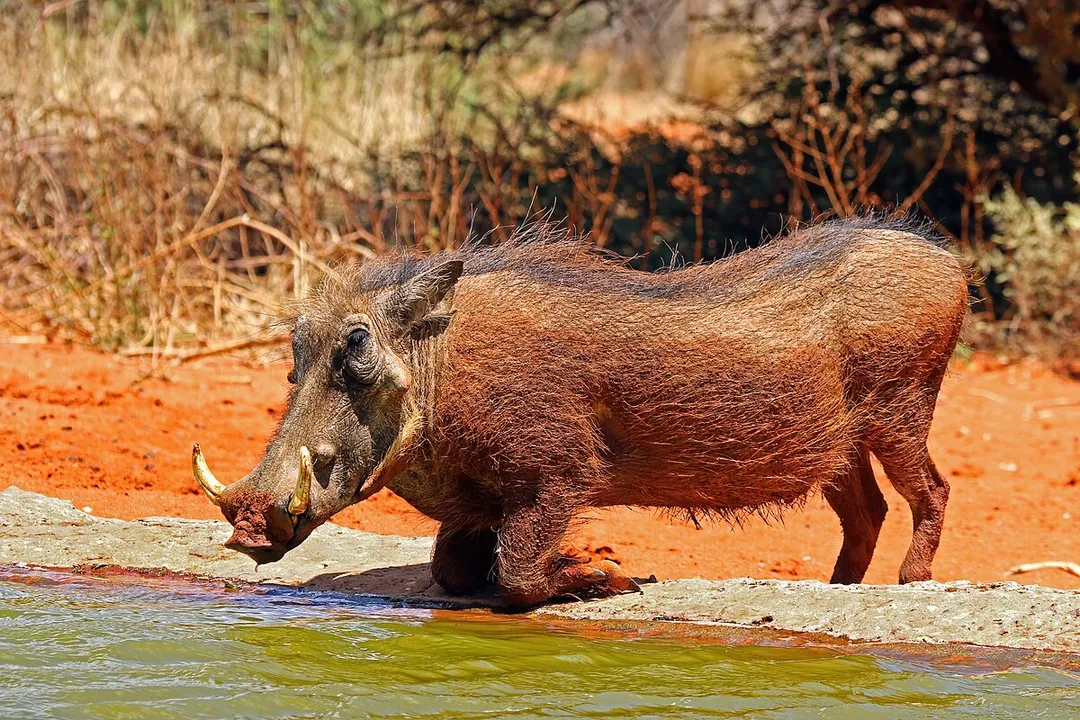
The transition of the warthog from a generalist forager to a dedicated grazer led to significant refinement in their dental structure. Warthogs possess highly specialized molars that are characterized as being high-crowned and having complex structures. This dentition is specifically adapted for the difficult task of grinding tough, fibrous grasses. These grasses are significantly more abrasive than the mixed diet consumed by other pigs. This dental specialization represents a major evolutionary divergence within the Suidae family, cementing their role as specialized grazers whose physical form is optimized for exploiting the specific vegetation found in the savanna environment.
Related Questions
How are the lower tusks of the warthog described compared to the upper pair?What tissue composes the warthog's facial "warts" and how do they differ by sex?What specialized forelimb adaptation facilitates the warthog's primary feeding behavior?Which extinct species of the genus *Phacochoerus* was historically found in Ethiopia and Somalia?Approximately how long ago did the genetic divergence leading to *P. aethiopicus* and *P. africanus* occur?Warthogs are classified within which subfamily, setting them apart from generalized pigs in the *Suinae* subfamily?How does the primary diet of the Bushpig (*Potamochoerus porcus*) contrast with the warthog's diet?What dental feature distinguishes warthogs adapted for grinding tough, fibrous grasses?What is the widely believed evolutionary purpose of the fleshy protrusions, the "warts," on the warthog's face?The evolutionary story of the warthog is intertwined with which major environmental change in Africa?