Warthog Evolution
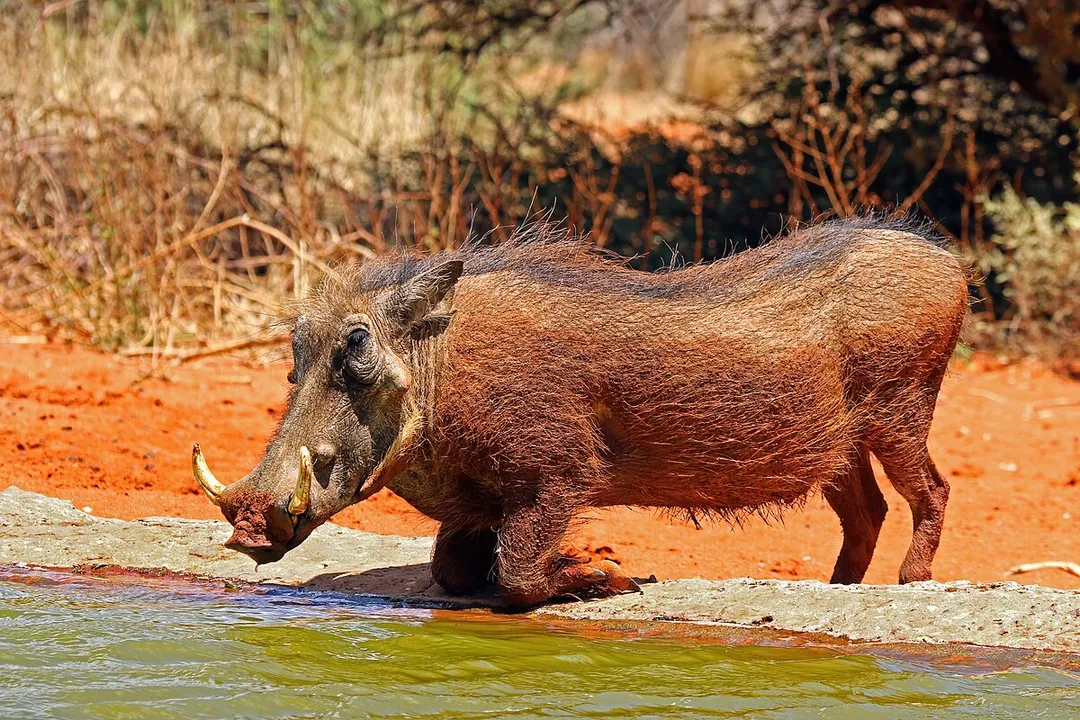
The lineage leading to the modern warthog, genus Phacochoerus, represents a fascinating side branch within the family Suidae, the same group that includes domestic pigs and wild boars. [4] Placing the warthog accurately within this family tree involves tracing morphological and genetic signatures that distinguish it from its cousins, the babirusas and bush pigs. [2] While they share a common ancestor with pigs, the evolutionary path that sculpted the warthog's unmistakable appearance—the prominent tusks and facial warts—began diverging millions of years ago. [5][9] Understanding this evolution requires looking not just at the surviving species, but also at the forms that have vanished from the fossil record. [9]
# Family Roots
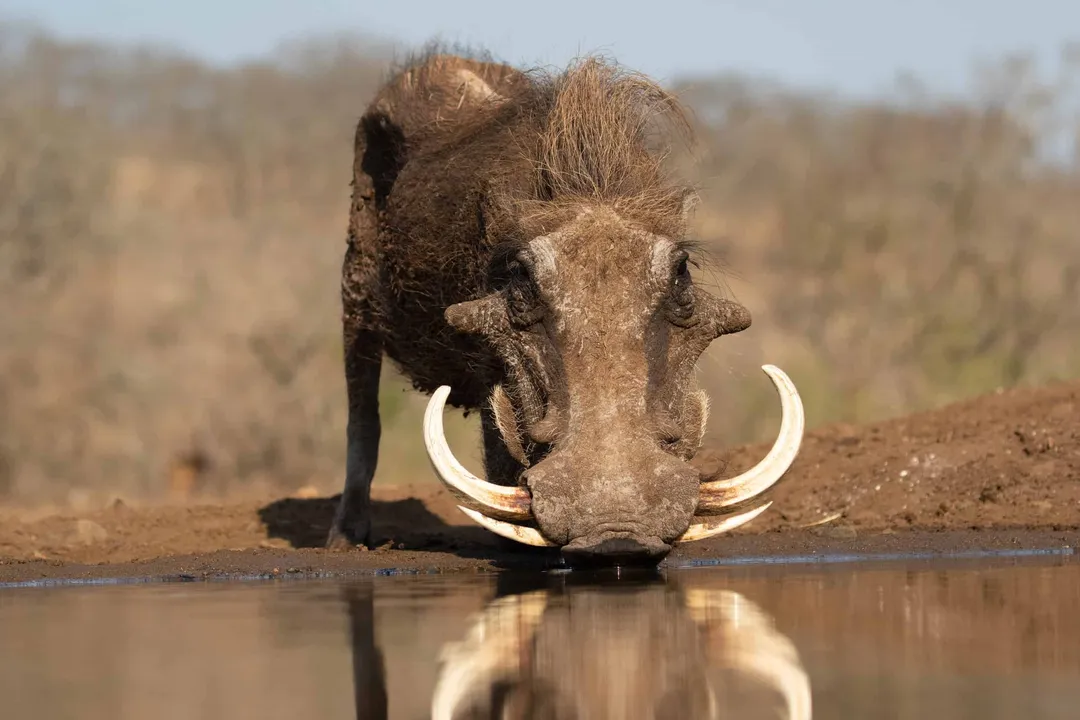
Warthogs are classified within the subfamily Phacochoerinae, setting them apart from the more generalized pigs of the Suinae subfamily. [4] Genetically, molecular studies place them near the pigs, but their distinct anatomical traits signal a long period of independent adaptation to specific African niches. [2] When comparing the genomes, researchers find clear points of separation that map out the evolutionary timeline, allowing for the inference that warthogs, along with other African suids, followed a unique trajectory separate from the Eurasian pigs. [5] This divergence set the stage for the extreme specialization seen today. [7]
The fossil record, though sometimes fragmented for this particular group, shows that the ancestors of modern warthogs adapted their skull structure over geological timescales. [9] These ancient forms were likely less specialized grazers and may have exhibited a broader diet, rooting around like their modern relatives, before the pressures of savanna life refined their morphology. [9] The evolutionary story of the warthog is therefore intertwined with the expansion and drying of African grasslands, providing an environmental context for its distinct traits. [2]
# Key Adaptations
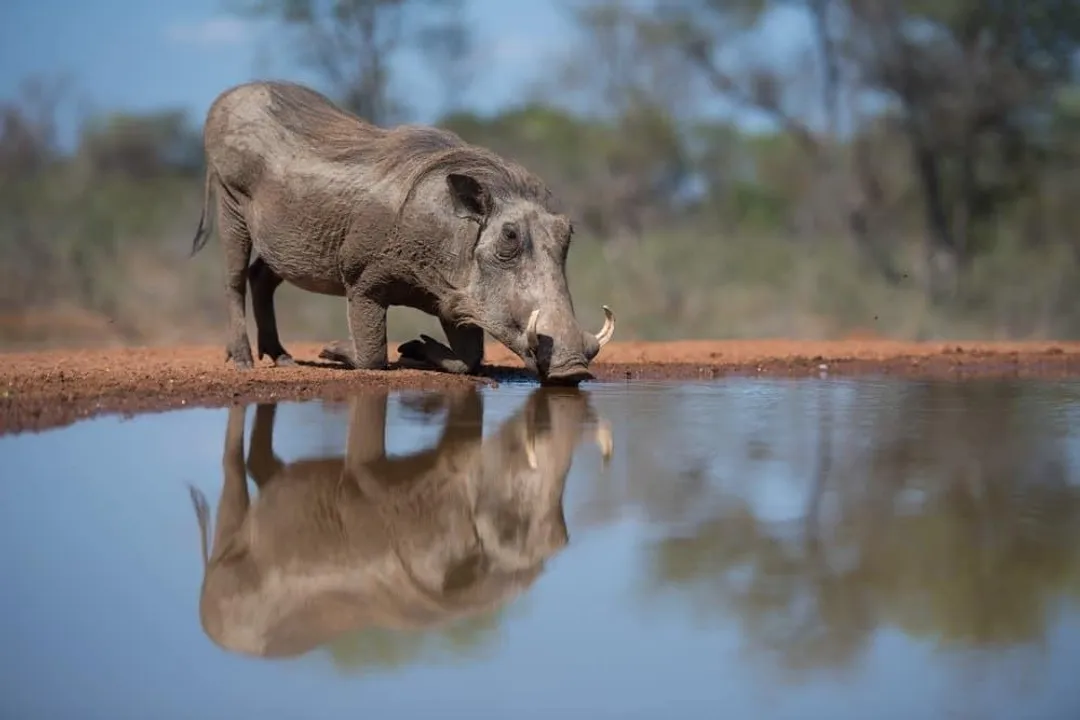
The most striking features of the warthog—the tusks and the facial warts—are the products of intense evolutionary selection. [8] The tusks are actually elongated upper and lower canine teeth. [1] The upper pair curves out and back, while the lower pair is shorter but sharper, acting like shearing blades during conflict or defense. [1] These are not merely ornamental; they are critical tools used in dominance displays and defense against predators like lions and leopards. [8]
The fleshy protrusions on the face, the "warts," give the animal its name. [8] These structures are composed of thick, tough connective tissue and cartilage, and they differ significantly between sexes, being much larger in males. [2] While their exact evolutionary purpose remains debated, they are widely believed to serve as protective padding during fights over females or territory, absorbing blows that might otherwise injure the more vulnerable eyes or snout. [8][2]
Perhaps less visually dramatic but equally important for survival is the adaptation of their forelimbs. Warthogs have developed specialized, thick pads on their wrists that allow them to kneel comfortably while feeding. [2] This behavior is crucial because it facilitates close cropping of grasses, their primary food source. [2] Considering the extreme modification of their wrist bones for kneeling, one can surmise that the evolutionary pressure strongly favored constant ground-level grazing over general foraging, effectively locking them into a specific dietary pathway that drove further specialization in dentition for abrasive grasses.
# Species Divergence
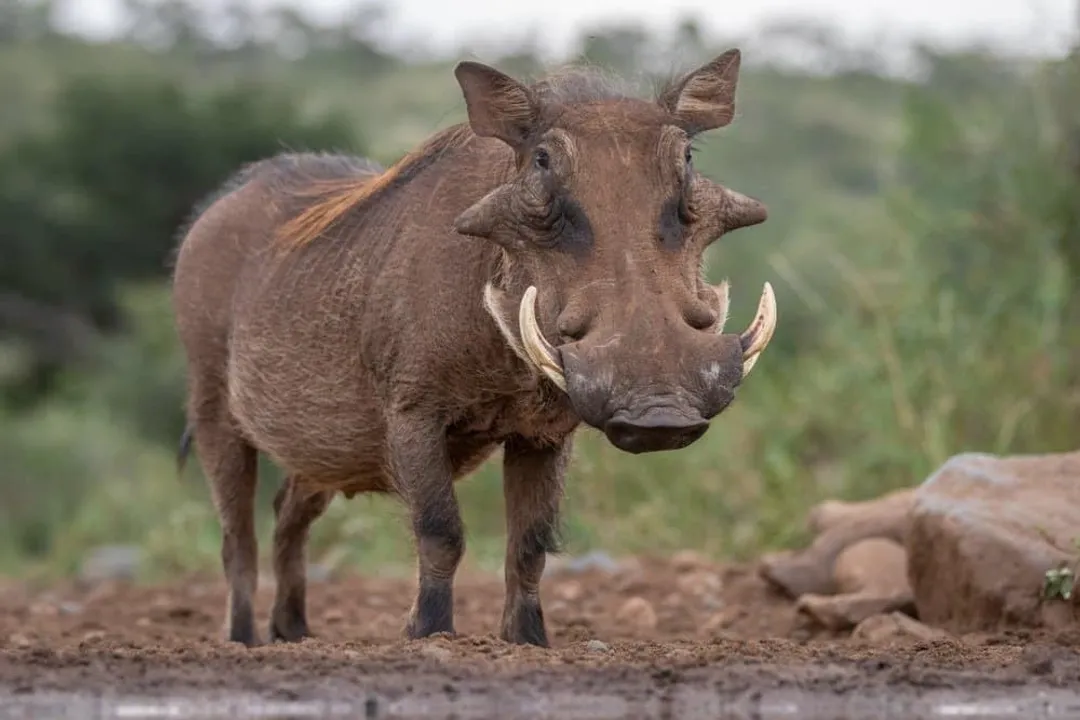
The genus Phacochoerus currently holds one recognized, widespread species: the Common Warthog (Phacochoerus africanus). [1] However, the evolutionary history is complicated by the existence of the Desert Warthog (Phacochoerus aethiopicus), a distinct species that is now extinct. [10] The Desert Warthog was historically found in the Horn of Africa, specifically in regions like Ethiopia and Somalia. [10] Its disappearance is a significant event in recent mammalian history, though the exact mechanisms—whether climate change, disease, or localized human impact—are not entirely clear. [10]
What is fascinating from an evolutionary standpoint is the relatively recent split between these two forms. [6] Genetic analyses suggest that the divergence leading to P. aethiopicus and P. africanus occurred perhaps only half a million years ago. [6] This indicates a relatively rapid speciation event within the genus. Despite the recent separation, the genetic differences were substantial enough to warrant separate species designation, highlighting how quickly isolated populations can accumulate distinguishing features when faced with different ecological demands. [7] Today, the Common Warthog itself shows considerable genetic structure across its vast African range, with some researchers proposing different subspecies based on geographic isolation. [6]
# Genetic Insights
Modern genomic sequencing offers a high-resolution look at these evolutionary events, confirming and refining older morphological classifications. [7] By analyzing both mitochondrial DNA (which traces maternal lineages) and nuclear markers, scientists can better map the relationships within and between the two Phacochoerus species. [2][7] These studies often reveal that genetic flow between geographically separated populations ceased long before the populations became drastically different in appearance, showing that genetics can precede visible morphological change. [6]
One important finding confirmed through genomic work is the relationship between the warthog and other wild pigs. [7] The genetic data places Phacochoerus securely within the Suidae family, but their unique suite of adaptations—the lack of a prominent snout disk, the unique molar structure, and the highly modified tusks—are fixed characteristics that clearly separate them from genera like Sus (pigs) or Potamochoerus (bushpigs). [2]
The fact that the split between the two species occurred relatively recently, yet resulted in the complete loss of one lineage (P. aethiopicus), highlights the fragility of specialized adaptations. In evolutionary terms, a rapid specialization, while successful for a time, might lack the genetic plasticity needed to withstand sudden environmental shifts, a stark contrast to the more generalized, older suid lineages. This extinction serves as a tangible reminder that evolutionary success is not guaranteed over deep time, even for animals well-adapted to their immediate surroundings. [10]
# Comparative Anatomy
To appreciate the warthog's evolutionary success, it helps to compare its structure to its closest relatives. While bush pigs (Potamochoerus porcus) generally prefer denser woodlands and thickets and retain a more generalized omnivorous diet, the warthog is fundamentally an animal of the open plains. [8] This difference in habitat directly shaped their anatomy. Bushpigs have shorter, straighter tusks and a less specialized muzzle structure, reflecting a life spent rooting in richer soil for roots, tubers, and invertebrates. [4]
Warthogs, conversely, have evolved heads that are proportionally larger and heavier to support the massive canines and the thickened facial structure. [2] Their molars also show evolutionary refinement; they possess high-crowned, complex cheek teeth adapted for grinding tough, fibrous grasses, which are far more abrasive than the mixed diet of other pigs. [2] This dietary specialization—becoming obligate grazers rather than generalist omnivores—is a major evolutionary divergence within the Suidae family.
| Feature | Common Warthog (P. africanus) | Bushpig (P. porcus) | Evolutionary Implication |
|---|---|---|---|
| Primary Diet | Grasses (Grazer) | Roots, tubers, omnivorous | Habitat specialization (Savanna vs. Thicket) [8][4] |
| Forelimbs | Adapted wrist pads for kneeling | Standard pig posture | Adaptation for low-level grazing [2] |
| Facial Warts | Prominent, thick connective tissue | Absent | Selection for defense/display in open areas [2] |
| Tusks | Large, curving upper pair; lower pair sharp | Smaller, straighter | Enhanced defense and intraspecific competition [1] |
This comparative view underscores that warthog evolution was not just about adding ornamentation; it involved a cascade of skeletal and dental changes driven by the need to exploit the specific, abundant, yet tough resources of the African savanna. [9] Their physical form is a direct, optimized response to their environment over the last few hundred thousand years. [6]
Related Questions
#Citations
Warthog - Wikipedia
Warthog Genomes Resolve an Evolutionary Conundrum and ...
Evidence of two genetically deeply divergent species of warthog ...
Common Warthog (Phacochoerus africanus) Fact Sheet - LibGuides
We Could Have Been Warthogs - Nautilus Magazine
Uncovering Evolutionary Adaptations in Common Warthogs ... - MDPI
Warthog Genomes Resolve an Evolutionary Conundrum and ...
Warthog - Phacochoerus africanus - A-Z Animals
Phylogeography and population structure of the common warthog ...
Phacochoerus aethiopicus (Desert Warthog) - The Extinctions