What defensive mechanism is suggested by the snake's resemblance to a grub or ant larva?
Answer
Batesian mimicry
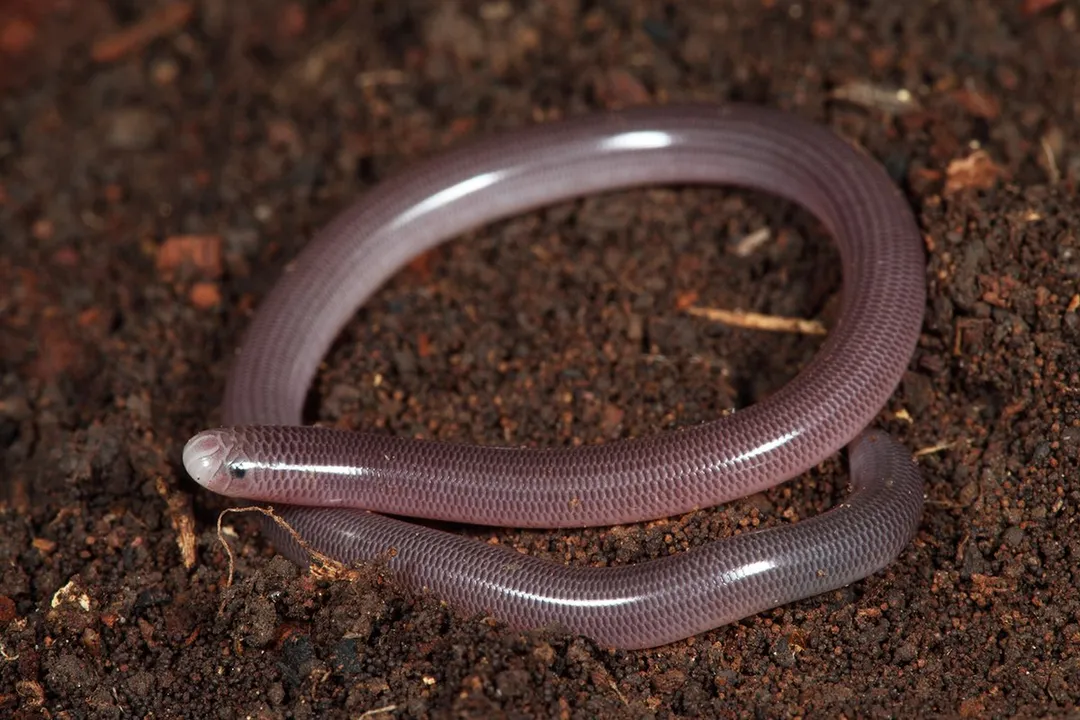
The physical resemblance of the Western Blind Snake to an earthworm or an ant larva is hypothesized to function as Batesian mimicry. This is a protective strategy where a harmless, palatable species evolves to resemble a species that is distasteful or dangerous to potential predators, such as visually hunting birds. A predator looking for a non-threatening, low-value food item like a grub might mistake the snake for that item and ignore it, thus affording the snake protection without possessing actual defenses like venom.
Related Questions
What is the scientific name for the Western Blind Snake?What term describes the *Rena humilis* dedication to eating ants?What specific parts of ant and termite colonies does *Rena humilis* target?Why does the Western Blind Snake focus on larvae over adult ants?What characteristic defines the subterranean foraging style of *Rena humilis*?Which sensory input is likely relied upon heavily by *Rena humilis* underground to locate hidden chambers?What physical features help the blind snake move efficiently through soil?What key ecological role does the predation by *Rena humilis* play in arid environments?What defensive mechanism is suggested by the snake's resemblance to a grub or ant larva?Where should observers look for *Rena humilis* activity based on prey concentration?