What critical substrate characteristic is preferred by fossorial *Rena humilis*?
Answer
Loose, sandy, or fine-gravelly soils
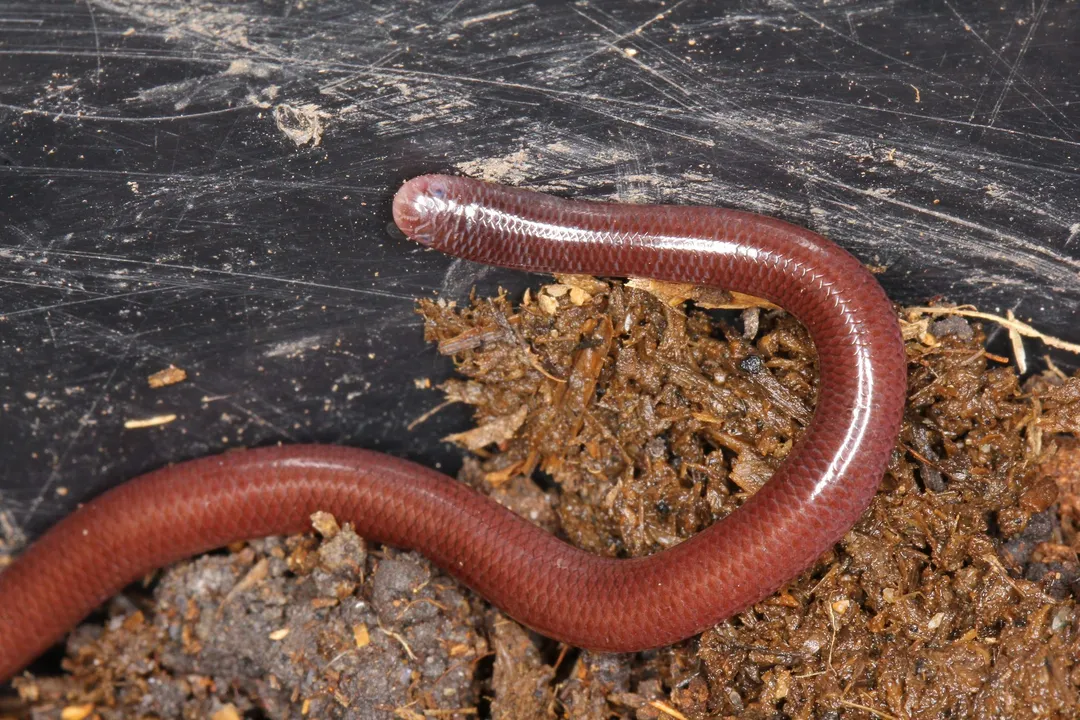
Habitat selection for the Western Blind Snake is primarily dictated by the physical composition of the soil, as they are fossorial and spend the majority of their time underground. They require substrates that facilitate easy movement through the dirt matrix. This necessity translates to a strong preference for soil that is loose, sandy, or comprised of fine gravel. Conversely, areas with soil that is too coarse or heavily compacted, such as in mountainous or extremely rocky regions, generally do not support viable populations because burrowing becomes too difficult.
Related Questions
What is the current scientific genus for the Western Blind Snake?What is the typical maximum length range for adult Western Blind Snakes?What distinct surface quality do the scales of the Western Blind Snake possess?What is the primary food source for the specialized diet of *Rena humilis*?What reproductive strategy defines the Western Blind Snake's life history?Which color range describes the typical uniform coloration of the Western Blind Snake?What critical substrate characteristic is preferred by fossorial *Rena humilis*?What is the primary defense mechanism when the Western Blind Snake is disturbed?Which former binomial nomenclature is still used in older field guides for this snake?Which common name references the thread-like structure of the Western Blind Snake?What characteristic defines the eye structure of the Western Blind Snake?