How is the black hood on a female Black-and-Yellow Tanager typically different from the male's?
Answer
Reduced, sometimes showing a yellowish wash mixed in
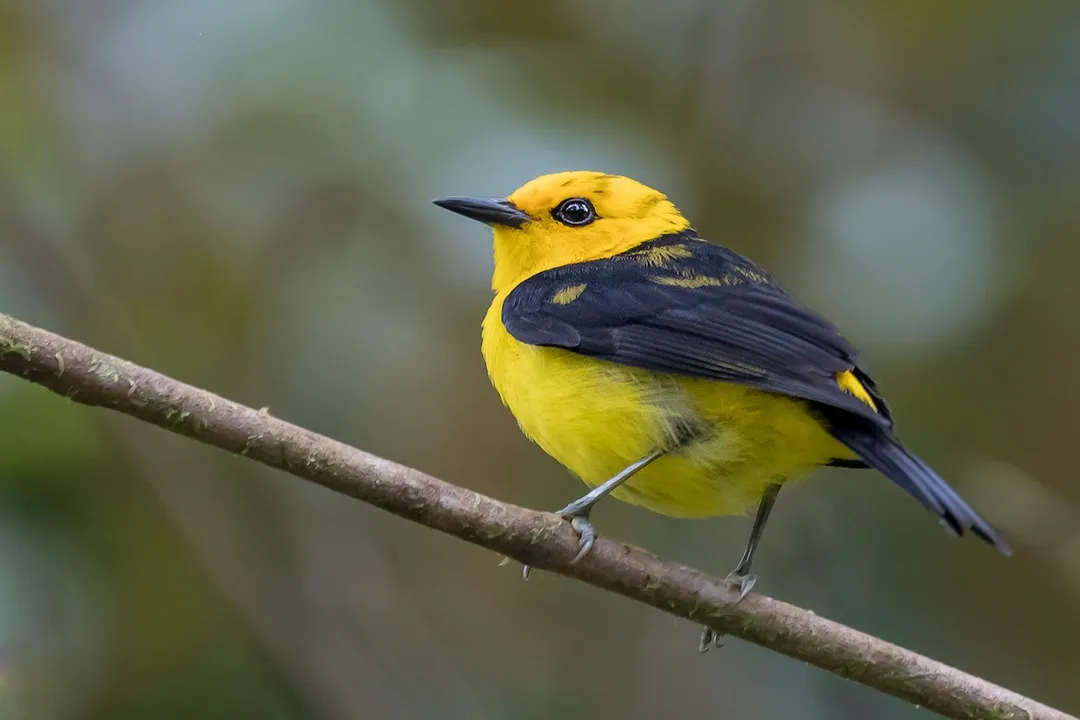
Sexual dimorphism means the female exhibits a less intense version of the male's pattern. Instead of a solid, extensive black hood seen on the male, the female's black hood is often reduced in coverage. Furthermore, there might be a yellowish wash intermingling with the black areas on the throat. The black pigmentation in females might be restricted primarily to the lores (the area between the bill and eye) and the upper back, allowing more of the lighter yellow color to be visible on areas like the crown and face, resulting in a more variegated appearance compared to the male's distinct dichotomy.
Related Questions
What is the general total length range for an adult Black-and-Yellow Tanager?What is the usual mass range for the Black-and-Yellow Tanager?How is the head plumage described for an adult male Black-and-Yellow Tanager?How is the black hood on a female Black-and-Yellow Tanager typically different from the male's?What color is the bill typically described as on the Black-and-Yellow Tanager?What is the overall appearance of the juvenile plumage in the Black-and-Yellow Tanager?What is the typical coloration of the legs and feet of the Black-and-Yellow Tanager?What subtle feature aids in separating a healthy adult male's black areas from similar congeners?On which areas might a female Black-and-Yellow Tanager's yellow lean toward an orangey-yellow or greenish-yellow wash?Besides the head, which areas on the male are predominantly black, sometimes appearing dark olive or greenish-black?