How does the temperament of domesticated water buffalo generally contrast with the defense mechanisms of their wild relatives?
Answer
Domesticated animals are generally docile and are not known for aggressive defense mechanisms.
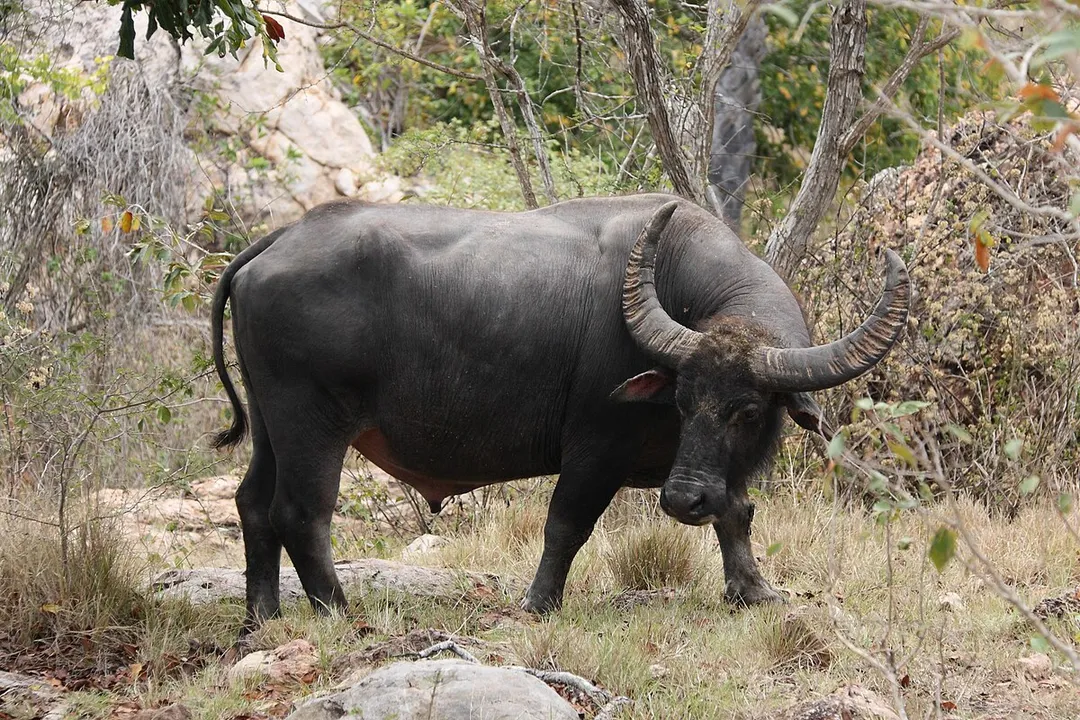
The process of domestication has resulted in a notable difference in disposition between the two groups. Domesticated water buffalo, particularly those raised from a young age specifically for farm labor, possess a generally docile temperament. This contrasts sharply with their wild counterparts, which are known to exhibit stronger, more aggressive defense mechanisms when threatened. Handlers of domesticated stock can often form strong bonds with the animals, a level of comfort not typically associated with managing the wild species, which retains more innate survival instincts regarding self-defense.
Related Questions
Which domestic water buffalo type is typically larger and favored for heavy tillage?What physiological trait necessitates the water buffalo's behavior of wallowing?What protective function does the dried mud crust from wallowing provide to water buffalo skin?What authentic Italian cheese traditionally uses water buffalo milk due to its high fat content?What is the scientific designation for the critically endangered Asiatic wild water buffalo ancestor?What exceptional length can water buffalo horns sometimes reach tip-to-tip according to recorded measurements?For which agricultural activity is the larger, stockier Swamp buffalo particularly valued over the River buffalo?How does the composition of water buffalo milk compare to the milk from domestic cattle regarding fat and protein?How does the temperament of domesticated water buffalo generally contrast with the defense mechanisms of their wild relatives?For farmers managing water buffalo, what resource is considered as crucial for health as providing fodder and drinking water?What are the two primary factors causing the decline of the Asiatic wild water buffalo (*Bubalus arnee*) populations?