Water Vole Facts
The water vole, often affectionately recalled as "Ratty" from Kenneth Grahame's beloved children's tale, The Wind in the Willows, [5][6] is Britain's largest vole species, though it is certainly not a rat. [6][4] While the name suggests a creature perfectly adapted to the water, the reality is more complex; these mammals are described as semi-aquatic but actually lack certain adaptations like webbed feet, limiting how long they can stay submerged. [6] Finding one today is increasingly rare, as they have suffered one of the most severe population crashes of any native mammal in Britain during the last century. [5][4]
# Appearance Distinctions
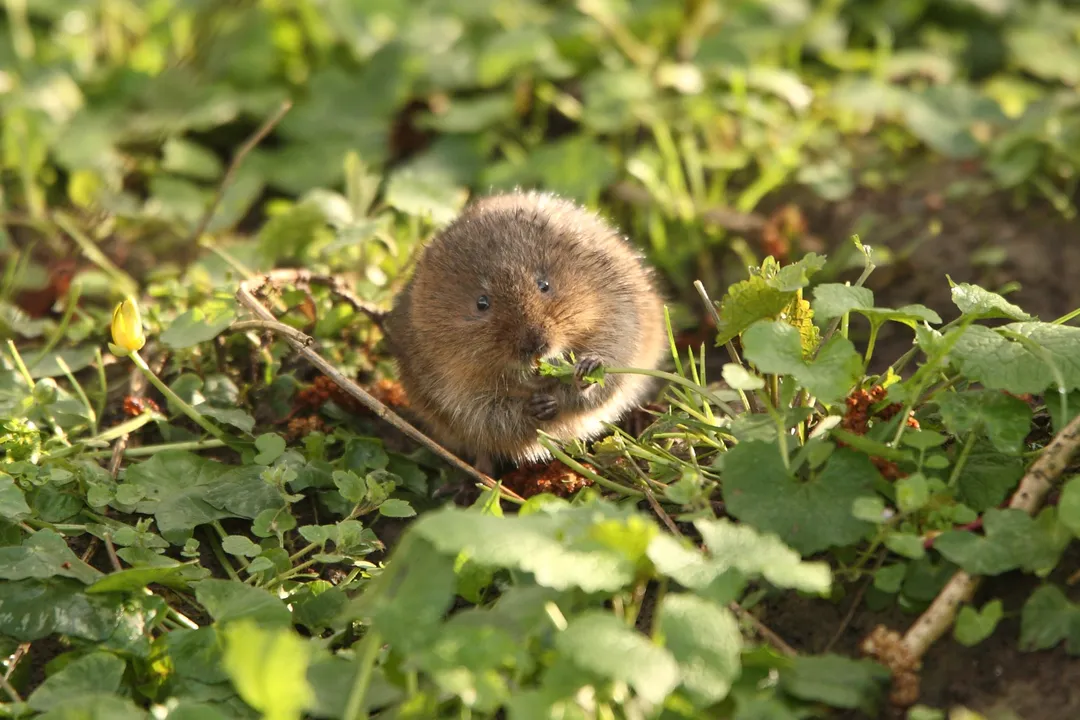
Telling a water vole apart from its lookalike, the common brown rat, requires a keen eye for specific features. [5] The water vole (Arvicola amphibius) is characterized by a decidedly blunt, rounded muzzle, contrasting sharply with the rat's more pointed nose. [5] Its eyes are small and black, and its ears are rounded and typically appear almost hidden within its thick fur. [5][4] The tail is dark, slightly furry, and significantly shorter than the rat's long, scaly appendage. [4]
Their thick coat provides excellent camouflage, ranging in color from a light to dark brown, sometimes appearing almost black across the back, while the underside presents a paler shade, from white to slate gray. [2] The physical statistics place them firmly as the largest vole in Britain. [5]
Here is a brief comparison of typical measurements for the Eurasian water vole:
| Feature | Male Average | Female Average |
|---|---|---|
| Body Length (Head to Body) | 210 mm | 187 mm |
| Tail Length | 124 mm | 116.5 mm |
| Mass | 263 g | 232 g |
| Lifespan (Wild) | Less than one year average | Less than one year average |
These animals possess continuously growing cheek teeth, typical of rodents, which they use extensively for feeding and for gnawing through tough bank materials. [2] To maintain their high energy levels, they must consume the equivalent of about 80% of their body weight daily. [6] Interestingly, their feet have hairy fringes which contribute to their swimming capabilities. [3]
# Waterways Home
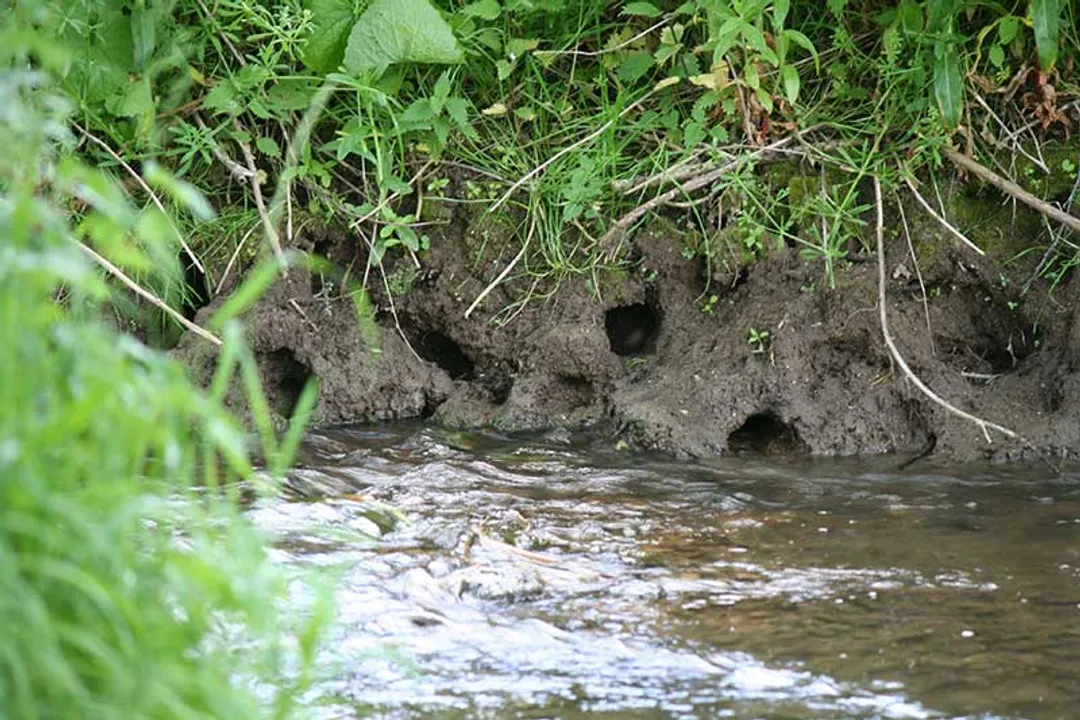
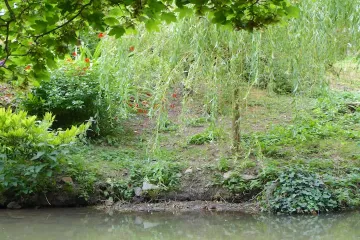
Water voles are inextricably linked to water bodies, preferring the banks of slow-moving rivers, streams, ditches, lakes, and ponds, as well as marshland and reedbeds. [5][6] A key habitat requirement is the presence of good vegetation cover. [2] They make their homes in complex systems of burrows dug directly into steep, grassy banks. [5][6] These burrows are often architecturally impressive, sometimes featuring entrances hidden beneath the water surface, offering a crucial escape route from terrestrial predators. [5][6]
Their burrow systems can be extensive, ranging from 3 to 4 meters in length during the winter months, potentially stretching up to 74 meters in the summer. [2] Inside, they construct one or two nests, and critically, storage chambers dedicated to food supplies for the leaner winter months. [2] Unlike some smaller rodents, they do not hibernate but instead spend more time underground, often huddling with colony members to maintain warmth. [5][6] To further regulate the internal temperature of their underground homes, they sometimes plug entrances with a mix of mud and vegetation, and they maintain chambers for food scraps that may compost and generate residual heat—a form of natural central heating.
While their primary existence is riparian, it is worth noting that water vole populations in mainland Europe often exhibit a lifestyle more akin to moles, living largely underground away from water. [4] Furthermore, unique populations in Britain, such as one in Glasgow, have been documented living in rough urban grassland without open water nearby, foraging predominantly above ground like field voles. [4]
# Sustenance Strategies
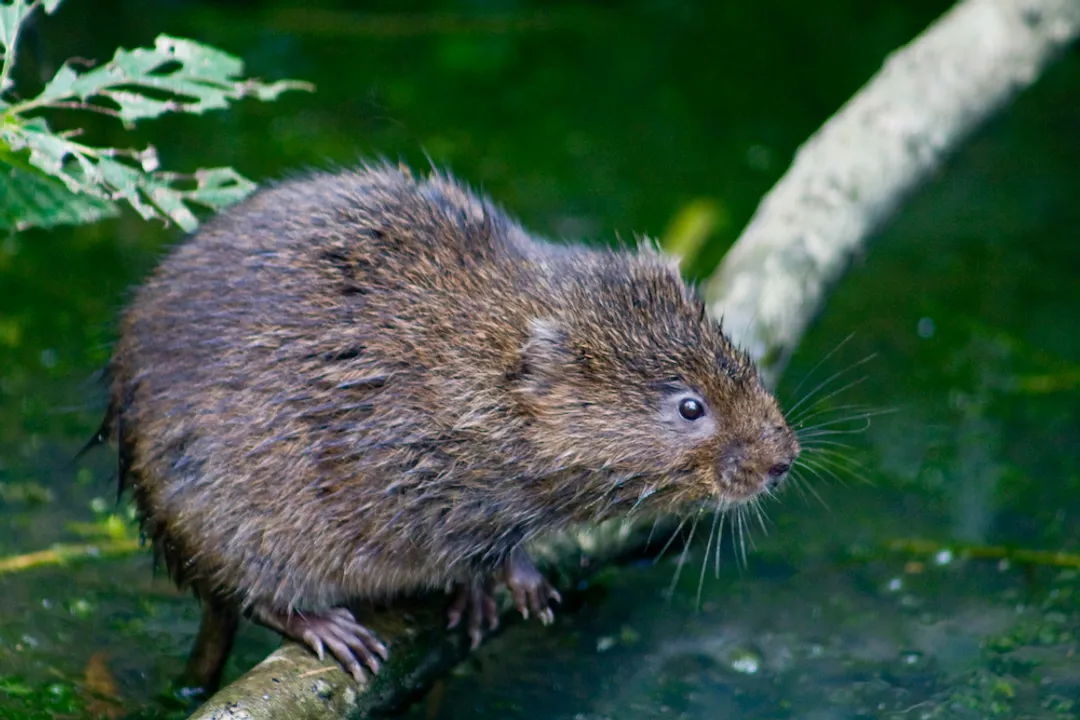
The diet of the water vole is overwhelmingly herbivorous, though they are not entirely averse to animal protein. [2] They possess an extensive palate, documented to have consumed over 227 different species of plant in Britain. [4][6] Their daily needs are high, demanding they consume around 80% of their body weight daily. [6]
In the spring and summer, their main fare consists of soft, abundant vegetation: reeds, sedges, rushes, and various water plants. [5][6] They are often observed sitting on their hind legs, holding grass stalks in their front paws while feeding. [5] When disturbed, the classic defense is a distinctive plop as they dive into the water, kicking up a screen of dirt to confuse a pursuer. [5][6]
As the seasons change and softer vegetation wanes, their diet shifts toward tougher materials. In autumn and winter, they rely on roots, bulbs, rhizomes, and the bark of woody species like willow, hawthorn, and crab apple. [5][6] One striking anecdote recounts a farmer discovering a hundredweight of potatoes cached in a ditch by water voles. Occasionally, they will supplement this plant-heavy diet with invertebrates such as freshwater mussels and water snails. [2]
When monitoring these creatures near their habitat, it is helpful to look for signs of where they choose to eat. They tend to graze in the same spots, leaving behind piles of nibbled stems that feature a distinctive, 45-degree angled cut at the ends. [5][6] If you are walking alongside a riverbank hoping to spot these animals, remember that their established feeding stations are key indicators. However, a respectful distance is essential; because these animals rely on such specific resources and marking systems, disturbing their known foraging spots or latrine areas could cause unnecessary stress or prompt them to abandon the location entirely, even if the main burrow remains untouched. [2]
# Social Markers
Water voles are social creatures, usually forming small family units that might comprise the adult pair and up to two generations of young. [2] Despite this social clustering, they are highly territorial, particularly the breeding females. [6][2] A female's defended territory might only span 30 to 150 meters of watercourse, while males maintain larger, overlapping home ranges that can stretch up to 300 meters. [5]
A fascinating aspect of their social structure is how they communicate boundaries. Water voles do not rely on scent in their droppings; instead, they use the scent from specialized flank glands located on the sides of their bodies. [2] They mark territory by rubbing these glands with their hind feet and then stamping the ground. [2] This action leads to the creation of latrines, which are discrete, flattened piles of droppings, often topped with fresh deposits, used to advertise ownership. [5][4] Recognizing these latrines is vital for surveyors, but it highlights why respecting these areas is an important aspect of responsible wildlife observation. [2]
Activity patterns are generally divided between daytime and the crepuscular hours of dawn and dusk. [2][5] They are motile creatures within their established range. [2] Lifespan is tragically brief; while they can survive up to five years in captivity, the average survival in the wild is less than a year, with few making it past their second winter. [2][6]
# Reproductive Cycles
Reproduction in water voles is prolific, designed to counter high natural mortality rates. [2] The breeding season generally runs from early spring (March or April) until late summer or early autumn (around October). [2][5] Over this period, a female can produce between two and five litters annually, with litter sizes typically ranging from two up to eight young, averaging four to six kits. [2][6]
The entire gestation period is quite short, lasting only about 20 to 22 days. [2] A key feature of their reproductive strategy is postpartum estrus, meaning females are often ready to mate again very shortly after giving birth. [2] The newborns arrive blind and hairless, weighing around 5 grams, but they develop rapidly. [2][6] Eyes typically open around five days, and they are weaned within two to three weeks. [2] While this rapid development is impressive, maturity can be reached quickly; some young born early in the season may be able to breed that same autumn, though most wait until the following breeding season. [5][2] Females can potentially reach sexual maturity as early as five weeks of age. [2] Parental care is primarily undertaken by the female, although males sometimes assist in raising the young. [2]
It is a stark reality that the massive historical decline in the UK has left many surviving populations fragmented and isolated. [4] Observing a thriving colony that manages to produce multiple successful litters across a season is a testament to their biological drive, but it is not enough to offset sustained environmental pressures. When populations become small and separated, they face increased vulnerability not just to predators, but also to a loss of genetic variation over time, making connectivity and habitat restoration efforts absolutely necessary for long-term survival. [4]
# Decline Crisis
The story of the water vole in Great Britain is one of catastrophic loss. [5] They were once widespread across nearly every waterway in England, Wales, and Scotland, yet they are now thought to have been lost from as many as 90% of those sites. [4] Their conservation status reflects this crisis: they are listed as Endangered (EN) on the Great Britain Red List for England and Wales, and Near Threatened (NT) in Scotland. [4] This makes them a species fully protected under the Wildlife and Countryside Act 1981. [5]
The decline has occurred in waves, driven by several interconnected factors. [4] Initial major losses in the 1940s and 1950s were linked to the intensification of agriculture, which led to habitat degradation and loss of the necessary riverside vegetation. [4] The most rapid drop, however, occurred during the 1980s and 1990s, a period directly coinciding with the spread of the American mink (Mustela vison). [4][5] These invasive predators, which escaped from fur farms established in the 1920s, found the water vole an easy and favoured prey. [4] The mink's ability to follow voles into their own burrows meant the typical defense strategy of diving or kicking up dirt was often insufficient against this specialized threat. [4]
While mink control efforts are underway in many areas, habitat issues remain a constant pressure. [4] Modern threats include unsympathetic riverside management that removes protective vegetation, development of floodplains, and fragmentation of existing habitat patches. [4] Extreme weather, particularly drought, can leave voles highly vulnerable to predation, exacerbating population stress. [4]
It is fascinating to note the genetic divergence within the species across the UK. Voles found south of the Scottish border generally descended from populations that recolonized Britain after the last Ice Age from South East Europe, whereas Scottish water voles trace their ancestry back to migrants from the Iberian Peninsula. [4] This means that conservation strategies must consider the unique genetic heritage of these distinct populations. [4] While the Eurasian water vole is generally classified as Least Concern by the IUCN globally, the specific circumstances in the British Isles paint a much darker picture of localized extinction and severe endangerment. [2][4] Protecting the remaining populations requires careful management that enhances connectivity between their fragmented homes, providing corridors for dispersal and genetic exchange. [4]
Related Questions
#Citations
Water vole - People's Trust for Endangered Species
Water vole | The Wildlife Trusts
Arvicola - Wikipedia
Ten water vole facts - Southwick Country Park Nature Reserve
[PDF] Wonderful Water Vole Facts - Cloudfront.net
North American Water Vole - Montana Field Guide
Arvicola amphibius (Eurasian water vole) - Animal Diversity Web