Water Buffalo Evolution
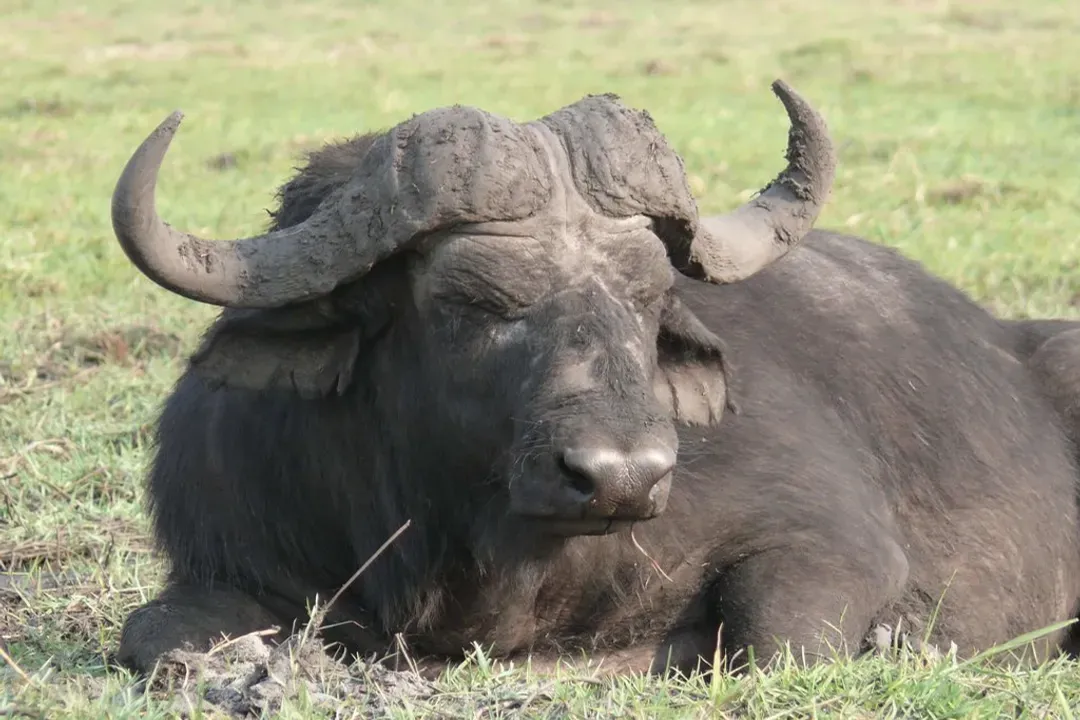
The evolutionary narrative of the water buffalo, scientifically classified as Bubalus bubalis, is a deep dive into Asian megafauna, marked by ancient divergence and profound domestication impacts that shaped its modern forms. [7] To properly understand this creature, it's useful to frame it within the wider Bovidae family, the group that includes cattle, goats, and antelope. The water buffalo belongs to the subfamily Bovinae, yet it shares a distinctive evolutionary path compared to its well-known relative, the domestic cow (Bos taurus or Bos indicus). [1][2] A significant point of comparison often arises with the African buffalo (Syncerus caffer), which, despite sharing the common name "buffalo," diverged from the lineage leading to Bubalus millions of years ago. [9] This early split means that the African and Asian buffalo types represent two distinct evolutionary experiments within the Bovinae subfamily. [9]
# Bovid Roots
The divergence within the Bovidae family is ancient, establishing several distinct tribes. The tribe Bovini, to which both the African and Water Buffalo belong, split from other groups early on. [2] Genetic studies suggest that the separation between the lineage leading to Syncerus (African buffalo) and the lineage leading to Bubalus (Water Buffalo) occurred deep in the evolutionary past. [9] This vast separation explains why, despite superficial similarities in their massive build and social behavior, they are recognized as belonging to separate genera. [9]
When focusing solely on the Bubalus genus, the evolutionary story centers almost entirely in Asia. [7] Within this genus, there is a distinct pattern of diversification. The two main living forms of the domestic water buffalo are the River buffalo and the Swamp buffalo, which are believed to have diverged from a common wild ancestor, likely the now-extinct Bubalus arnee. [1][7] The differentiation between these two types—river and swamp—is one of the most significant events in the recent evolutionary history of B. bubalis, driven heavily by regional adaptations and subsequent human intervention. [1]
| Characteristic | River Buffalo | Swamp Buffalo |
|---|---|---|
| Geographic Center | South Asia, India, West | Southeast Asia, China |
| Horn Shape | Tightly curved, crescent moon | Wide, sprawling, often sickle-shaped |
| Coat Color | Generally dark gray to black | Often lighter, sometimes pinkish/white spotting |
| Primary Use | Dairy production (milk) | Draft work (plowing) [1] |
Understanding this split is critical because it reflects an evolutionary bottleneck imposed by geography and habitat preference before domestication. [1] The River buffalo adapted to drier, often more tropical or subtropical environments where extensive wallowing might not be the primary daily need, whereas the Swamp buffalo is structurally suited for the muddy, waterlogged conditions of river deltas and rice paddies. [1]
# Asian Origin
The ancestral home of the water buffalo lineage is firmly rooted in Asia. [7] Paleontological evidence and genetic data point towards a generalized ancestor inhabiting the Asian continent. [2] The wild ancestor, Bubalus arnee, still exists in fragmented populations, primarily in India and Nepal, though it is critically endangered. [7] The sheer adaptability of the Bubalus lineage allowed it to spread across various Asian environments, leading to the genetic distinctions observed today between the various subspecies and breeds. [2]
The differentiation process, long before human intervention, likely saw populations adapting to local availability of water sources and foraging strategies. [1] For instance, populations thriving near major river systems would naturally select for traits that allowed them to graze on riparian grasses and utilize the water for thermoregulation, setting the stage for the River buffalo type. Conversely, populations moving into low-lying floodplains or marshy delta areas would benefit from adaptations suited to heavy mud and slower-moving waters, paving the way for the Swamp buffalo morphology. [1] This natural environmental pressure established the underlying genetic variation upon which domestication was later layered. [7]
If we look at the broader Bubalus genus, which includes species like the Anoa of Sulawesi, the evolution within the genus shows a tendency towards specialization in island or restricted environments following the main radiation event from the mainland Asian ancestor. [7] However, B. bubalis represents the successful lineage that expanded across the continent and then, critically, across the globe through human assistance. [7]
# Domestication Split
The domestication of the water buffalo is not a singular event but rather a complex process that appears to have occurred independently, or at least resulted in distinct genetic pools, for the River and Swamp types. [1] Current understanding, based on molecular markers and morphological data, suggests that River buffalo populations were likely domesticated in the Indian subcontinent, while Swamp buffalo domestication occurred further east in Southeast Asia, possibly China. [1]
This parallel domestication, occurring in separate geographic cradles, is what solidified the two main morphological and behavioral types recognized today. [1] The selection criteria applied by early farmers reinforced pre-existing ecological adaptations. In the Indian context, a high-yield dairy animal was prioritized, leading to selection for traits like later maturity and increased udder capacity typical of the River buffalo. [7] In contrast, the emphasis in Southeast Asian agriculture, heavily reliant on rice cultivation in flooded fields, was on a powerful, docile animal capable of sustained draft work, thus favoring the robust structure and high tolerance for deep mud characteristic of the Swamp buffalo. [1][7]
Consider the horns as a prime example of this selection pressure. River buffalo horns are described as being more tightly curved and spiraled, traits perhaps favored for aesthetic or management reasons in areas where the animals are kept tethered or in denser herds. [1] Swamp buffalo horns, however, are often massive and spread wide, sometimes exceeding two meters in span, which may relate to dominance displays or simply be a less constrained morphological expression due to the lack of intense, specific dairy selection. [1]
It is fascinating to consider the spread of these animals. The River buffalo, associated with South Asia, spread west into the Middle East, North Africa, and eventually Southern Europe. [4] The Swamp buffalo spread eastward and southward. [7] This geographic spread is not merely a footnote; it represents a successful agricultural expansion aided by a highly efficient ruminant that thrives where cattle might struggle, converting fibrous roughage into valuable resources like milk, meat, and labor. [4]
# Global Presence
The global distribution of water buffalo today is largely a result of historical trade, conquest, and agricultural necessity, rather than purely natural dispersal. [4] For instance, their introduction into Argentina, for commercial purposes, showcases their adaptability outside their native Asian range. [5] The spread into Europe is particularly interesting, as it highlights the adaptability of the River type. Historical records suggest their presence in parts of Italy dating back to the Early Middle Ages, possibly introduced via the Byzantine Empire or through Mediterranean trade routes. [3] While the wild ancestor B. arnee never established itself across Europe, the domestic River buffalo found niches in river deltas and marshy areas, such as the Pontine Marshes near Rome. [3]
The survival of these European populations, often in relative isolation for centuries, is a testament to their hardiness. [3] This isolation, while geographically small compared to the Asian cradle, likely acted as a micro-evolutionary pressure cooker, refining the local breed's traits—such as horn shape and temperament—to suit specific European farming practices. [3] When looking at the historical context, one can draw a parallel between the development of the River buffalo in South Asia and the later development of distinct European strains; both scenarios involved a geographically restricted population undergoing selection that differentiated them from the main genetic pool.
For readers interested in modern ecological dynamics, the concept of rewilding sometimes involves considering the role of escaped or feral domestic buffalo. [3] While the megafauna rewilding discussion often focuses on prehistoric extinctions, the presence of feral water buffalo populations in places like Australia or South America shows how successfully this species can revert to a wild-like existence when environmental conditions permit, albeit starting from a domestic genetic base. [5][3]
# Genetic Distinction
Modern molecular biology provides the clearest evidence for the evolutionary history and separation of the buffalo types. Phylogenetic analyses confirm the deep split between Bubalus and Syncerus. [9] Furthermore, studies specifically on B. bubalis reveal distinct genetic clusters corresponding to the River and Swamp types. [1]
If one were to map the genetic distances, the River buffalo populations from India often cluster separately from the Swamp buffalo populations from China or Thailand, supporting the hypothesis of dual domestication centers. [1] Genes associated with milk protein production and metabolism are often under different selective pressures in River versus Swamp breeds, which is a direct genetic signature of the different agricultural needs driving their evolution post-domestication. [7]
It is worth noting a common point of confusion: while the African buffalo (Syncerus caffer) is sometimes referred to simply as a "buffalo," its evolutionary trajectory is significantly different. It is generally considered a more recent offshoot within the Bovinae compared to the Bubalus lineage, which retained more ancient morphological characteristics despite its own specialization. [9] This molecular distance reinforces that they are not simply geographic variants but distinct evolutionary branches that converged on a large, dark-coated, horned herbivore form through parallel adaptation to African and Asian environments, respectively. [9]
For anyone working with livestock genetics or breeding programs, recognizing these deep genetic markers is crucial. Attempting to cross River and Swamp types (which can occur, leading to hybrids) might yield animals that exhibit compromised traits—for example, a hybrid might have the large horns of a Swamp buffalo but the lower milk yield potential of a River buffalo, demonstrating that the fixed, specialized traits are often genetically linked to their primary purpose. [1] This underscores that evolution, whether natural or human-directed, creates specialized solutions, and mixing those solutions without understanding the underlying genetics can dilute the benefits for which they were originally selected. [7] The evolution of the water buffalo, therefore, is a story of ancient separation, distinct Asian cradles of domestication, and ongoing genetic specialization driven by the needs of human agriculture across millennia. [1][7]
Related Questions
#Citations
Bubalus bubalis: A Short Story - PMC - PubMed Central
Asian water buffalo: domestication, history and genetics - Zhang
How did European water buffaloes survive the freezing winters of ...
The genome of the lowland anoa (Bubalus depressicornis ...
Water Buffalo (Bubalus Bubalis): Facts, Size, Behavior & Swimming
The water buffalo: evolutionary, clinical and molecular cytogenetics
Bubalus bubalis (water buffalo) - Animal Diversity Web
Bubalus bubalis (Linnaeus, 1758) - GBIF
2 - The Evolutionary History of the African Buffalo: Is It Truly a Bovine?