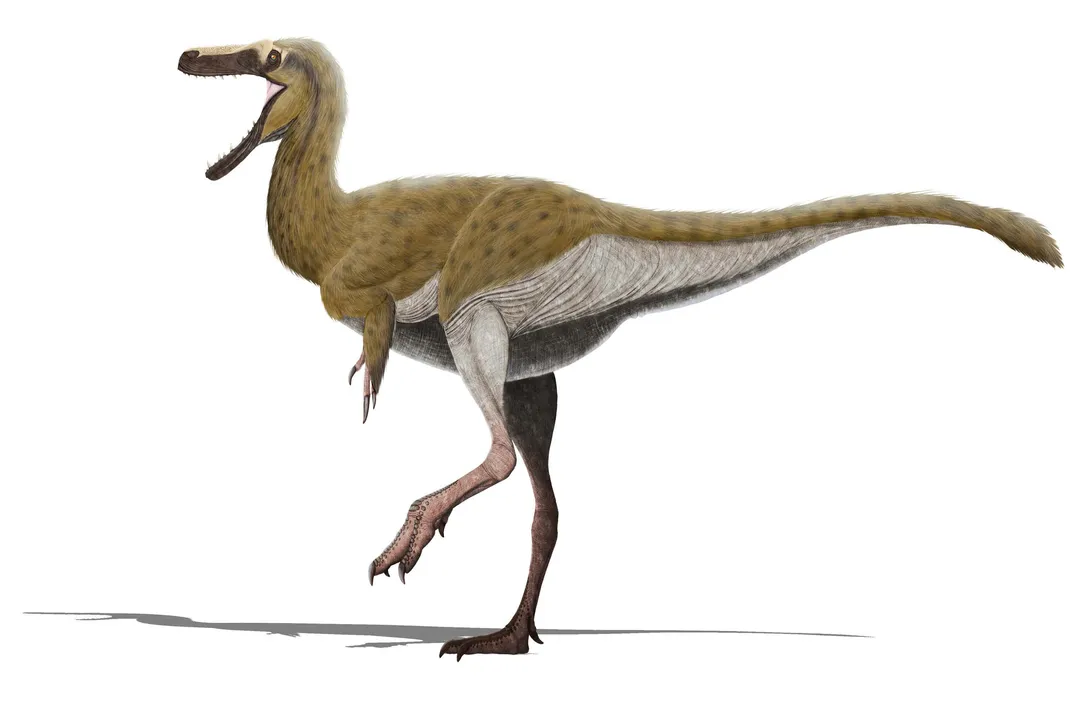
How does the cranial architecture of *Xiongguanlong* suggest a different predatory strategy than *T. rex*?
It suggests precise strikes for snatching smaller prey, unlike heavy grappling
The physical structure of the skull dictates how an animal interacts with its environment and prey. *Xiongguanlong*'s elongated and slender snout is interpreted as an adaptation for quick, precise strikes, likely employed in dense, wooded environments characteristic of the humid Jehol Biota ecosystem. This contrasts fundamentally with the cranial architecture of later tyrannosaurs like *T. rex*, which featured deep, powerful jaws built like a battering ram, optimized for maximum bite force capable of crushing large bones and engaging in heavy grappling with substantial prey items. The difference shows an early specialization in speed versus a later specialization in sheer mechanical power.