Xiongguanlong Facts
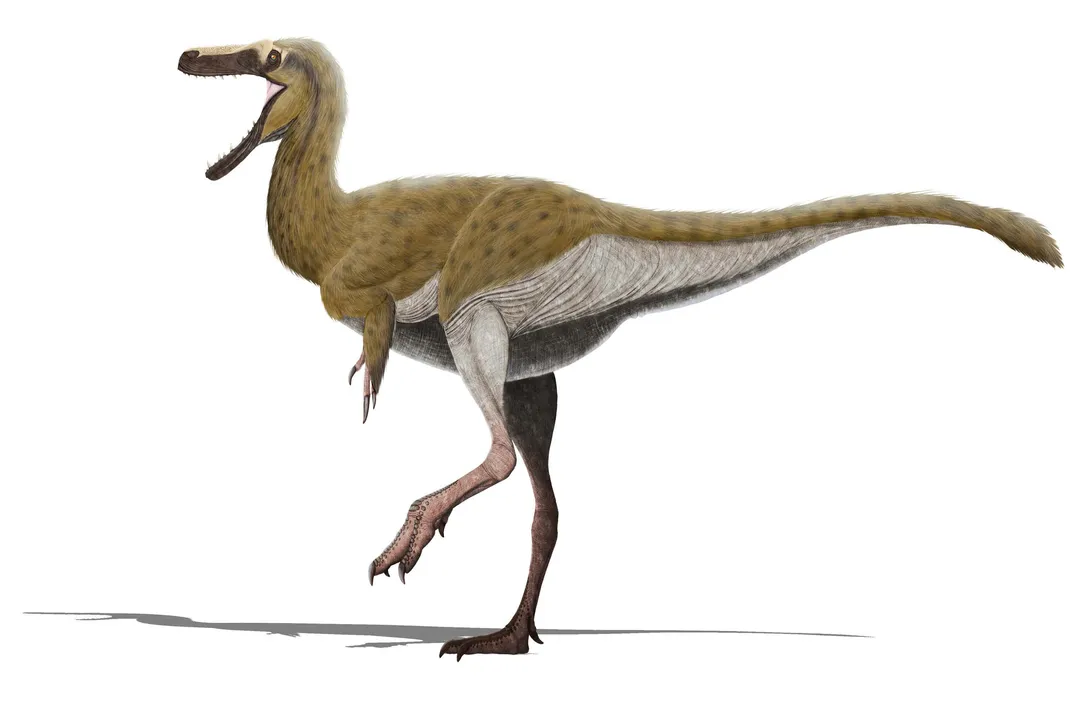
The fossil record occasionally reveals creatures that challenge our preconceived notions about established dinosaur groups, and Xiongguanlong serves as a fascinating example of such a discovery. This dinosaur, recognized primarily for its notably long snout, existed long before the age of giants like Tyrannosaurus rex and helps chart the early evolutionary road taken by the diverse tyrannosauroid family. [5] Its name, Xiongguanlong baimoutunensis, translates roughly to the "Xiongguan Pass Dragon", [1][4][5] stemming from the location in China where its remains were unearthed. [5]
# Naming Origins
The genus Xiongguanlong was formally described in 2010 by a team of paleontologists, including Gao, Mateus, and Shukou. [1][5] The specific epithet baimoutunensis refers to the Baimoutun quarry area in western Liaoning Province, China, a region rich in Mesozoic fossils. [1][2] The foundational evidence for this dinosaur rests upon the holotype specimen, cataloged as IVPP V18555, which is remarkably well-preserved, consisting of a nearly complete skull and significant portions of the postcranial skeleton. [1] This relatively complete material allows for a much deeper understanding of its anatomy compared to species known only from fragmentary remains. [1]
# Jurassic Home
Xiongguanlong inhabited the Earth during the Middle Jurassic period. [1][2][5][8] Specifically, the rock layers where it was found, the Yixian Formation, date back to approximately 168 million years ago. [1][6] This placement firmly sets Xiongguanlong in an era significantly earlier than the Late Cretaceous apex predators often associated with the name tyrannosaur. [5] The Yixian Formation itself is famous globally for preserving a snapshot of an ancient ecosystem teeming with life, including feathered dinosaurs and the earliest birds. [5][6]
# Snout Features
The most defining characteristic of Xiongguanlong is its skull morphology, particularly the elongated, relatively slender snout. [1][8] While later, famous tyrannosaurs evolved deep, powerful jaws designed for maximum bite force to crush bone, Xiongguanlong displays a much different cranial architecture. [5] The skull is described as proportionally long and narrow. [1] This difference in head shape suggests a potentially distinct predatory strategy compared to its later, more robust relatives. [1]
If we consider that the environment of the Jehol Biota—the ecosystem of the Yixian Formation—was likely a humid, wooded landscape, an elongated snout might have been advantageous for quick, precise strikes in dense undergrowth, perhaps snatching smaller, faster-moving prey like early mammals or lizards, rather than engaging in heavy grappling with larger dinosaurs. [5] This contrasts sharply with the heavily reinforced skull of a creature like T. rex, which was built like a medieval battering ram. [5]
# Scale Profile
When thinking of tyrannosaurs, the sheer size often comes to mind, but Xiongguanlong belongs to the lineage before gigantism set in. [5] Based on skeletal reconstruction, this animal was a relatively small predator, estimated to have reached a total length of about 1.7 meters (5.6 feet). [1][8] To put this scale into perspective, a contemporary human is significantly taller than this entire dinosaur. [5] This diminutive stature highlights a crucial point in tyrannosauroid evolution: the group began as smaller, mid-sized hunters before undergoing massive evolutionary shifts to occupy the top predator niches millions of years later. [5]
It is useful to visualize this difference. Imagine the largest Xiongguanlong compared to the later apex predator Tyrannosaurus rex, which could exceed 12 meters in length. [5] This nearly tenfold difference in linear size across the family timeline underscores the immense evolutionary potential held within the early tyrannosauroid group. [5]
| Feature | Xiongguanlong baimoutunensis | Late Cretaceous Tyrannosaurids (e.g., T. rex) |
|---|---|---|
| Time Period | Middle Jurassic (~168 Ma) | Late Cretaceous (~68–66 Ma) |
| Estimated Length | ~1.7 meters (5.6 ft) [1][8] | Up to 12+ meters (40+ ft) [5] |
| Skull Shape | Long, slender snout [1] | Deep, robust, built for crushing [5] |
| Evolutionary Role | Early lineage member | Apex predator |

# Family Standing
The precise placement of Xiongguanlong within the dinosaur family tree has been a subject of scientific discussion, demonstrating the shifting understanding of early theropod evolution. [1][9] Most analyses situate it firmly within the Tyrannosauroidea superfamily. [1][5] Furthermore, many paleontologists group it with other early, lightly built forms like Guanlong and Proceratosaurus within the family Proceratosauridae. [1]
However, the scientific literature presents conflicting views on its placement, which is common as new fossils are analyzed. [9] While commonly cited as a tyrannosauroid, some interpretations suggest that Xiongguanlong might fall slightly outside the core definition of the group, or that its features overlap with other basal theropods. [9] This debate centers on specific features of the skull and limb bones that share traits with both early tyrannosauroids and potentially other basal coelurosaurs. [1][9] The fact that we have such a relatively complete animal from the Middle Jurassic allows researchers to test hypotheses about where the traits defining the later, massive tyrannosaurs first emerged. [1][5]
# Ancient Habitat
Living in the Yixian Formation means Xiongguanlong was a resident of what is now Liaoning Province, China, roughly 168 million years ago. [1][6] This environment was characterized by volcanic activity and featured a mix of lacustrine (lake) and terrestrial settings. [6] The landscape likely supported a diverse array of fauna, including early mammals, various reptiles, and a high diversity of early birds and feathered dinosaurs. [5][6]
As a predator, Xiongguanlong would have occupied a middle ground in the food web relative to other contemporary predators. It wasn't the massive, undisputed top predator that later forms would become. [5] Its existence provides important data points for understanding predator guilds during the Jurassic, showing that the specialized, hypercarnivorous niche was not yet monopolized by the ancestors of T. rex. [1] The animal was part of a complex ecosystem where specialized hunting skills, perhaps speed and agility favored by its smaller size, were necessary for survival. [5]
# Legacy
Xiongguanlong holds significant value not for its fearsomeness, but for its age and morphology. [5] It bridges a substantial gap in the fossil record, appearing about 100 million years before the famous Late Cretaceous tyrannosaurs like T. rex. [5] Studying its nearly complete skeleton allows scientists to track the origins of key tyrannosauroid characteristics—such as the reduction in the number of fingers or the structure of the nasal bones—that would later become exaggerated in its descendants. [1]
The fossil material allows paleontologists to refine phylogenetic trees, showing the branching patterns that led to different predatory styles within the theropod group. It reminds us that the path to apex predation is often slow and involves many small, specialized steps, rather than a single, dramatic leap in size. [5] Xiongguanlong is a key piece of evidence illustrating the early, modest beginnings of one of the most successful and widely recognized dinosaur families in history. [1][8]
Related Questions
#Citations
Xiongguanlong - Wikipedia
Xiongguanlong baimoensis - A-Z Animals
Xiongguanlong Pictures & Facts - The Dinosaur Database
Xiongguanlong - Dinosaur Alive Wiki - Fandom
Xiongguanlong: A New, Long-nosed Tyrannosaurid
A longirostrine tyrannosauroid from the Early Cretaceous of China
Xiongguanlong - Grokipedia
Xiongguanlong - Prehistoric Wildlife
Xiongguanlong: not a tyrannosauroid - The Pterosaur Heresies