How does female Ixodidae distinction relate to their scutum structure when engorged?
Answer
Females can greatly distend their bodies when engorged due to fixed scutum position
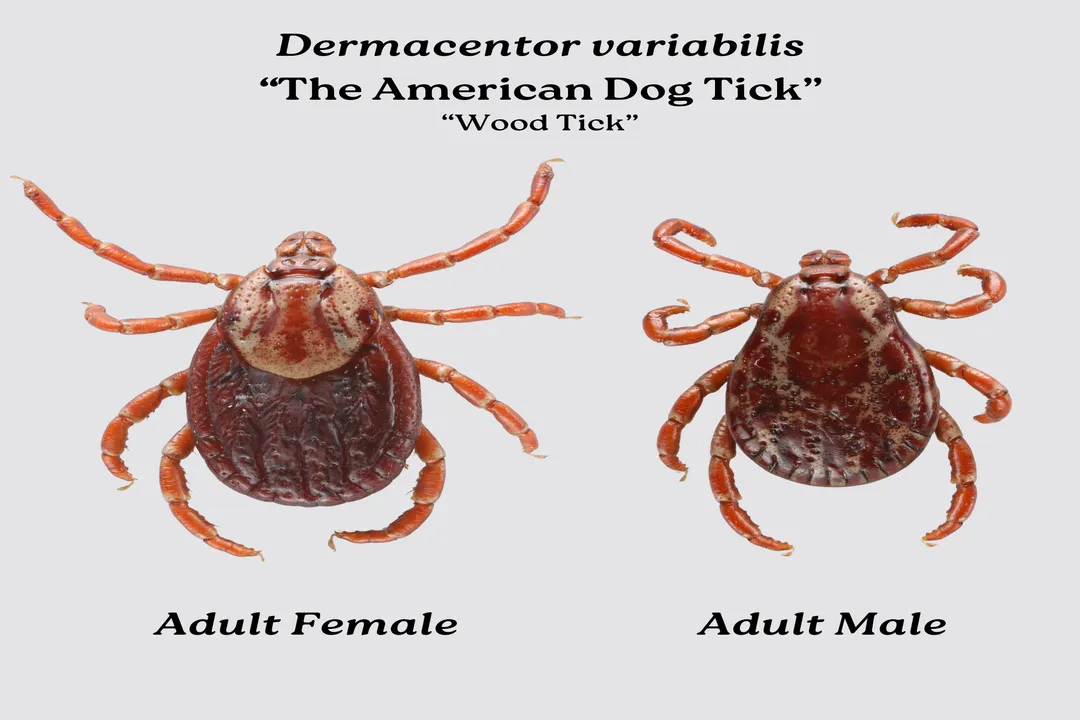
The Family Ixodidae, the hard ticks, exhibits a specific morphological constraint related to the scutum that affects feeding behavior, particularly in females. While males possess scuta that cover their entire dorsal surface, preventing significant body expansion, females have a scutum that is fixed only over a portion of their back. This partial coverage allows the female body beneath it to greatly distend as she engorges on blood. This ability to achieve massive size increase during feeding is a distinguishing characteristic of the Ixodidae family when compared to other tick groups where external coverings might limit distension.
Related Questions
What structural feature defines ticks placed in the Order Ixodida?What defines membership in the Subphylum Chelicerata for ticks?Where is Dermacentor andersoni predominantly found relative to the Missouri River?Which pathogen risk is associated with D. andersoni west of the Missouri River?Which Class groups ticks alongside spiders and scorpions?How does female Ixodidae distinction relate to their scutum structure when engorged?What microscopic feature differs between D. andersoni and D. variabilis spiracular plates?What does the term Acarina represent in the context of tick classification?Which bacterium, known to cause reproductive alteration via cytoplasmic incompatibility, is hosted by D. andersoni?Why is D. andersoni specifically the Rocky Mountain Wood Tick while D. variabilis is sometimes called the Wood Tick in the East?