Why does the smooth structure of the wasp stinger allow for repeated use?
It permits the wasp to withdraw the stinger without tearing its own tissues.
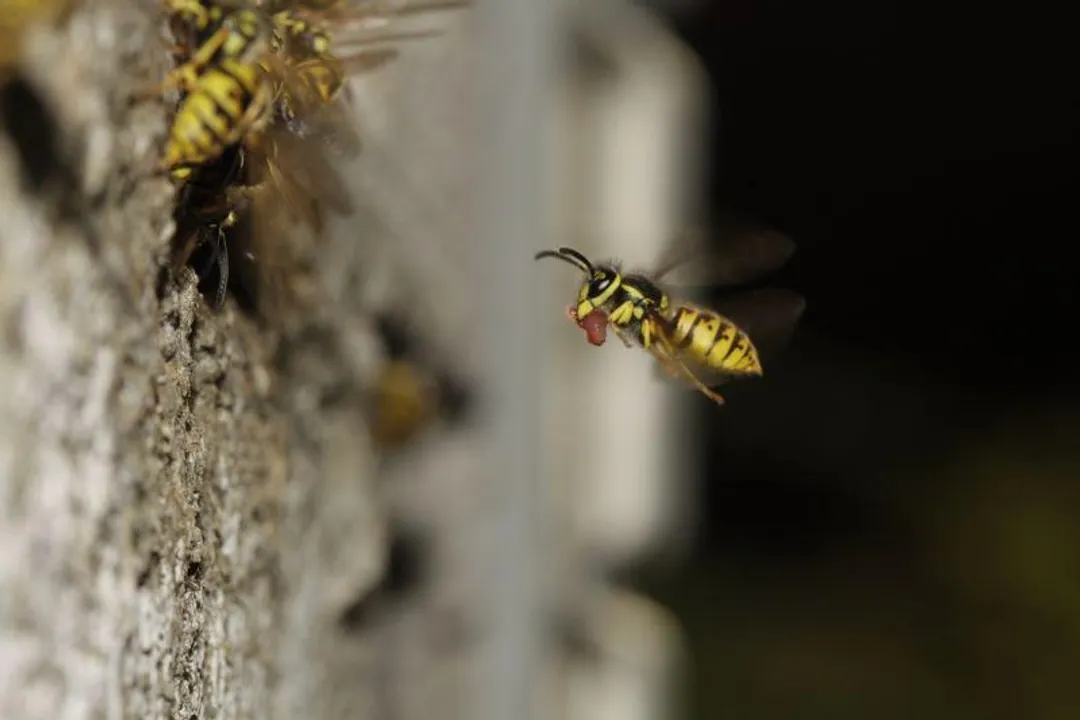
The physical architecture of the wasp stinger is a crucial adaptation for defense and predation, especially when contrasted with the honey bee's stinger. A wasp's stinger is characteristically smooth and lacks barbs. This smoothness is highly advantageous because it allows the wasp to inject venom and then withdraw the entire apparatus from the target's skin or exoskeleton without causing tearing or snagging on underlying tissues. Because the stinger remains intact, the wasp retains full functionality and is capable of stinging multiple times consecutively. This multi-sting capability is a significant defensive advantage, ensuring repeated deployment of venom against threats, unlike the honey bee, whose barbed stinger typically results in fatal detachment.