What are the physical characteristics of an owl?
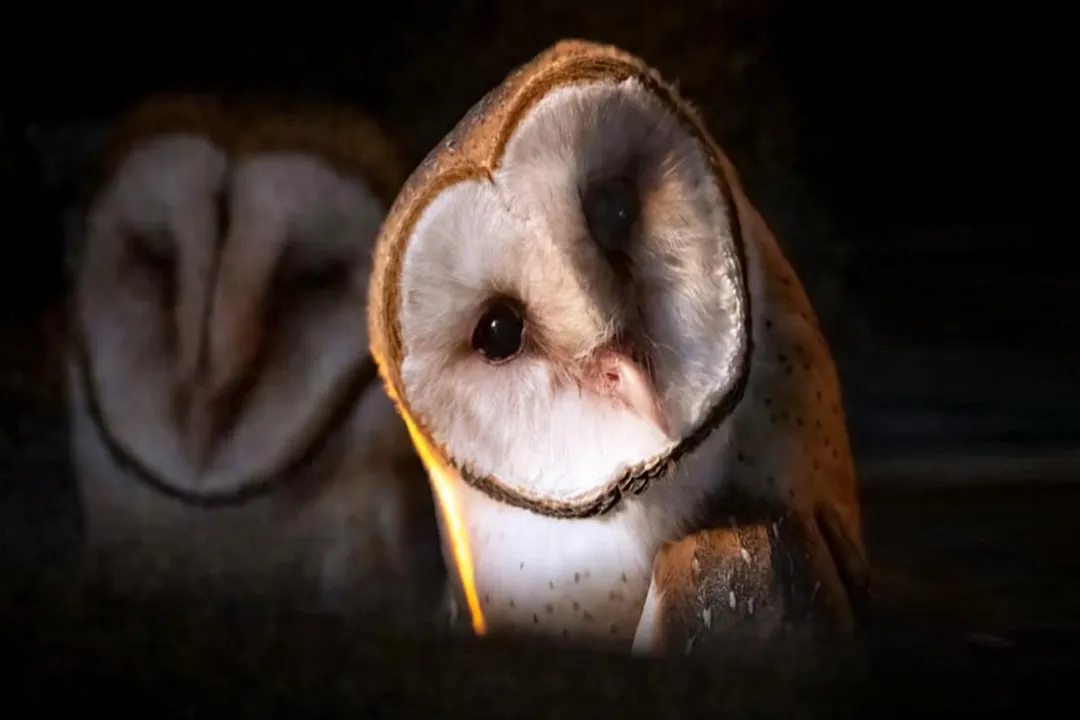
Owls, birds of prey found across the globe except in the polar regions and some remote islands, possess a suite of physical adaptations that make them highly effective nocturnal hunters. [2][3] While the term "owl" encompasses numerous species, from the diminutive Elf Owl to the imposing Eurasian Eagle-Owl, they share distinctive physical traits centered around exceptional senses and specialized flight mechanics. [2][9][3][10] Their overall appearance, often characterized by large heads and cryptic plumage, immediately sets them apart from other avian groups. [8]
# Large Eyes
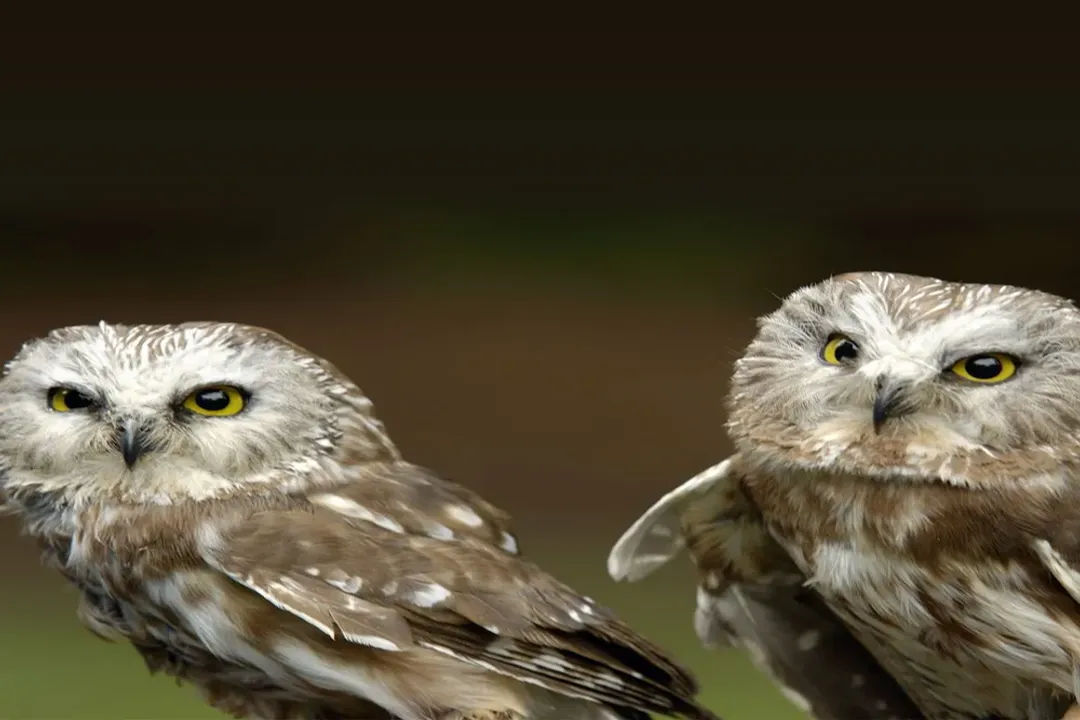
Perhaps the most immediately striking feature of an owl is its massive eyes, which are disproportionately large compared to the size of its head and body. [2][4] This size is directly related to their primary hunting style. Owls rely heavily on vision, even in very low light conditions, allowing them to spot prey in near darkness. [2][5] Unlike humans and many other birds, owl eyes are forward-facing, providing them with excellent binocular vision. [2] This front-facing orientation grants superb depth perception, which is crucial for judging the exact distance to moving prey before striking. [2][4]
However, this excellent visual positioning comes with a significant structural trade-off: the eyes are not spherical, and they are fixed within their bony sockets. [4][1] This means an owl cannot move its eyes to scan its surroundings like we do. [4] To compensate for this fixed gaze, nature has equipped owls with an astonishingly flexible neck, allowing them to rotate their heads up to 270 degrees in either direction from a forward-facing position. [1][4] This extreme flexibility requires a specialized vertebral structure, with several extra vertebrae compared to the human neck, giving them the unique ability to turn their heads to see behind them without having to reposition their entire body. [4] Furthermore, pupil shape varies; for instance, the American Barn Owl possesses round pupils, whereas many others feature elliptical or slit-like pupils. [7][2]
# Sound Funnel
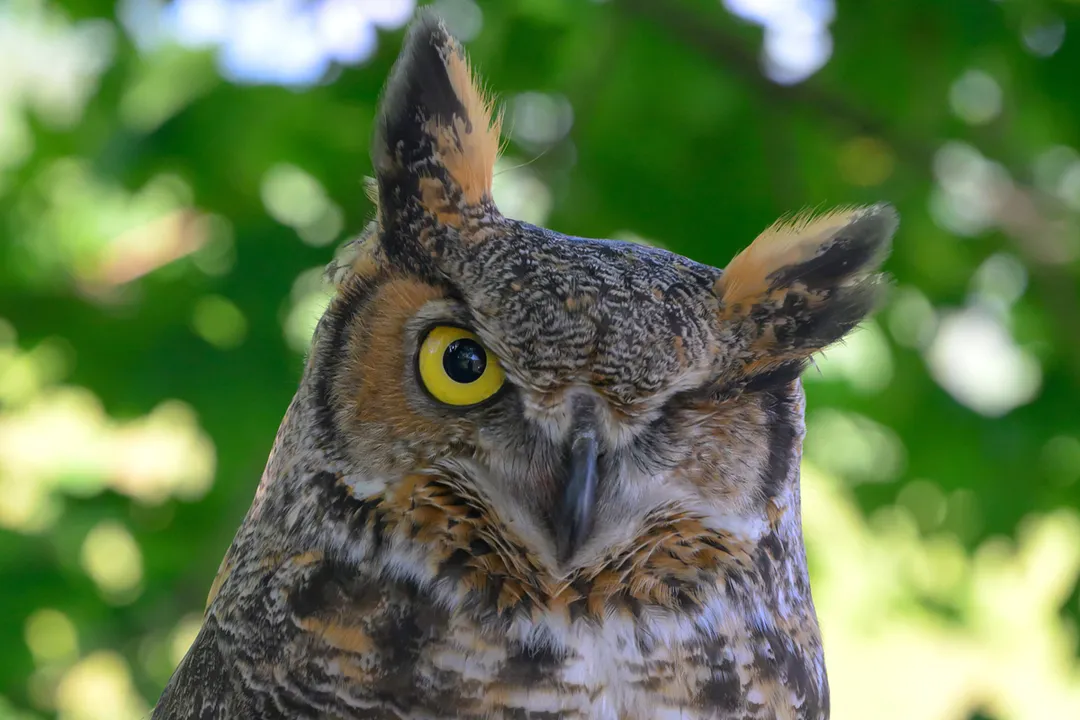
While vision is critical, an owl's hearing is often just as important, and sometimes even more so, especially for species that hunt in complete darkness or dense cover. [1] Many owls exhibit a physical structure designed to maximize sound capture: the facial disc. [2] This arrangement of stiff feathers radiates outward from the eyes and beak, creating a dish-like structure that helps funnel faint sounds toward the ear openings located on the sides of the head. [2][4]
The ear openings themselves are often asymmetrical in placement between the left and right sides of the head in many species, most notably in the Barn Owl. [1][7] This slight vertical offset means that sound waves reach one ear a fraction of a second before the other, and at a slightly different intensity. [1] The owl's brain processes these minuscule time and volume differences with incredible precision, allowing the bird to pinpoint the exact horizontal and vertical location of a small rustle in the grass or under snow, sometimes with pinpoint accuracy. [1] The structure of the feathers within the disc is also adapted to reduce the sound of air moving over them, further aiding in quiet hunting. [1]

# Silent Flight
The ability to approach prey unnoticed is essential for a nocturnal raptor, and this depends entirely on their specialized plumage. [5] Owls are renowned for their near-silent flight, a characteristic that separates them from most other birds of prey. [3] This quiet movement is achieved through several unique modifications to their flight feathers. [5]
The leading edge of the primary flight feathers possesses a stiff, comb-like fringe that breaks up the turbulent airflow, muting the noise typically generated by air passing over a wing surface. [5] Following this serrated edge, a soft, velvety down covers the upper surface of the feathers, absorbing any remaining sound waves. [5] Finally, the trailing edge of the wing has soft, frayed edges that help dissipate turbulence without creating a whooshing sound. [3] This combination of features means that the sound barrier for an owl's approach is typically the faint sound of the prey itself, rather than the predator flying overhead. [5]
In addition to these flight adaptations, the overall color and pattern of the feathers serve as excellent camouflage. [5] Plumage patterns—ranging from mottled browns and grays to pale whites—allow many species to blend perfectly into tree bark, dense foliage, or shadowed cavities during their daytime roosts. [8][5]
# Size Spectrum
The physical diversity within the order Strigiformes is vast when looking at sheer physical dimensions. [2] This variation reflects the wide range of ecological niches owls occupy. [3] On one end of the scale is the small, specialized Elf Owl, weighing only about 1.5 ounces and capable of roosting comfortably in a cactus cavity. [3] Conversely, some of the largest owls, such as the Eurasian Eagle-Owl, can weigh over nine pounds and possess a wingspan that can exceed six feet. [9]
It is interesting to observe how size often correlates with habitat and prey base. A smaller owl might specialize in catching large insects or small rodents in dense scrubland, where maneuverability is key, whereas a giant species requires more substantial prey like rabbits, large birds, or even small mammals requiring a long, uninterrupted glide path for a successful strike. [3] Understanding the species-specific size data is often the first step in identification, as spotting a bird of prey in the field immediately narrows down the possibilities if one can estimate its size relative to surrounding objects. [10]
# Grasping Tools
As birds of prey, owls are equipped with formidable tools for capturing, securing, and dispatching their meals. [4] Their feet are powerful and muscular, terminating in four toes equipped with long, curved, and exceptionally sharp talons. [2][4] These talons are essential for grasping prey firmly enough to prevent escape during the flight back to a perch. [4]
Most owl species exhibit a characteristic foot arrangement known as zygodactyly. [4] This means two toes point forward and two point backward. However, owls have a unique feature: the outer toe is reversible. [1][4] This allows the owl to shift one outer toe backward so that it has two toes facing forward and two facing backward when landing or perching, or to point two toes forward and two backward when attacking prey. [4] This flexibility in toe arrangement enhances their grip on uneven surfaces and struggling victims. [1]
Complementing the powerful feet is the beak, which is short, strong, and sharply hooked. [2][8] The hooked shape is perfectly designed for tearing flesh from their captured animals. While the beak is not the primary tool for killing—that job belongs to the talons—it is vital for processing the meal into manageable portions that can be swallowed whole or in large chunks. [4]
# Head Structure
Beyond the eyes, the owl's head structure is built for sensory input and protection during impact. [4] Their skulls are relatively large, housing those impressive eyes and ears. [4] While the external ear opening is hidden beneath the feathers of the facial disc, the skull itself has protective bony structures around the orbit and ear canals. [4] This reinforced structure likely helps cushion the impact when the owl strikes prey with high velocity, absorbing shock that would otherwise cause significant injury. [4] This specialized cranial architecture underscores the predatory focus of nearly every physical aspect of owl anatomy.
Related Questions
#Citations
Characteristics and Behavior of Owls - Carolina Knowledge Center
Owl - Wikipedia
About Owls I Owl Research Institute
Some Special Owl Features - Alaska Department of Fish and Game
How to identify owls | The Wildlife Trusts
Eugene – Great Horned Owl | College of Veterinary Medicine
American Barn Owl - All About Birds
[PDF] Let's Learn About Owls
Eurasian Eagle Owl - San Francisco Zoo & Gardens
Physical Appearance - Owls