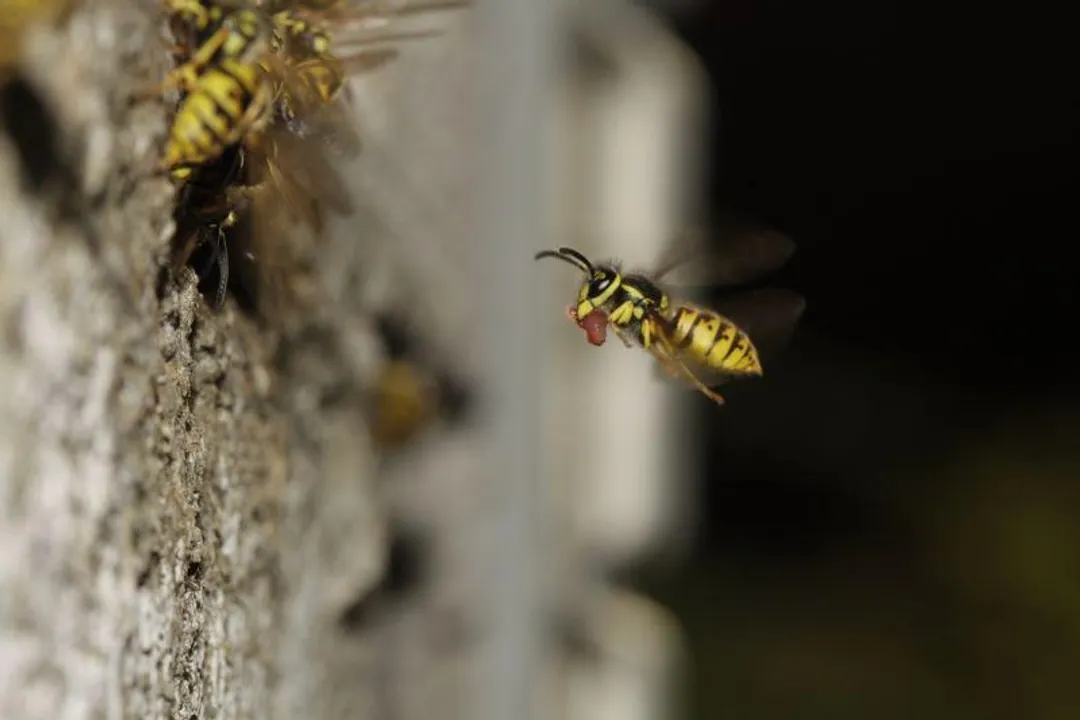
What evolutionary purpose does the stark black and yellow striping serve for many wasps?
It acts as a visual warning (aposematism) signaling unpalatability or defensive capability.
The bright, high-contrast coloration frequently observed on social wasps, such as the vivid black and yellow striping seen on yellowjackets, is an evolutionary strategy called aposematism. This patterning serves as a clear, unambiguous visual signal directed towards potential predators. The message communicated by this striking palette is one of danger, indicating that the insect is either unpalatable due to chemical defenses or, more commonly in wasps, possesses a potent defensive weapon—the sting. A predator that experiences the negative consequences of attacking such an insect, such as receiving a venomous sting, quickly learns to associate that specific high-contrast pattern with pain and begins to actively avoid all similarly marked insects in the future, offering protection to the entire wasp population displaying that warning sign.