Morphologically, what structure is the wasp's stinger considered to be a modification of?
Answer
A modified ovipositor
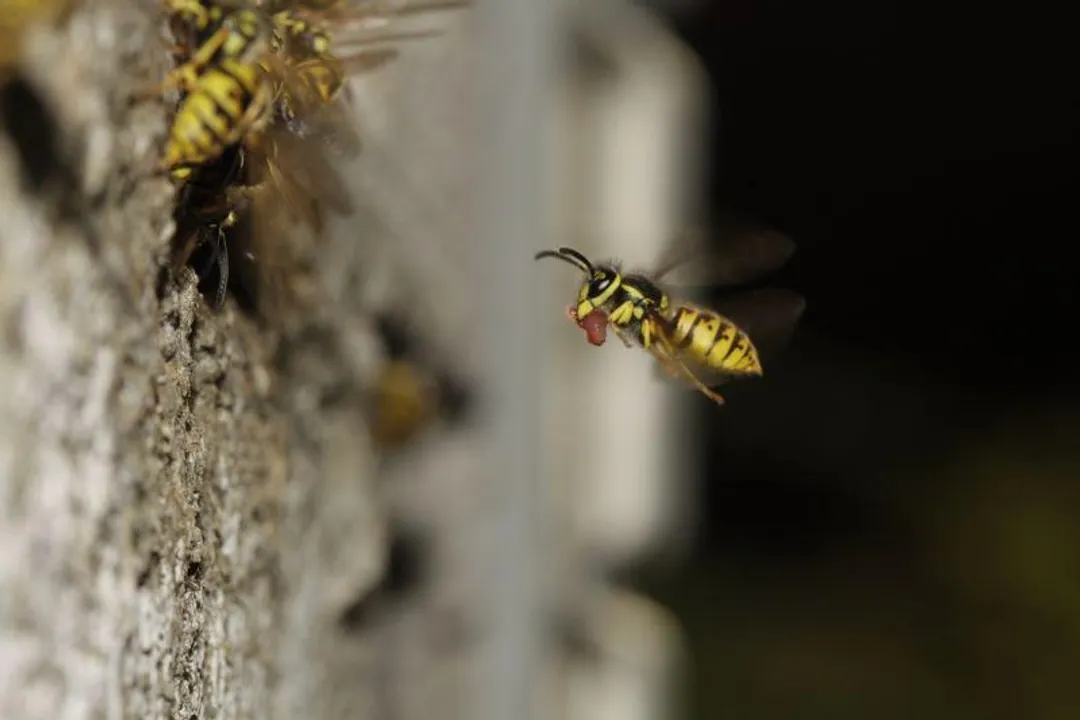
The stinger apparatus, which is exclusively found in the female caste of wasps, is not a completely novel structure but rather a specialized derivative of existing insect anatomy. Specifically, the stinger is recognized as a modified ovipositor, the organ females use for laying eggs. In wasps, this structure has been adapted primarily for offensive and defensive roles. Beyond defense against threats, this modified organ is also employed by many predatory species to inject venom, effectively paralyzing prey items such as spiders or caterpillars before they are transported back to the nest to provision the developing larvae.
Related Questions
What anatomical feature marks the narrow constriction connecting the wasp's thorax and abdomen?What is the believed function of the typically three ocelli located on a wasp's head?How do the hamuli facilitate efficient flight in Hymenoptera wings?Compared to bees, what is characteristic of the wasp integument?Why does the smooth structure of the wasp stinger allow for repeated use?What evolutionary purpose does the stark black and yellow striping serve for many wasps?Morphologically, what structure is the wasp's stinger considered to be a modification of?What type of antennae structure is commonly observed in social wasps like yellowjackets and hornets?What specific morphological feature is noted in mud daubers related to subduing prey?According to typical size ranges, which social wasp is generally the largest encountered, sometimes exceeding an inch in length?Despite being configured for chewing, what capability do wasp mouthparts often retain for utilizing certain food sources?