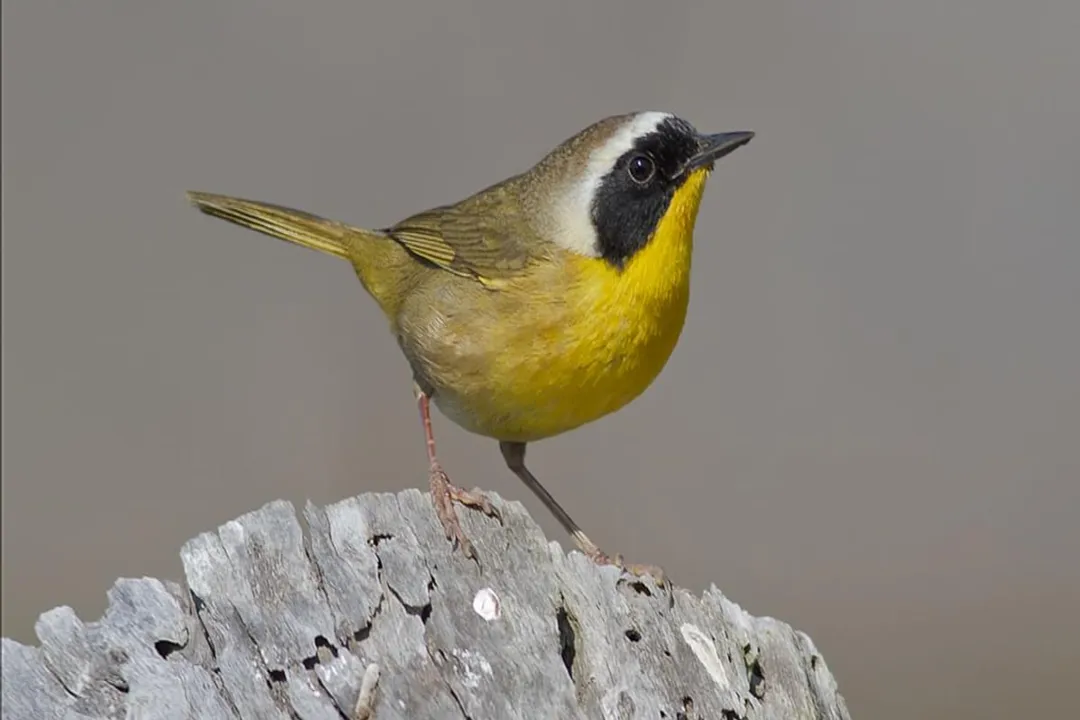
Why does the Common Yellowthroat delay southern migration later than many canopy feeders?
Their ground-level food source persists later into the fall
The Common Yellowthroat's specialized ecological niche grants it a significant advantage regarding migration timing compared to many other warblers that inhabit the high canopy. Canopy-dwelling warblers often rely on caterpillars found on deciduous trees; once leaves drop early in the fall, these food sources disappear. In contrast, the Yellowthroat forages closer to the ground in leaf litter and dense undergrowth. The invertebrates hidden beneath these lingering leaves persist later into the autumn season. This reliable, low-level food supply allows the Common Yellowthroat to be one of the hardier warblers, enabling them to delay their southern departure well after many of the higher-feeding canopy species have already moved on.