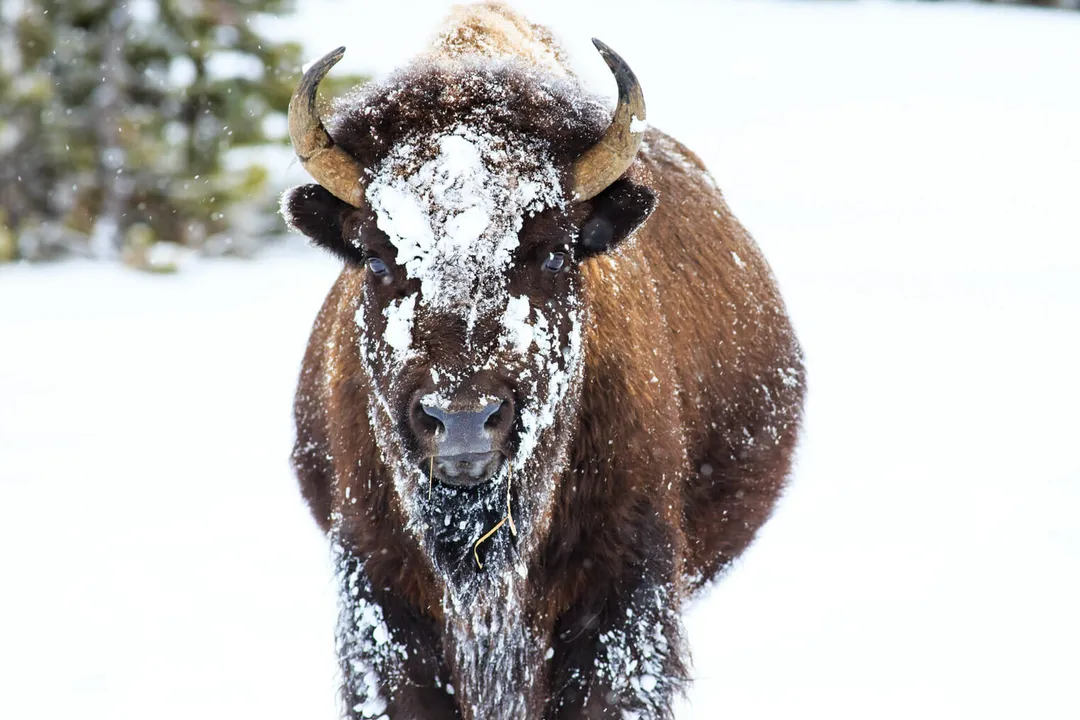
Why does an impenetrable ice layer covering forage present a more severe danger than deep snow for bison?
The ice layer renders the bison's primary foraging tool—their head—nearly useless against the solid barrier
While bison are exceptionally adapted to manage heavy snowfall using their head-plowing technique, an unexpected overlay of ice represents a much graver survival threat. This scenario typically occurs when rain falls onto existing snow and subsequently freezes, creating a dense, solid, and often deep layer of ice directly atop the desirable dormant grasses. Because the bison's snow-clearing mechanism relies on displacing loose snow with force, this solid ice sheet effectively blocks their primary access route to nutrition. When the head-plow cannot break through this impenetrable barrier, the animal's ability to forage is completely cut off. This immediate cessation of food intake forces a rapid, stressful reliance on previously banked energy reserves, potentially leading to significant mortality if the icing event is prolonged, as their physical adaptations are optimized for snow depth, not ice penetration.