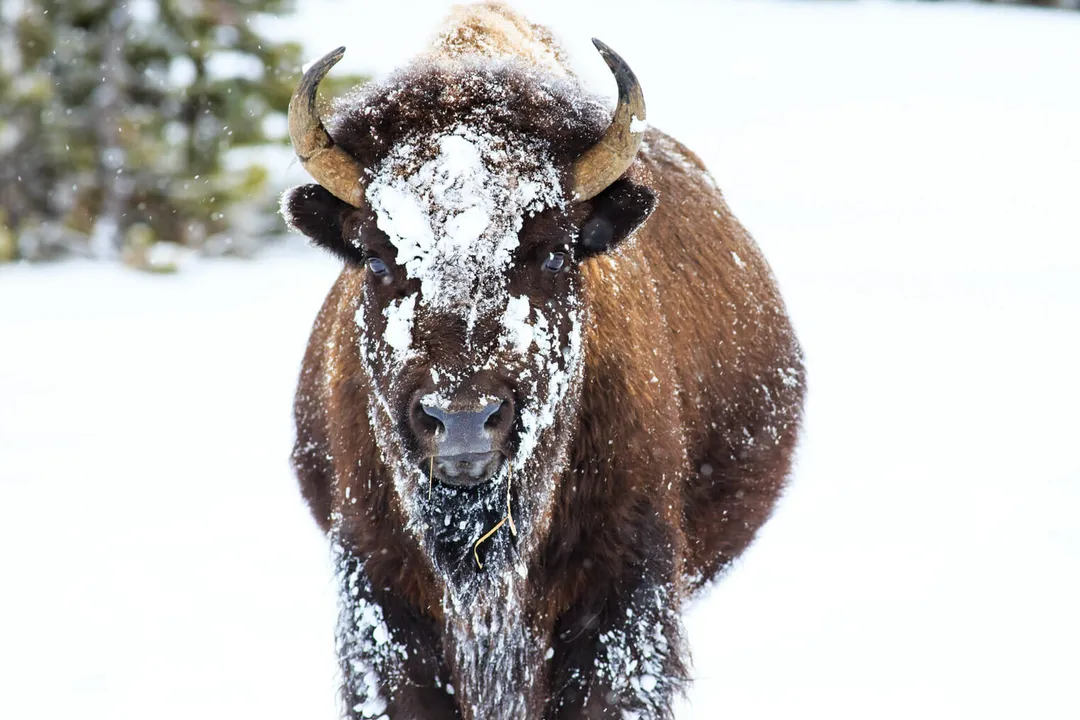
What physiological adjustment allows bison to drastically reduce energy needs during winter scarcity?
They possess the ability to lower their metabolic rate during periods of scarcity
Winter survival hinges on managing high energy demands against dwindling, lower-quality food sources. Bison exhibit a crucial physiological adaptation known as physiological downshifting. This is an internal, non-voluntary mechanism that allows the animal to consciously slow down its overall rate of energy consumption by lowering its basal metabolic rate. This drastic reduction in energy expenditure is essential because the energy required to move through deep snow and maintain core warmth under harsh conditions often outstrips the calories gained from scraping together sparse winter forage. The success of this metabolic slowdown is directly dependent on the previous growing season, as the animal must have built substantial fat reserves during the abundance of summer and fall to fuel this slower metabolic state throughout the lean winter months.