What helps a horned lizard survive?
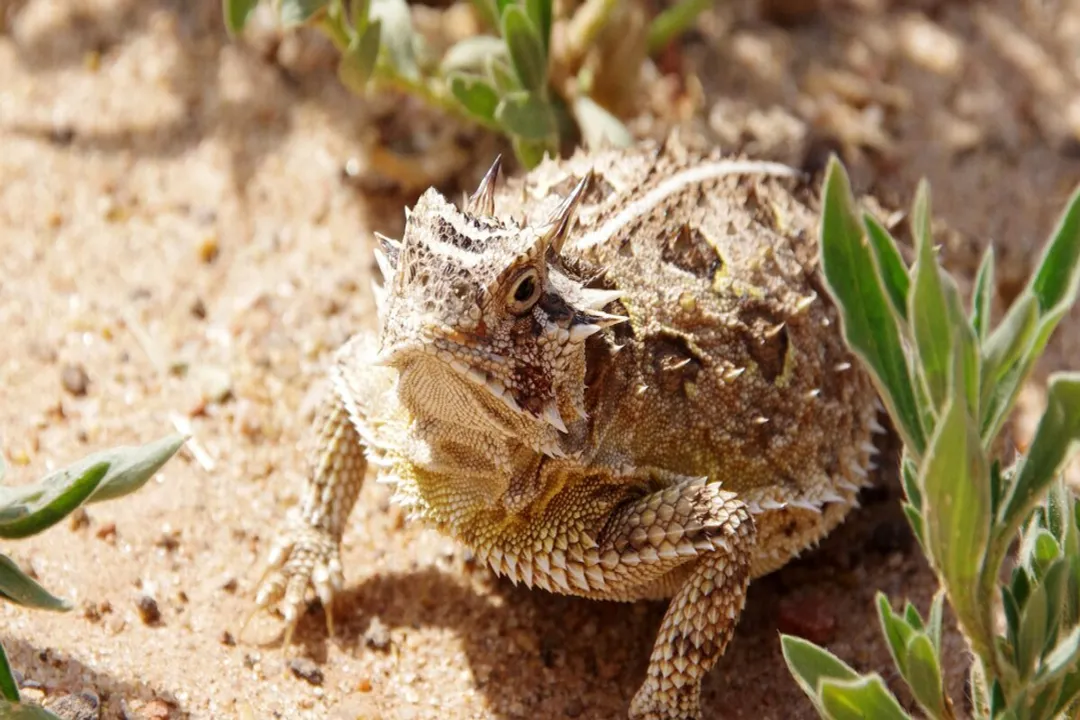
The horned lizard, often instantly recognizable by its flattened, spiky appearance, is a masterclass in desert survival, having evolved remarkable traits to thrive in some of North America’s harshest, driest environments. These creatures, which belong to the genus Phrynosoma, rely on a specific suite of behavioral and physiological adaptations to manage temperature, find scarce resources, and avoid becoming a meal. Successfully navigating their world requires more than just impressive spikes; it demands specialized feeding habits and unique ways of interacting with moisture.
# Water Acquisition
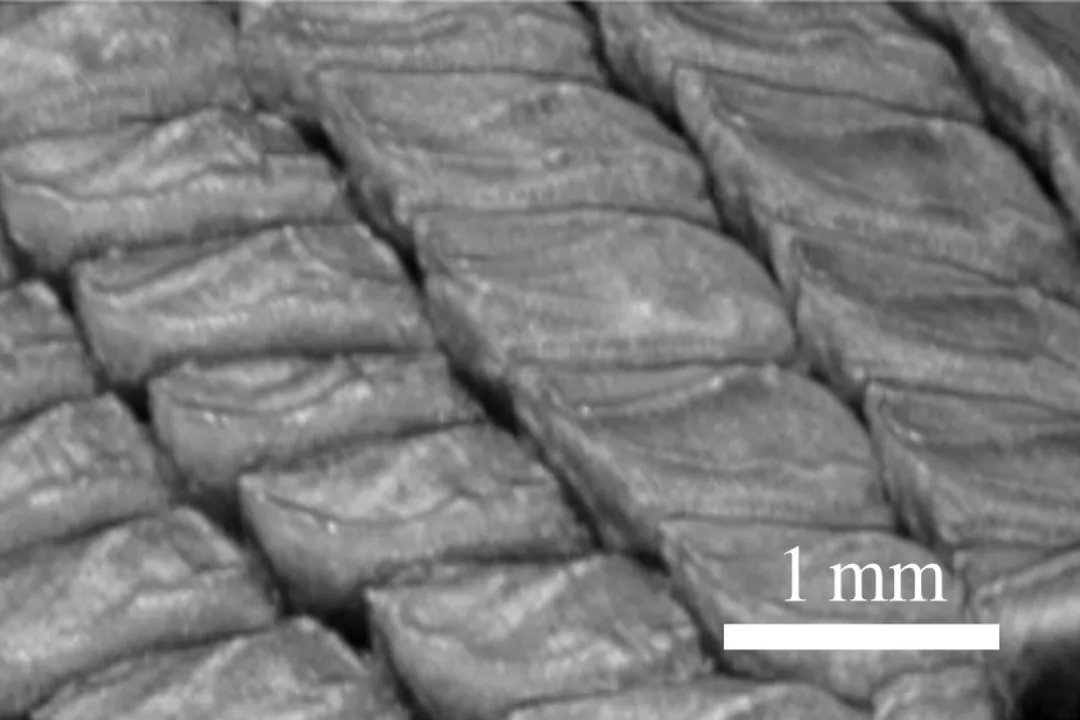
Perhaps one of the most astonishing survival tools employed by the horned lizard involves hydration, particularly in arid settings where standing water is rare or nonexistent. Unlike many other reptiles that must actively drink, horned lizards possess an extraordinary ability to absorb water directly through their skin and specialized scales. This mechanism is passive but highly effective. When the environment provides it—such as after a rainfall, during heavy dew, or when they press themselves onto damp soil—water moves through microscopic channels between their scales and into the lizard’s body. This passive collection system allows them to efficiently capture sporadic moisture without expending precious energy searching for puddles. Given the intense evaporative water loss expected under desert sun, this specialized dermal absorption acts as a critical safety valve, effectively turning the cool, damp earth or morning dew into a personal, accessible water source.
# Diet Specificity
Survival in the desert hinges on efficient energy gathering, and the horned lizard has evolved an incredibly narrow dietary focus to meet this need. Their diet is almost entirely composed of ants, making them highly specialized insectivores. While they may occasionally consume other small invertebrates, harvester ants are frequently the preferred, and most necessary, food source. This reliance requires the lizard to patrol ant trails and actively hunt these small, numerous insects throughout the day.
The specialization is so profound that the health and persistence of local harvester ant colonies directly dictate the local horned lizard population's viability. For a juvenile mountain horned lizard, for instance, consistent access to these small, protein-rich meals is essential for growth and development, which can sometimes lead to difficulties if their specific prey base is disturbed or inaccessible in a captive setting. The sheer volume of ants required for an adult lizard to sustain itself highlights just how critical the predator-prey relationship is for their energy balance in an environment where high-caloric intake must be balanced against water conservation.
# Camouflage Mastery
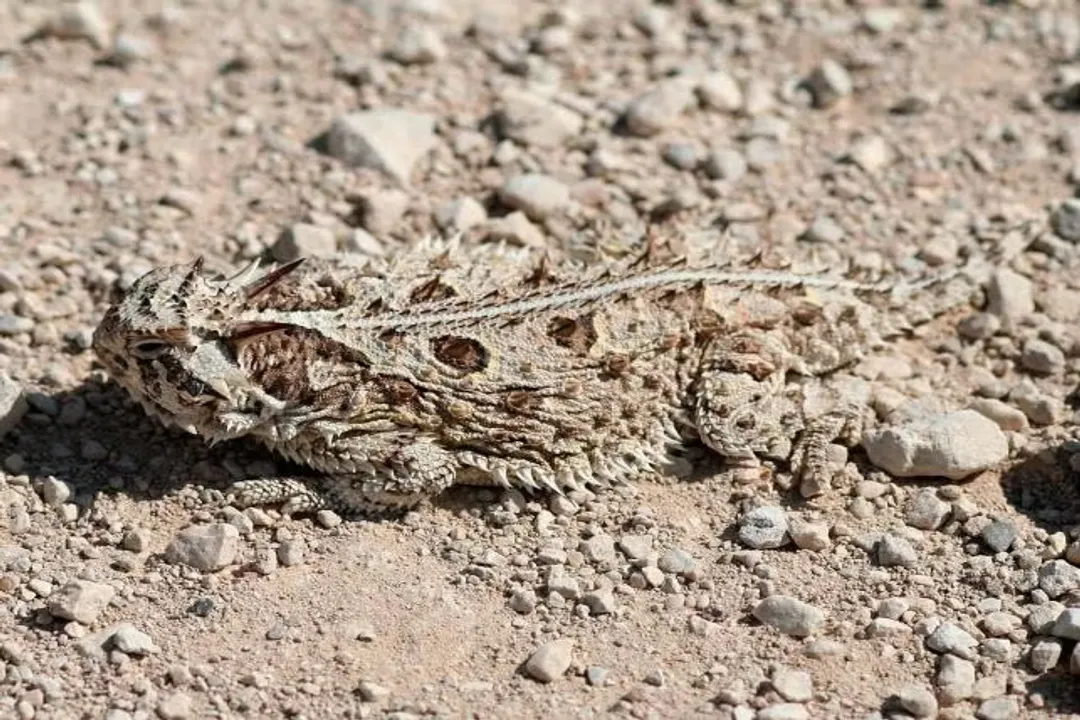
To avoid predation from birds of prey, snakes, and mammalian carnivores, the lizard’s physical appearance is its first line of defense. Horned lizards exhibit superb cryptic coloration, meaning their skin patterns and shades—ranging through browns, grays, and tans—allow them to blend almost perfectly with the sand, gravel, or rocky substrate they inhabit. Their body shape is also key; being relatively flat and wide helps minimize shadows and allows them to press themselves against the ground, further obscuring their outline.
When threatened, they may flatten their bodies further or remain motionless, relying entirely on their ability to disappear into the background. The effectiveness of this strategy is immediately diminished if the lizard is forced onto an unfamiliar substrate, such as dark asphalt or lush, green grass, which is why maintaining access to their preferred open, sparsely vegetated areas is so vital for their daily safety.
# Defense Tactics
Beyond hiding, horned lizards have developed several active and passive defensive maneuvers once spotted or cornered. The most obvious features are the horns, which are actually modified, non-retractable scales. These spikes serve a protective function by making the lizard difficult, if not impossible, for a predator to swallow whole.
If a predator persists, the lizard can rapidly inflate its body with air, puffing up its ribs and skin to make itself appear significantly larger and more intimidating, effectively wedging itself between rocks or simply presenting a much larger, spikier target. While some species are famous for a final, dramatic defense—squirting blood from their eyes—this behavior is usually reserved for mammalian predators and is a specialized adaptation that serves as a last resort against specific threats. This chemical defense mechanism is not universally deployed but represents an extreme adaptation to specific predator types.
# Thermoregulation Needs
As ectotherms, horned lizards must carefully manage their internal body temperature using external heat sources—a process known as thermoregulation. Survival throughout the active day depends on achieving an optimal body temperature that allows for efficient digestion and movement. This necessity dictates much of their daily behavior. They spend early mornings and cooler parts of the day basking motionless in the sun, often positioned on dark rocks or soil which absorb heat quickly.
Their preferred habitat reflects this need: open, sunny areas with accessible ground cover, often characterized by sandy or gravelly soil, provide the necessary elements for both basking and quick escape or burial. If they overheat, they must retreat to cooler microclimates, such as seeking shade under vegetation or burying themselves slightly into the cooler subsurface soil until conditions are suitable to resume activity.
Given their reliance on specific soil types (gravel/sand) for camouflage and potential water absorption sites, the fragmentation of their habitat isn't just about losing space; it's about losing the functional, interconnected microclimates they require for basic daily routines like basking and rehydrating. If a patch of preferred basking substrate is isolated by development or dense vegetation, the lizard may risk exposure or insufficient warming time, hindering its ability to hunt effectively.
# Human Factors
While nature has equipped the horned lizard with incredible tools for the desert, modern human activity poses significant, often insurmountable, obstacles to their survival. Habitat destruction through development and agriculture is a primary concern, as it eliminates the specific open, sunny, sandy, or gravelly environments they require for basking, hunting, and water collection.
Furthermore, the widespread use of insecticides has a devastating indirect impact. Because the lizards rely almost exclusively on ants for food, the heavy application of pesticides can wipe out their necessary food source, leading to starvation even if the habitat itself remains physically intact. On roadways, their tendency to bask on warm asphalt makes them highly susceptible to being run over, creating significant mortality rates in disturbed areas.
Finally, well-meaning but misguided attempts to "rescue" or keep them as pets often hinder survival efforts. Handling lizards can cause stress, and removing them from their established territory means they lose the precise, hard-won knowledge of where food, water, and shelter are located. For those wishing to support these animals, the best course of action is generally to observe them from a distance, ensure local pesticide use is minimized, and never move a wild lizard from the area where it was found. Supporting ethical, legal captive breeding programs, rather than removing wild individuals, helps maintain the wild populations needed for ecological stability.
#Videos
How Do You Keep A Horned Lizard Alive? - YouTube
Related Questions
#Citations
What You Can Do to Help or Hinder Horned Lizards
How Do You Keep A Horned Lizard Alive? - YouTube
Reddit knowledge/info for Horned Lizard. : r/reptiles
The horned lizard has a very specific method for hydrating itself.
How the Texas Horned Lizard Stays Hydrated in the State's ...
Help with horned lizard (phrynosoma platyrhinos) - Reptile Forums
[PDF] management of texas horned lizards
Texas Horned Lizard - Missouri Department of Conservation