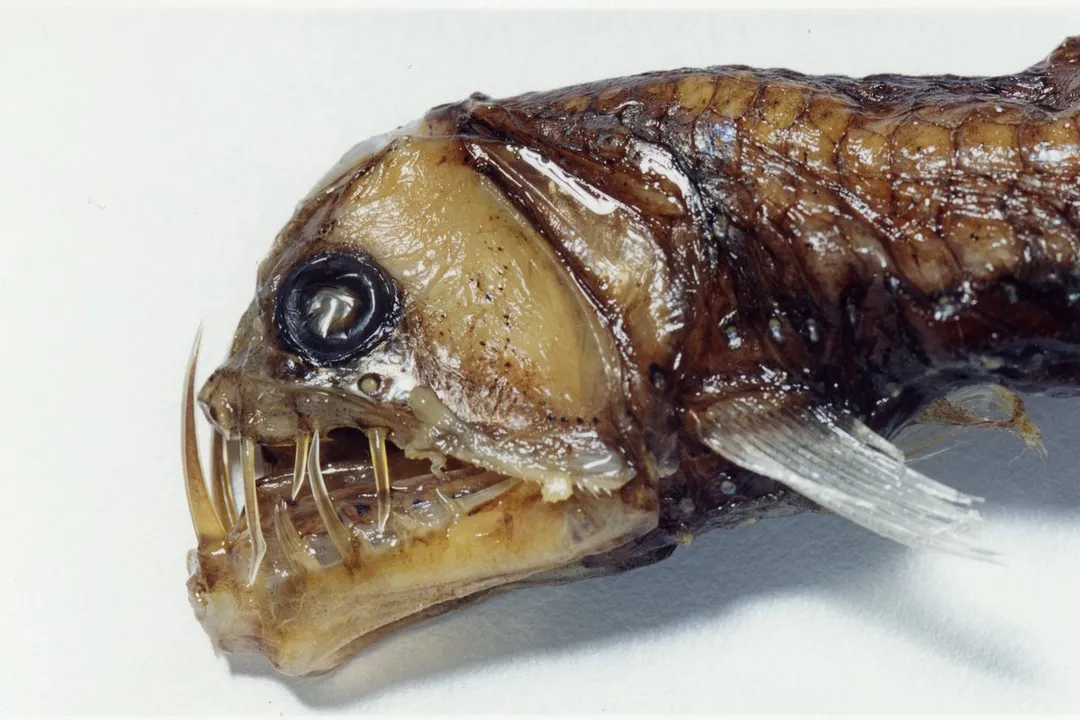
Why does a viperfish often suffer damage when brought to the surface?
Answer
Its anatomy is optimized for high-pressure consistency
The viperfish is biologically and physically optimized for the intense, constant pressure found at depths of around 1,000 meters. Its internal anatomy and skeletal structures have evolved specifically to thrive under these conditions. When brought to the surface in a deep-sea trawl, the rapid and drastic reduction in pressure causes catastrophic structural failure, often leading to the fish appearing severely damaged or inflated. This fragility serves as an indirect measure of how successfully the species has adapted to its deep-sea niche.
Related Questions
Why can the teeth of a Chauliodus sloani not fit inside its mouth when closed?What is the primary evolutionary function of the ventral photophores on a viperfish?Which anatomical features enable the viperfish to consume prey larger than itself?To which scientific order does the genus Chauliodus belong?Where is the Pacific Viperfish primarily located?What is the predatory purpose of the barbel photophore found on the chin?In which ocean zones do modern viperfish species typically reside?Why does the viperfish typically display a black or dark brown body color?Why does a viperfish often suffer damage when brought to the surface?What trade-off did the viperfish make regarding its hydrodynamic efficiency?