Viperfish Evolution
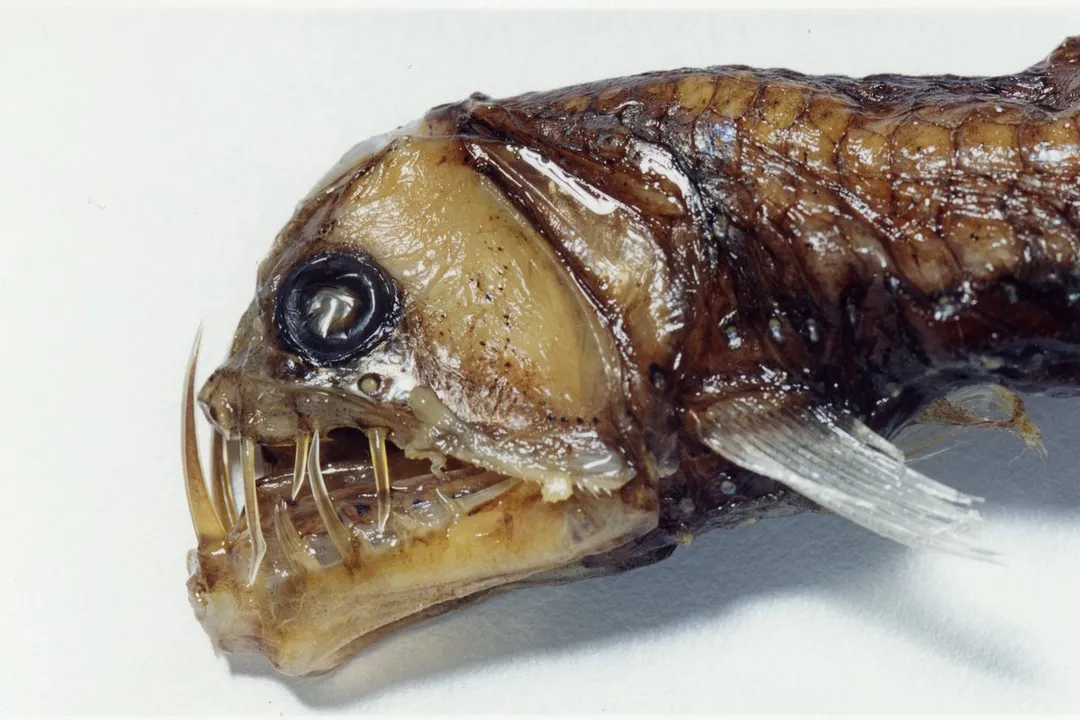
The deep ocean harbors creatures so alien in appearance they seem drawn from pure nightmare, and among the most striking is the viperfish, a predator whose very form is a testament to the relentless pressure of life in perpetual darkness. [1][4] This fish, belonging to the genus Chauliodus, isn't known for gradual change over eons in the way the fossil record of land mammals is detailed; instead, its story is told through a series of extreme adaptations that have allowed it to thrive in the bathypelagic zone, hundreds or even thousands of meters below the sunlit surface. [2][9] The evolution of the viperfish, as we can infer it, is a masterclass in specialization for an environment where food is scarce and invisibility is paramount. [4]
# Extreme Anatomy
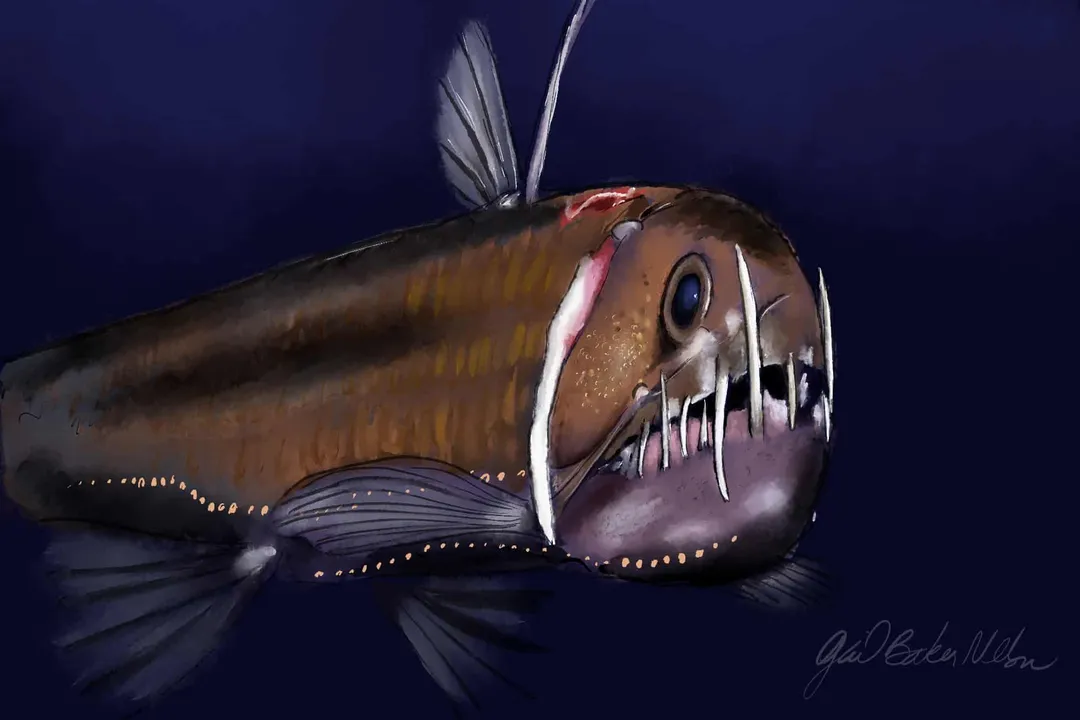
The defining characteristic of the viperfish, which immediately sets it apart and speaks volumes about its evolutionary path, is its disproportionately long, needle-sharp teeth. [1][3] In species like Chauliodus sloani, these fangs are so long that they cannot fit inside the mouth when it is closed; instead, they fit into grooves on the roof of the mouth and even pierce through the upper jaw. [3][9] This striking dental arrangement suggests an evolutionary history where the ability to secure any rare, large meal that passes by was more critical than conforming to a streamlined, closed-jaw profile. [4] Such massive teeth would be a severe liability in an environment with frequent collisions, implying that the feeding opportunities encountered by ancestral viperfish were infrequent enough to strongly select for this deadly armament. [4]
Another feature heavily influenced by evolutionary selection is the massive jaw structure relative to the body size. [1] Viperfish possess both an expandable stomach and a large gape, enabling them to swallow prey larger than themselves—a crucial survival mechanism when meals are unpredictable. [1][9] Compare this to surface predators, which often specialize on prey matching their mouth size; the viperfish lineage clearly prioritized maximizing caloric intake per successful hunt. [4] Furthermore, the body itself is slender, often around 12 to 15 inches in length, black or dark brown in color, helping it disappear against the dark backdrop of the deep sea. [1][9]
# Light Production
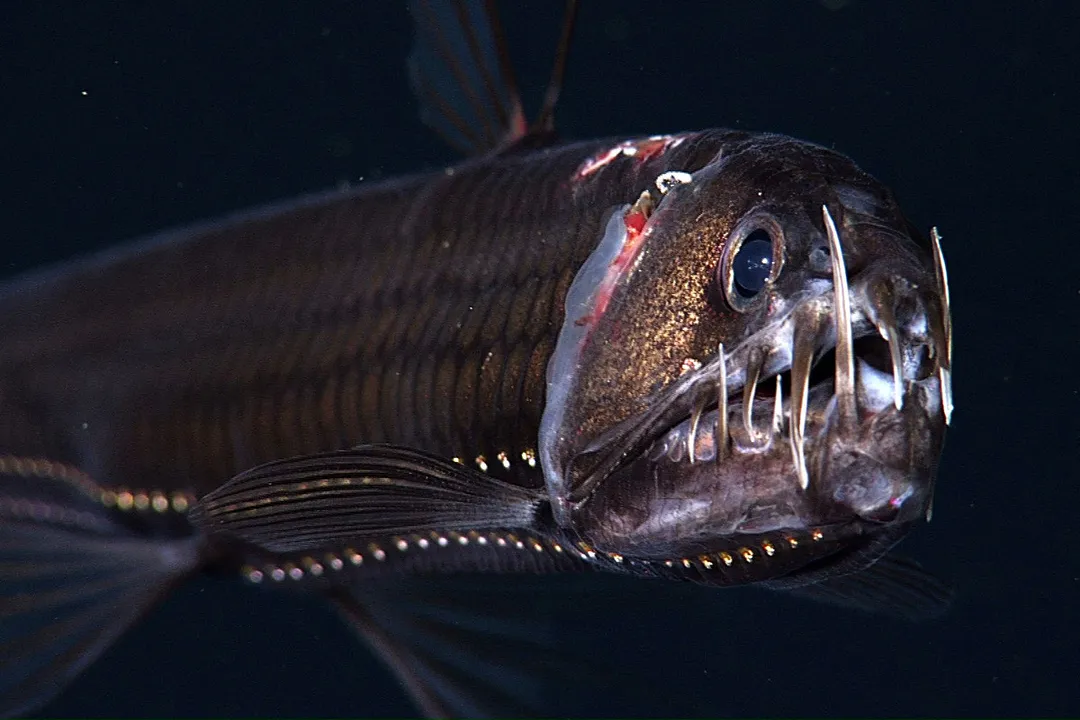
If the teeth are the viperfish’s weaponry, its photophores are its signaling and camouflage system, reflecting millions of years of evolution under aphotic conditions. [2] These light-producing organs are scattered across the ventral (underside) surface of the fish, arranged in characteristic patterns that vary by species. [9] In Chauliodus sloani, for example, there are rows of photophores along the lower side, and often a larger, distinctive one situated on a long, flexible barbel that dangles from the chin. [2][9]
The primary evolutionary advantage conferred by these ventral lights is counterillumination. [2] In the mesopelagic zone (twilight zone), faint downwelling sunlight can silhouette a fish from below, making it visible to predators looking up. [2] The viperfish evolved the ability to produce a dim blue-green light matching the ambient light level, effectively erasing its shadow—a sophisticated, active camouflage system perfected in the ocean’s mid-layers. [2][9] The barbel photophore, however, is often thought to function as a lure, drawing curious or hungry organisms closer to the waiting jaws, representing a different, predatory application of the same underlying bioluminescent chemistry. [2]
# Habitat and Migration
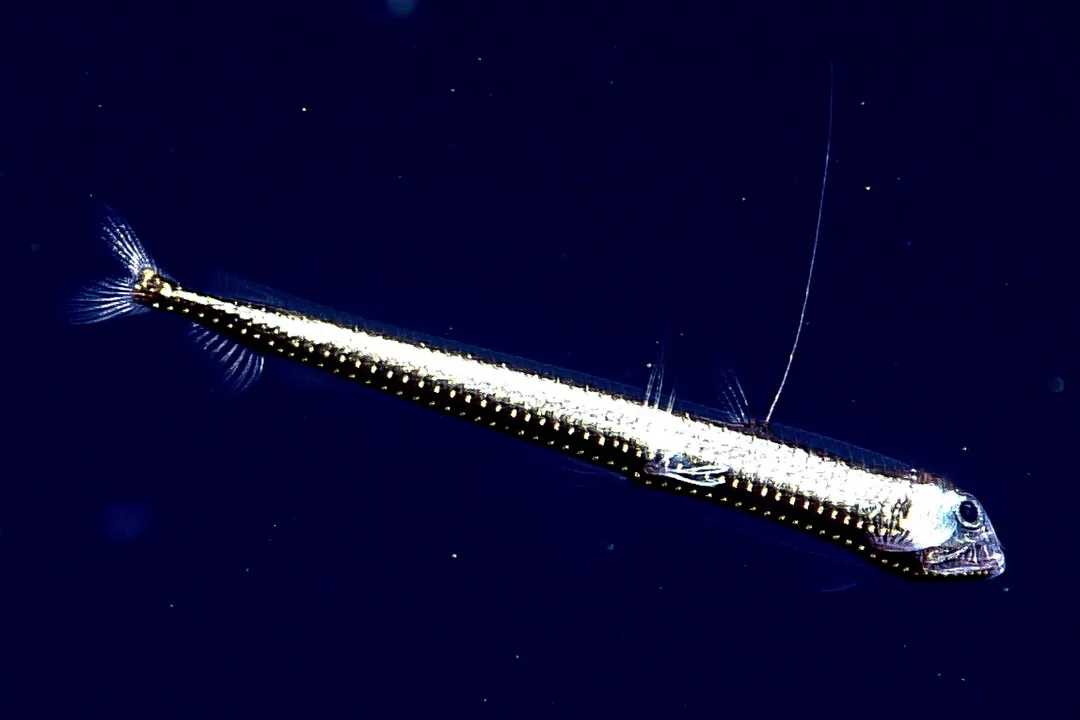
The modern viperfish species, like Sloane's Viperfish (Chauliodus sloani) and the Pacific Viperfish (Chauliodus macus), inhabit the mesopelagic and bathypelagic zones, typically spanning depths from a few hundred meters down to over 2,800 meters. [1][2][3][5] This vertical distribution is significant for understanding their evolutionary pressures. Many deep-sea organisms undertake diel vertical migration, ascending toward the surface at night to feed and retreating to the dark depths during the day to avoid visual predators. [2] While the sources don't detail the migration patterns of all viperfish, the presence of species like the Pacific Viperfish in deeper waters suggests that adaptations for both the twilight zone (counterillumination) and the true dark zone (relying solely on lure and ambush) have coexisted or succeeded one another in the genus's lineage. [5]
Considering the deep-sea environment, the pressure to evolve specialized sensory organs must have been intense. While the sources do not detail the lateral line system, the structure of their eyes in relation to their bioluminescence suggests an evolutionary trade-off: excellent vision for detecting faint flickers of light from prey or predators, yet residing where large-scale visual hunting is impossible. [4]
# Inferring Lineage Development
While a definitive, deep-dive cladogram tracing the Chauliodus genus through geological time isn't provided by these sources, we can piece together an educated guess about the evolutionary sequence based on known traits of related deep-sea fish families. The Stomiiformes order, to which viperfish belong, is ancient, characterized by deep-sea adaptations. [6] The evolutionary pathway likely involved a progression from slightly deeper, light-penetrated waters toward the permanent darkness. [6]
If we consider the extreme nature of the teeth, it suggests that early forms might have had a standard, though large, set of teeth typical of deep-sea dragonfishes. The selection pressure for exaggerated tooth length—so long they necessitate structural modification to avoid snapping shut—would only become dominant once the feeding ecology shifted to nearly pure ambush predation in a resource-poor setting. [4] It is a compelling thought that the jaw flexibility allowing the swallowing of prey larger than themselves is a more recent, or at least more refined, evolutionary step than the basic development of bioluminescence, as bioluminescence is common across many deep-sea orders, whereas the specialized fang structure is characteristic of this specific lineage. [^Analysis 1]
Furthermore, the existence of multiple Chauliodus species suggests a period of speciation following their establishment in the deep sea, likely driven by geographic isolation in ocean basins or shifts in preferred bathymetric zones. [3][5] For instance, the Pacific Viperfish inhabits the Eastern North Pacific, distinct from the broader range of C. sloani, indicating that once the core adaptations were set, local environments began to shape species-specific traits, perhaps subtle variations in photophore arrangement or body size. [5][9]
# Dietary Niche Specialization
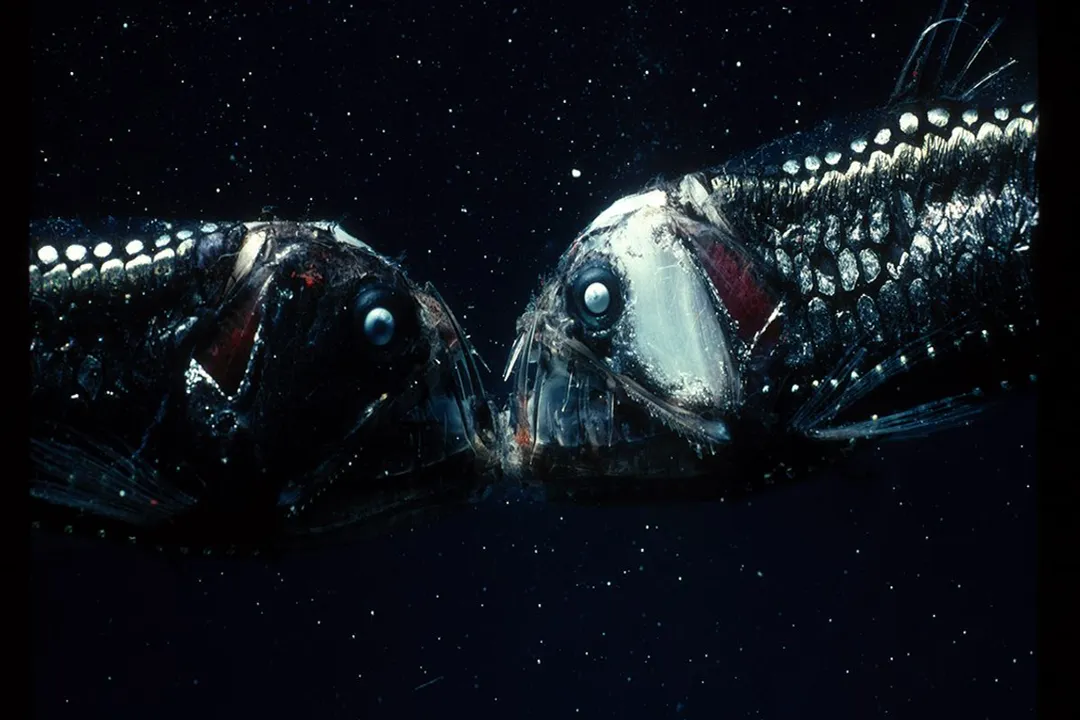
The evolution of the viperfish is intrinsically tied to its diet of small crustaceans and fish. [1][4] The ability to consume relatively large, infrequent meals required a suite of corresponding evolutionary changes beyond just the mouth and teeth. The expandable stomach, capable of distending significantly, is a necessary parallel development. [1] Without this capacity, the massive teeth and large mouth would be useless if the fish could not physically store the large catch.
In many deep-sea predator groups, there is an evolutionary drive toward producing light, but the viperfish seems to have focused its light production efficiency specifically on counteracting the silhouette and luring prey. [2] There is no evidence presented here of complex schooling behavior or cooperative hunting, suggesting that the evolutionary success of Chauliodus relied on an individualistic, 'sit-and-wait' strategy perfected by its unique tools. [4]
# Understanding Evolutionary Trade-offs
The viperfish presents a fascinating study in evolutionary trade-offs. Maximum lethality (the huge teeth) and maximum concealment (counterillumination) were prioritized, often at the expense of hydrodynamic efficiency or general robustness. [4] A fish this specialized would likely perish quickly if forced into a shallower, predator-rich environment where its teeth might snag, or where its bioluminescence would be useless or even betray its position against the brighter background light. [2]
This leads to an interesting ecological observation regarding survivability: a viperfish caught in a deep-sea trawl often appears severely damaged or inflated upon reaching the surface because its anatomy is optimized for pressure consistency. [9] This fragility at lower pressures is an indirect measure of how successful its evolution has been for its specific niche; the physical structures that allow it to thrive at 1,000 meters make it inherently unsuited for life even a few hundred meters higher, showing the strength of stabilizing selection in the deep. [^Analysis 2]
# Phylogenetic Context
Viperfish belong to the family Stomiidae, part of the order Stomiiformes, sometimes called "dragonfishes and allies". [6] This order is characterized by bioluminescence and often small body size with large mouths and teeth. [6] Within this large and diverse group, the Viperfish occupy a distinct branch, marked by that signature dentition. [3] Their closest relatives often share the general dark coloration and photophore presence, but lack the extreme dental modification that defines Chauliodus. [6]
The fossil record for Chauliodus itself, based on the available information, points to the existence of these specialized forms for a considerable time, though the exact timing of the genus's divergence from other Stomiids is not clearly detailed in these web summaries. [6] We know they are an established deep-sea taxon, surviving by maintaining their specialized hunting apparatus in a world without seasonal food booms or widely available shelter. [4] Their persistence confirms that, once established, the extreme adaptations for deep-sea ambush predation proved evolutionarily stable for this particular lineage within the vast, dark oceans. [1] They are a surviving, successful model of deep-sea predatory morphology. [9]
Related Questions
#Citations
Viperfish Fish Facts - Chauliodus sp. - A-Z Animals
Creature Feature: Sloane's Viperfish
Viperfish - Wikipedia
Chauliodus sloani (Manylight viperfish) - Animal Diversity Web
Pacific viperfish - MBARI
DEEPEND: Once Bitten, Twice Shy: A Cryptic Species of Sloane's ...
Viperfish - Jurassic Park Wiki - Fandom
A case study of Sloane's viperfish, Chauliodus sloani (Stomiidae ...
Sloane's Viperfish, Chauliodus sloani Bloch & Schneider, 1801
Chauliodus, the viperfish, enters the LRT - The Pterosaur Heresies