What trade-off did the viperfish make regarding its hydrodynamic efficiency?
Answer
It prioritized lethal dentition and concealment over general robustness
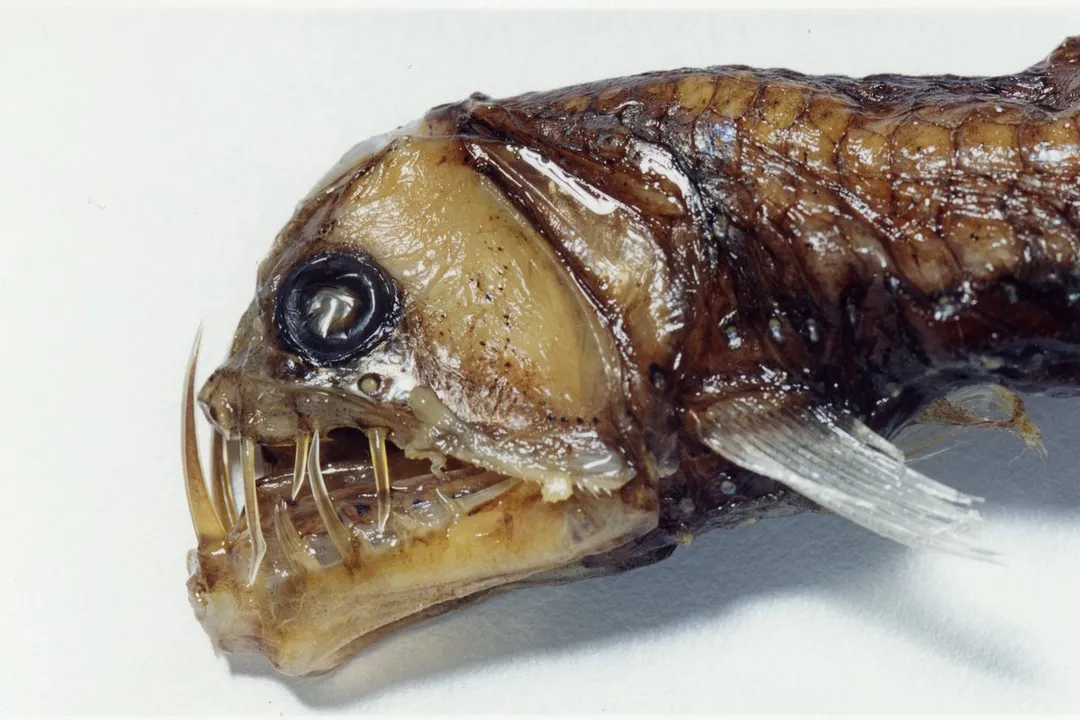
The evolution of the viperfish represents a clear prioritization of ambush predation tools, specifically its massive teeth and advanced counterillumination systems. These adaptations for hunting and survival in the deep sea were gained at the expense of general robustness and hydrodynamic efficiency. Consequently, the viperfish is not built for high-speed maneuvering or surviving in diverse habitats, but is instead perfectly specialized for a 'sit-and-wait' strategy in the deep ocean, where its unique anatomy is a distinct advantage.
Related Questions
Why can the teeth of a Chauliodus sloani not fit inside its mouth when closed?What is the primary evolutionary function of the ventral photophores on a viperfish?Which anatomical features enable the viperfish to consume prey larger than itself?To which scientific order does the genus Chauliodus belong?Where is the Pacific Viperfish primarily located?What is the predatory purpose of the barbel photophore found on the chin?In which ocean zones do modern viperfish species typically reside?Why does the viperfish typically display a black or dark brown body color?Why does a viperfish often suffer damage when brought to the surface?What trade-off did the viperfish make regarding its hydrodynamic efficiency?