Which two distant global regions are mentioned as potential wintering grounds for migrating Sabine’s Gulls?
Answer
Coasts of West Africa or waters off South America.
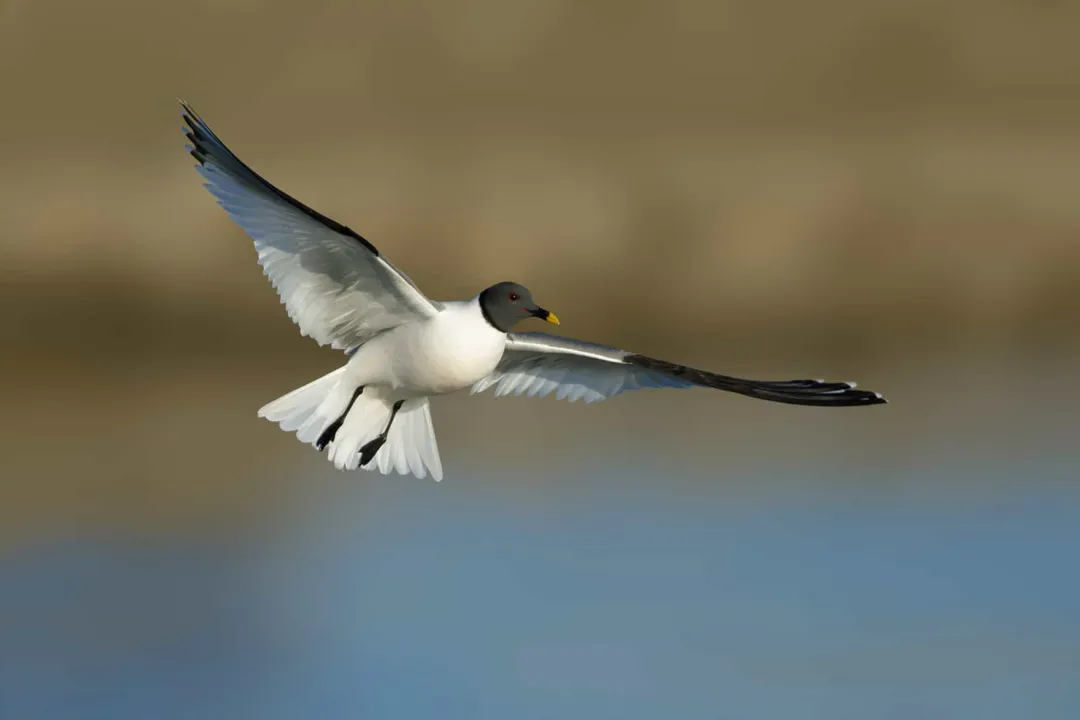
The migratory behavior of adult Sabine’s Gulls is extreme, involving transit across entire hemispheres following the breeding season. Adults departing the Arctic basin utilize two primary oceanic pathways for their wintering grounds. One major route directs them southeast over the Atlantic Ocean, potentially reaching the coasts of West Africa. The alternate route takes them southwest across the Pacific Ocean, leading toward the productive waters off the coast of South America.
Related Questions
What makes the Sabine’s Gull scientifically unique regarding its genus classification?Where does the Sabine’s Gull exclusively breed in the high Arctic tundra?How is the striking adult breeding plumage of the Xeme instantly recognizable?What morphological trait of the Xeme is adapted for tundra maneuvering rather than deep wading?Which two distant global regions are mentioned as potential wintering grounds for migrating Sabine’s Gulls?What describes the pelagic existence of the Sabine’s Gull during the non-breeding season?How do the plumage characteristics of juvenile *Xema sabini* differ from fully mature adults?What is the specific diagnostic feature of the Sabine’s Gull tail that matures in immature birds?What pattern defines the successful evolutionary strategy balancing Arctic breeding and global migration?How did the Xeme’s habitat partitioning promote its distinct evolutionary pathway?