Xeme (Sabine’s Gull) Facts

The Xeme, scientifically known as Xema sabini, is perhaps one of the more enigmatic members of the gull family, often preferring the open ocean to the familiar coastal shores favored by its larger relatives. [2][9] While widely known as Sabine’s Gull, its alternative name, Xeme, provides a unique entry point into learning about this specialized Arctic seabird. [1][7] This species embodies the extreme nature of high-latitude bird life, characterized by vast migrations and strict reliance on the brief Arctic summer for reproduction. [2][4] Understanding the Xeme means appreciating an animal built for life on the wing, far from easy terrestrial view. [2]
# Plumage Details
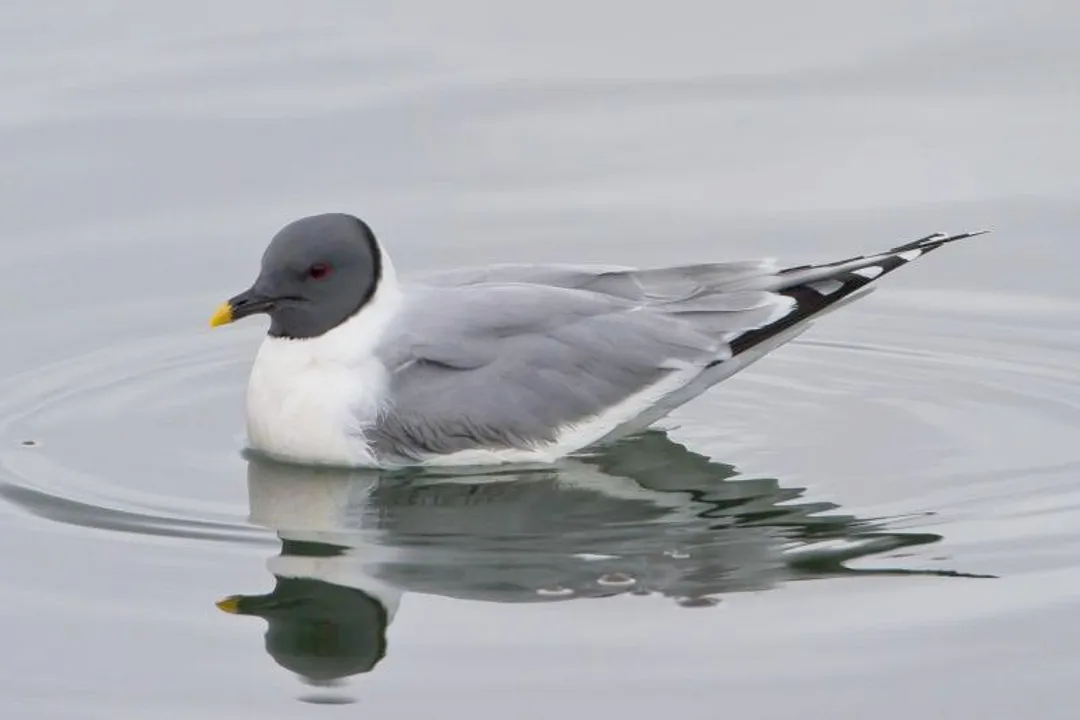
Identifying an adult Sabine’s Gull in breeding plumage is relatively straightforward, even from a distance, thanks to its distinct dark cap. [2][9] The adult summer bird features a deep, solid black hood that contrasts sharply with the crisp white neck patch circling the back of the head. [3][9] The upperparts, including the back and wings, are a uniform dark slate gray, while the underparts remain pure white. [2][9] A key feature visible when the bird is perched or in flight is the bill: it is short, stout, and black, but critically, it possesses a pale or yellowish tip—a feature that helps distinguish it from similar, though rarer, species. [2][3] The legs are typically black. [2][9]
The non-breeding plumage sees the black cap break up, often leaving only a dark smudge or patch around the eye and ear coverts, giving the head a somewhat mottled or gray appearance. [2][3] Juvenile birds present a much different picture, displaying mottled brown and gray plumage overall, lacking the clean lines of the adult. [3] For field observers, immature birds are often recognized by the trailing edge of the primary flight feathers, which creates a dark, W-shaped pattern across the back of the wing when the bird is perched or gliding. [2]
Its flight style is a significant identifier, setting it apart from the more common, heavy-winged gulls. Observers frequently describe the flight of the Sabine’s Gull as buoyant, graceful, and almost moth-like, characterized by rapid wing beats and a tendency to glide frequently. [2][4][9] It feels lighter in the air than most gulls one might encounter closer to shore.
# Physical Dimensions
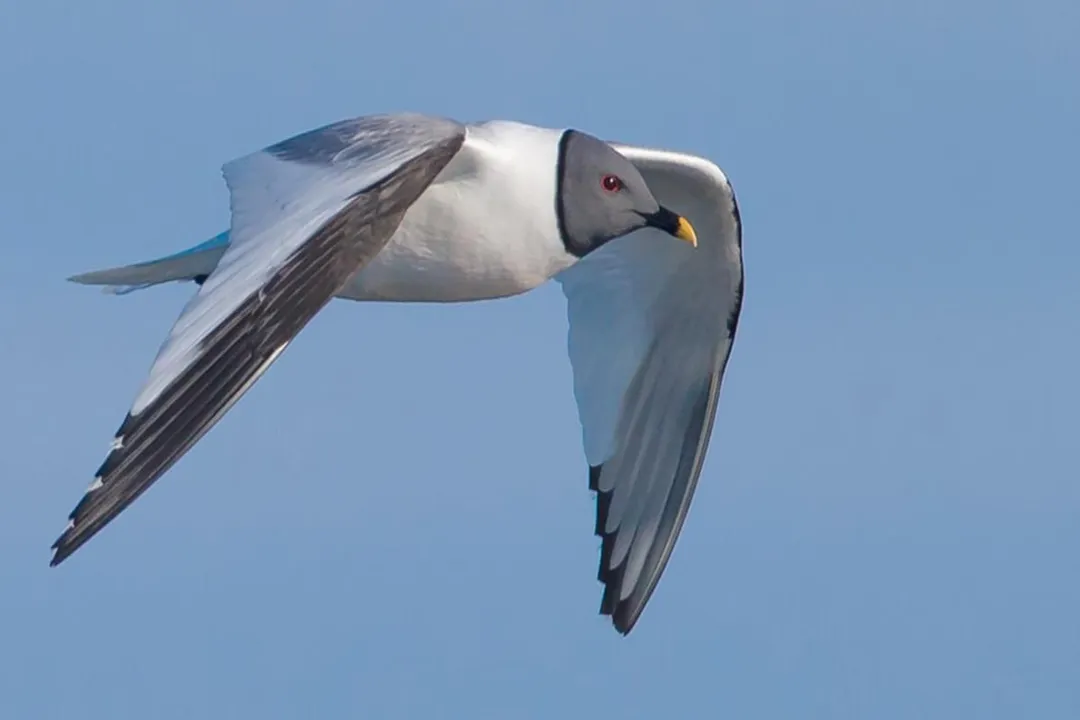
Sabine’s Gull is among the smallest gull species found globally. [2][4] Measuring in at approximately 11 to 12 inches in length, it is considerably smaller than the familiar Ring-billed Gull or Herring Gull. [4][9] Its wingspan typically ranges between 31 and 33 inches. [4][9] Weighing in at just over five ounces, its light build contributes to that distinctive buoyant flight pattern. [4]
| Feature | Adult Measurement (Approx.) | Comparison Note |
|---|---|---|
| Length | 28–31 cm (11–12 in) | Significantly smaller than most common gulls [4] |
| Wingspan | 79–84 cm (31–33 in) | Narrower wings relative to body size compared to larger gulls [4] |
| Mass | ~155 g (5.5 oz) | Very light for a gull species [4] |
When standing beside a larger gull, the Xeme appears slender, with relatively long, pointed wings for its body size. [2] This streamlined silhouette is a direct result of the demands of its highly pelagic lifestyle, favoring efficiency in long-distance oceanic travel over the bulk required for scavenging near human activity. [2]

# Global Travel
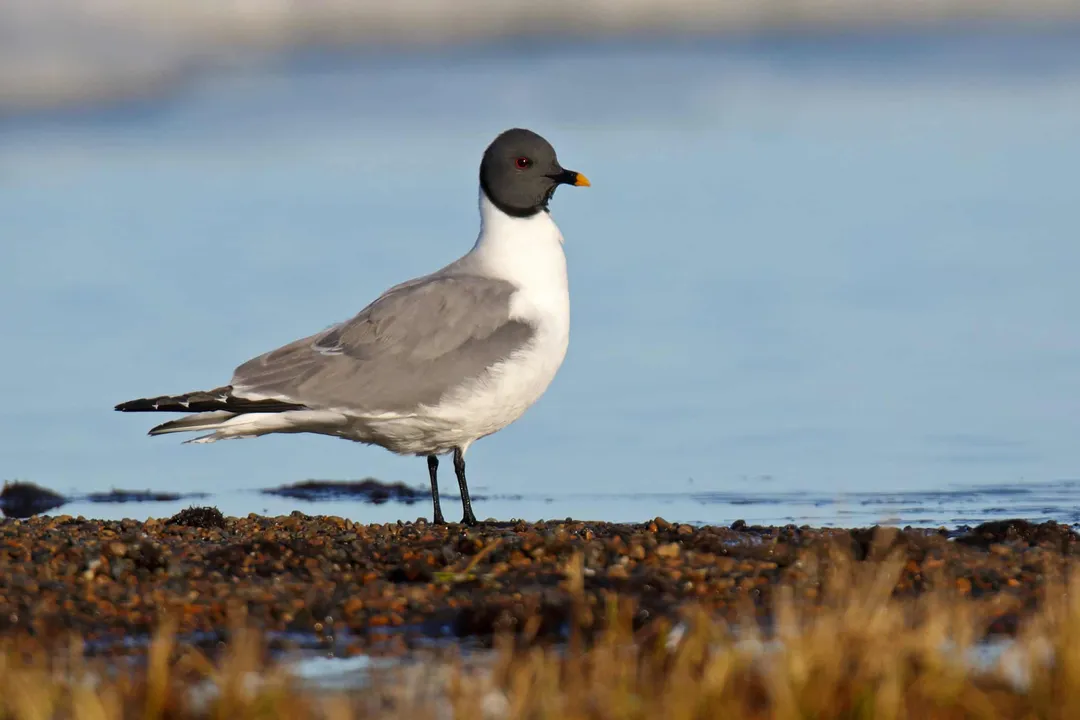
The migratory habits of the Sabine’s Gull are truly exceptional, positioning it as one of the world’s most dedicated long-distance avian travelers. [2] Its breeding grounds are strictly confined to the tundra regions near the Arctic Ocean. [2][4][9] Here, they breed across the northern coasts of North America, Europe, and Asia. [2]
Once the short Arctic breeding season concludes, the population disperses across the oceans in an incredible southbound movement. [2] While many gulls may migrate south along coastlines or short ocean hops, the Xeme undertakes a massive pelagic journey. [2] Major migration routes take them far out into the open ocean. One major route sees them traveling down the eastern coast of North America, swinging across to the South Atlantic, often ending up off the coasts of West Africa. [2][9] A separate population follows the western coast of the Americas, wintering along the coasts of Peru and Chile. [2][4] It is this dedication to an offshore existence during the non-breeding season that makes them relatively scarce for land-based birdwatchers, often requiring boat trips or specific storm fallouts to observe them far from shore. [2][9]
# Ecology Habits
The feeding and habitat preferences of the Xeme shift dramatically between seasons. [2] In the Arctic breeding territories, their diet relies heavily on terrestrial and freshwater insects, spiders, and aquatic invertebrates found in the tundra pools. [2] They will also take small fish found in these shallow waters. [4]
However, once they head to sea, their diet becomes distinctly marine. They forage primarily on the surface of the water, consuming small fish, marine crustaceans, and other small invertebrates they can snatch from the waves. [2][4][9] A fascinating aspect of their behavior at sea is their tendency to congregate around whales or large fishing vessels. [2][4] This association isn't just accidental; they benefit by feeding on organisms stirred up by the larger animals or discarded by the fishing operations, demonstrating an opportunistic approach to utilizing marine food sources. [4]
For the casual observer, finding a Xeme outside of the Arctic breeding season is synonymous with being offshore. While other gulls might linger near harbors or beaches, the Xeme is truly pelagic, meaning it lives most of its life over the open ocean, only touching land to nest. [2][9] This preference means that coastal observers often only see them during erratic migration periods, especially when strong winds or weather systems push these pelagic birds closer to the shoreline, offering a rare, momentary connection to this wide-ranging species. [2]

# Nesting Cycle
Sabine’s Gulls are colonial nesters, meaning they gather in groups to raise their young, though these colonies are typically smaller compared to those formed by some other gull species. [2][4] They select nesting sites on the open tundra, usually on the ground, and often position their nests near bodies of water. [2][4]
The clutch size is small, generally consisting of two or three eggs. [2] The parents share the responsibilities of incubation and chick-rearing throughout the brief, intense Arctic summer. [2] The success of the nesting cycle is tied directly to the timely arrival of warm weather and the availability of insect and aquatic food sources necessary to provision the growing chicks before the entire family must undertake their monumental migration south. [4]
# Vocal Notes
While not known for the loud, complex calls associated with larger gulls, the Xeme does possess a distinct vocal repertoire. [2][9] The typical call given by Sabine’s Gulls is described as a sharp, short sound. [2] Listeners often characterize this sound as a sharp kyaa or a high-pitched kree. [2][9] These calls are used for communication within the colony and during interactions over food resources. [2]
#Videos
Xeme Facts: Sabine's Gull (Xema) 𓅰 Animal Fact Files - YouTube
Related Questions
#Citations
Xeme (Sabine's Gull) Bird Facts - Xema sabini - A-Z Animals
Sabine's gull - Wikipedia
Sabine's Gull Overview, All About Birds, Cornell Lab of Ornithology
Xeme Facts: Sabine's Gull (Xema) 𓅰 Animal Fact Files - YouTube
The Sabine's Gull | Critter Science
[PDF] Sabine's Gull Xema sabini - The Carolina Bird Club
Xeme - Facts, Diet, Habitat & Pictures on Animalia.bio
Sabine's gull Facts for Kids
Sabine's Gull | Audubon Field Guide