Xeme (Sabine’s Gull) Physical Characteristics
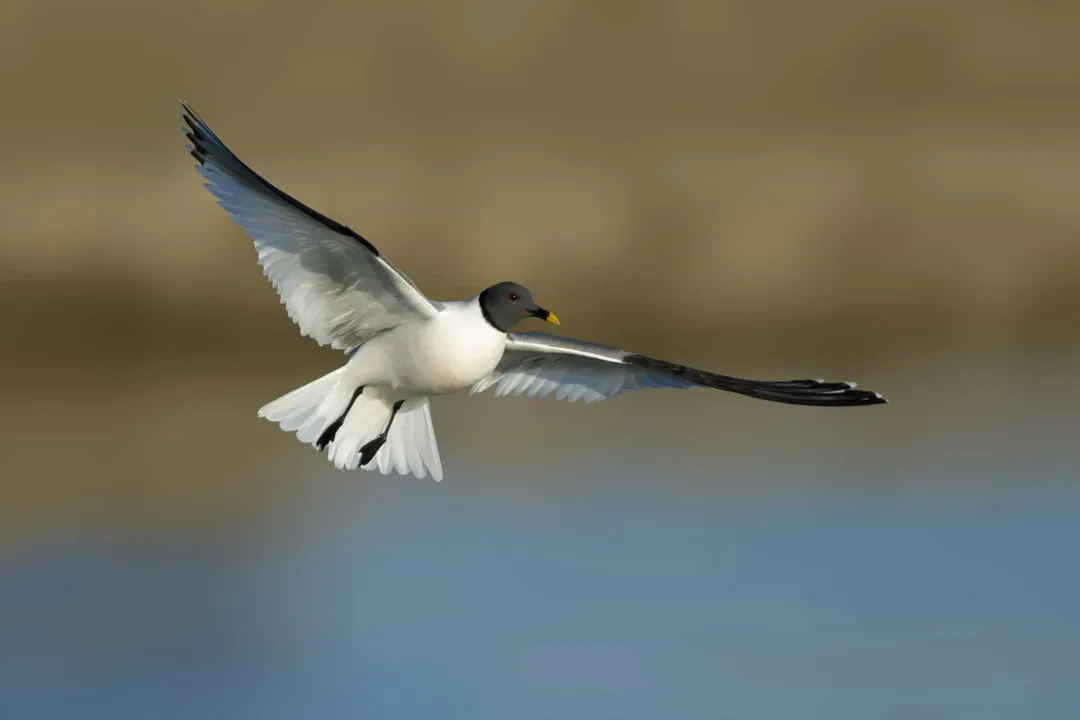
The Xeme, more commonly recognized by its alternate name, Sabine’s Gull (Xema sabini), is a truly striking and delicate Arctic seabird that often confounds birders used to the bulkier profiles of more common gull species. Its appearance shifts considerably between the seasons, making a firm grasp of its physical characteristics essential for confident identification, especially when glimpsed offshore or after a stray individual appears inland during migration. [1][5] This species is so streamlined in flight that its movements frequently suggest a tern more than a typical gull. [5]
# Size Structure
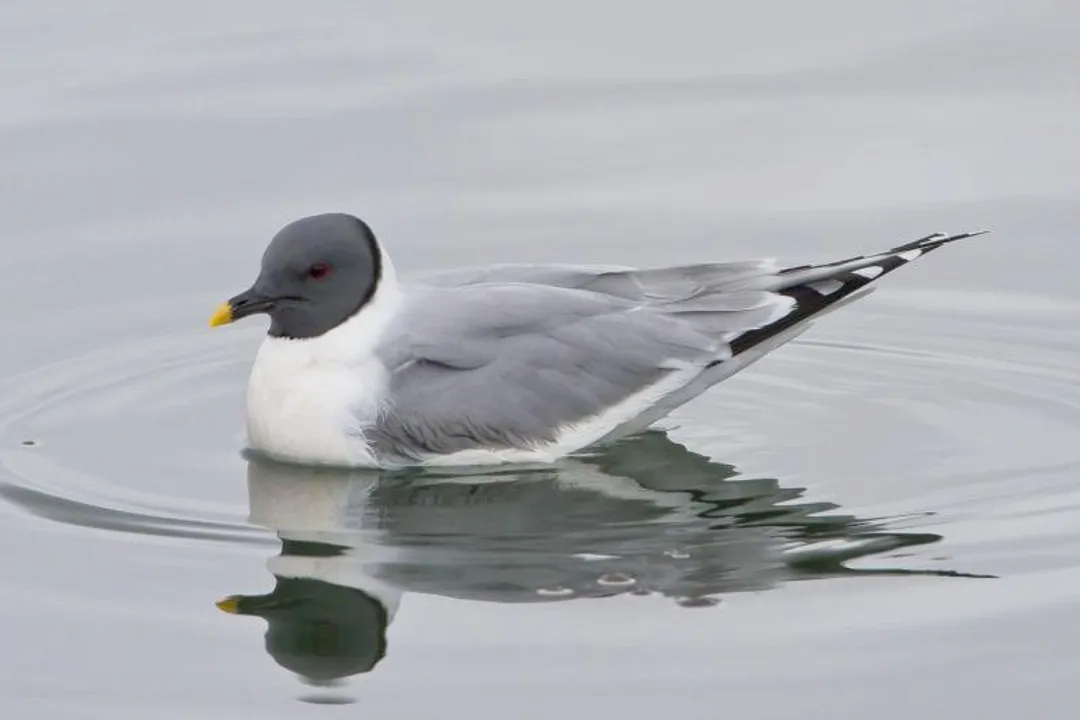
Sabine’s Gull occupies the smaller end of the gull spectrum, presenting a petite and streamlined silhouette in the air and on the water. [5] Measurements reveal a bird built for long oceanic transit. Adults generally measure between 27 to 33 centimeters (or approximately 10.5 to 13 inches) in length. [3][6] This places it roughly comparable in size to a robin, though it possesses a much greater wingspan relative to its body mass. [1]
The wings are notably long, thin, and pointed, contributing significantly to its tern-like flight behavior. [3][5] When measuring the expanse from wingtip to wingtip, Sabine’s Gulls span between 81 to 87 centimeters (about 32 to 34.5 inches). [3][6] Despite its long wings, the bird is quite light, with weights recorded between 135 to 225 grams, or roughly 4.8 to 7.9 ounces. [3][6] For field identification, understanding this small stature is the first key; it is significantly smaller than many of its North American counterparts. [4]
# Adult Plumage Summer

The breeding plumage of the adult Sabine’s Gull is where the species displays its boldest, most diagnostic features. [1] The head transforms into a distinct charcoal gray hood that is sharply outlined or edged in black around the neck and face. [5] This dark hood contrasts sharply with the rest of the body, which is predominantly white below. [1]
The back, or mantle, and the wing coverts are a uniform pale gray. [3][6] The wings themselves offer the most spectacular field mark when seen in flight, exhibiting a clear, tricolored pattern. [1][5] Specifically, the outer primary flight feathers are black, while the inner primaries and the secondary feathers are conspicuously white. [3][6] This precise arrangement of dark and light patches—a dark trailing edge contrasting with the pale gray upper wings and white body—is a hallmark of the species during the breeding season. [1] Furthermore, a subtle but important detail is the presence of a red eye-ring framing the dark eye. [5]

# Bill Features
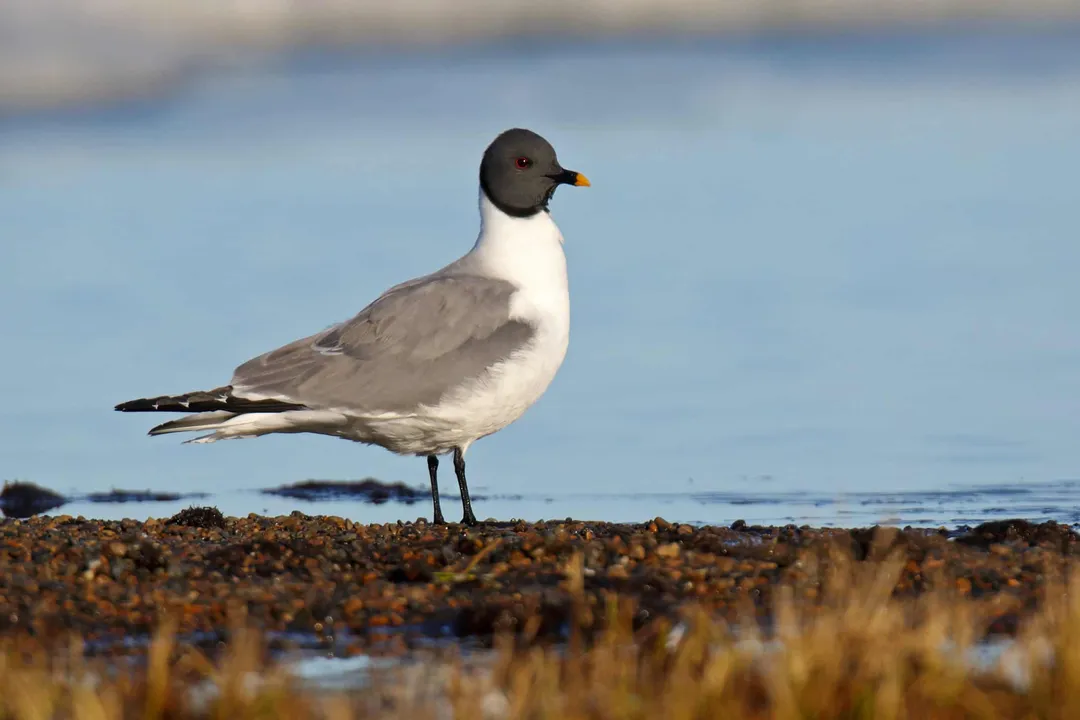
The bill of the adult Xeme is slender and relatively short, measuring around 2.5 centimeters, or about one inch long. [3][6] Its coloration is distinct: the bill is black with a distinct yellow tip. [3][5][6] This yellow tip, combined with the unique tail shape, makes the bill an almost singular feature among many gull species. [3]
# Adult Plumage Winter
As the birds leave the Arctic tundra breeding grounds and migrate to their pelagic wintering areas, their appearance softens considerably, transitioning into non-breeding or winter plumage. [3][5] The striking dark hood is lost entirely, resulting in a white head. [3] While the overall body remains pale, descriptions note that non-breeding adults may show white speckles on their heads, often retaining some dark smudging or pattern around the face or ear coverts, rather than the clean hood of summer. [4] The mantle and wing pattern remain consistent with the gray, black, and white scheme, though perhaps less intensely contrasted without the solid black hood framing the face. [1]
The tail remains white but lacks the dark terminal band seen on the young birds. [3] It is important to differentiate non-breeding adults from the immature birds, which can retain a generally brown-and-scaly appearance on the back during their first autumn. [1]

# Immature Stages
Sabine’s Gulls follow an unusual schedule for attaining adult plumage, requiring two years before they fully attain the adult appearance. [3][6] This prolonged immature phase involves several intermediate plumages.
Young birds share the basic three-part color pattern on the wings, but the pale gray is replaced by brown on the back and coverts. [3][6] In place of the white tail of the adult, juveniles display a black terminal band across the tail feathers. [3] Furthermore, the bill in juvenile plumage is described as being all black, lacking the diagnostic yellow tip seen on adults. [4] Birders should be aware that these young birds, particularly in the autumn post-fledging, will appear brownish and somewhat scaly on their backs. [1]
One fascinating element of their development relates to their unique molt schedule. Fledged juveniles retain this initial juvenile plumage throughout the autumn, only beginning to molt into their first winter plumage once they have reached their distant southern wintering grounds. [5] This timing is a reversal of the standard pattern seen in many other gull species. [5]
# Diagnostic Shape Features
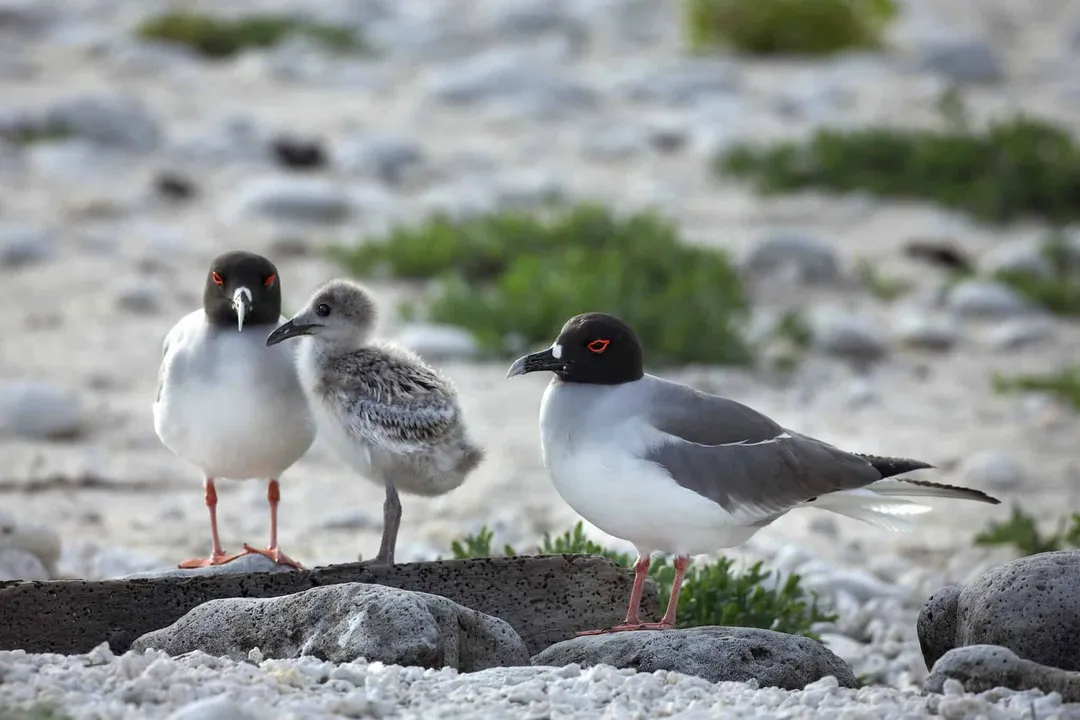
Beyond the colors, the structure of the Sabine's Gull offers critical field identification clues, especially given its tendency to be mistaken for a tern. [5] The most distinguishing feature is the forked tail, sometimes described as notched. [1][3] This tail shape is rare among gulls, shared almost exclusively with the Swallow-tailed Gull of the Galapagos, though studies show the latter is not a close relative. [3]
The flight profile itself is highly informative. The combination of the long, pointed wings and the aerial dexterity suggests a less clumsy gait than many related species. [1] The appearance of the dark primary feathers against the white inner wing creates a dark triangle at the wingtip that is immediately noticeable in flight, even from a distance. This contrast is key when separating them from species like the immature Black-legged Kittiwake, which can cause confusion at long range. [1]
To offer a point of comparison for identification, consider the Bonaparte’s Gull, another small North American gull. While Bonaparte's has a dark hood in summer, its wing pattern lacks the broad, distinct gray panel of the Xeme; the primary pattern is often less starkly divided into large, clear triangles than that of Xema sabini. [5] Furthermore, the Bonaparte’s Gull has a square or slightly rounded tail, decidedly not forked, giving the Xeme a visible structural advantage in identification when the tail is visible. [3]
When analyzing the wing from below, this is where the tricolor effect truly shines. The dark primary feathers meet the white secondaries and coverts, often creating what looks like a wedge or crescent shape of dark coloration on the trailing edge of the outer wing. [1] In the dim light of early morning or late evening over the ocean, observing the pattern of the wingtip—the proportion of black to white—can be more reliable than judging the head color, which is variable based on season and age. [1] For instance, the extent of the black on the wingtip in Xema sabini is often more restricted and clean compared to other small gulls showing extensive dark smudging on the primaries, an observation helpful when identifying birds far offshore.

# Molt Uniqueness
The lifecycle of the Xeme is marked by an unusual timing for feather replacement, or molting, compared to its relatives. [5] Adults undergo a complete molt during the spring, just before starting their long northward migration back to the Arctic breeding grounds. [5] Conversely, they undergo only a partial molt in the autumn after they have already arrived at their wintering areas. [5] This "reversal of the usual pattern for gulls" means their plumage transitions are strongly tied to their major migratory movements rather than just seasonal daylight changes. [5] This unusual schedule is significant because it dictates exactly when a migrating bird will present a particular set of physical features, reinforcing why the two-year process for juveniles to reach full adult status is so complex. [3]
# Summary of Key Physical Traits
To consolidate the identification markers, a quick reference is useful for differentiating the Xeme across its appearances:
| Feature | Breeding Adult | Non-Breeding Adult | Juvenile (First Year) |
|---|---|---|---|
| Head | Dark gray hood, black edging | White, some pale smudging/speckling [4] | White/pale with brownish/scaly back [1] |
| Mantle/Coverts | Pale gray [3] | Pale gray | Brown, scaly [1][3] |
| Wings (Flight Feathers) | Black primaries, white secondaries/inner primaries [3] | Same as breeding, but less contrast due to head color | Same pattern, but gray replaced by brown [3] |
| Tail | White, slightly forked [3] | White, slightly forked | White with a distinct black terminal band [3] |
| Bill | Black with a yellow tip [5] | Black with a yellow tip | All black [4] |
| Eye-ring | Red [5] | Often less distinct | N/A |
The physical characteristics of the Xeme, Xema sabini, mark it as a highly specialized gull adapted to an extreme existence, primarily pelagic outside the brief Arctic summer. [1][6] From its slender, tern-like shape and its forked tail to the precise, contrasting blocks of gray, black, and white on its wings, every feature serves to distinguish this small navigator of the world’s oceans. [5]
Related Questions
#Citations
Xeme (Sabine's Gull) Bird Facts - Xema sabini - A-Z Animals
Sabine's Gull Overview, All About Birds, Cornell Lab of Ornithology
Sabine's gull - Wikipedia
Xeme - Facts, Diet, Habitat & Pictures on Animalia.bio
Sabine's Gull "Xema sabini" - Boreal Songbird Initiative
Sabine's Gull | Audubon Field Guide
Sabine's gull Facts for Kids