How did the Xeme’s habitat partitioning promote its distinct evolutionary pathway?
Answer
Its avoidance of competition in more crowded, warmer zones by remaining anchored to high-latitude breeding grounds.
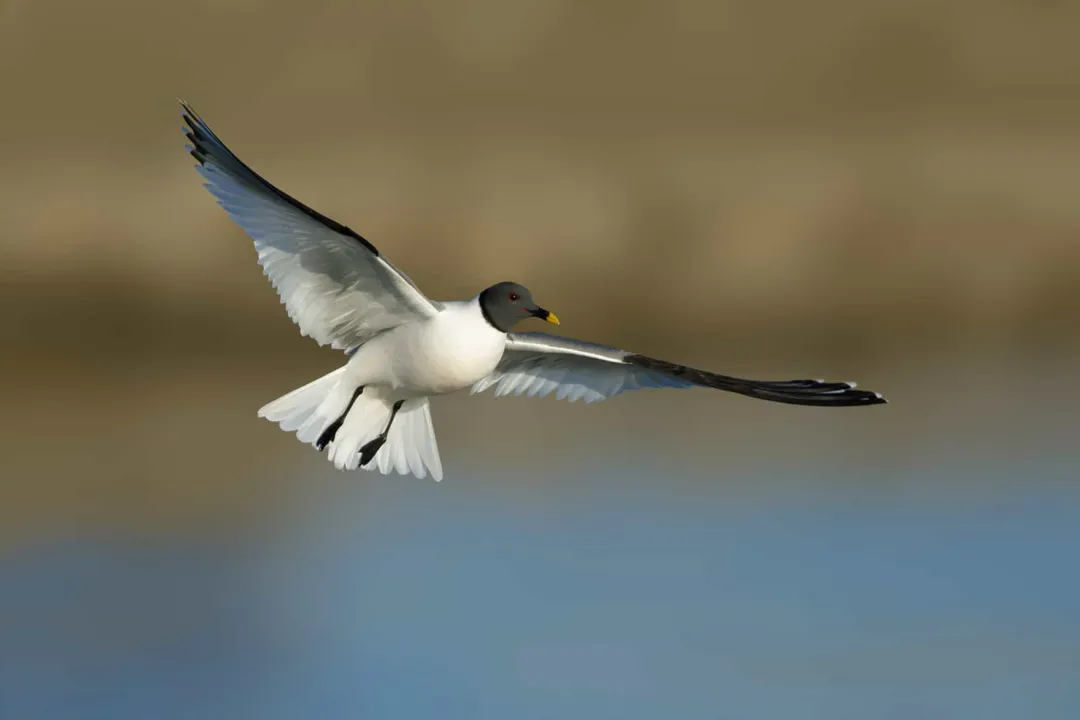
The Sabine’s Gull maintained its unique generic classification partly by actively partitioning habitats away from competitors. Instead of moving into the crowded, warmer, temperate zones where generalist gulls thrive, the Xeme remained strictly anchored to the planet's remote, high-latitude breeding grounds. This strategic avoidance of direct competition with species like the Herring Gull or Ring-billed Gull allowed it to follow a distinct evolutionary path, free from pressures that might otherwise have led to homogenization with more generalized populations, cementing its unique physiological and behavioral traits.
Related Questions
What makes the Sabine’s Gull scientifically unique regarding its genus classification?Where does the Sabine’s Gull exclusively breed in the high Arctic tundra?How is the striking adult breeding plumage of the Xeme instantly recognizable?What morphological trait of the Xeme is adapted for tundra maneuvering rather than deep wading?Which two distant global regions are mentioned as potential wintering grounds for migrating Sabine’s Gulls?What describes the pelagic existence of the Sabine’s Gull during the non-breeding season?How do the plumage characteristics of juvenile *Xema sabini* differ from fully mature adults?What is the specific diagnostic feature of the Sabine’s Gull tail that matures in immature birds?What pattern defines the successful evolutionary strategy balancing Arctic breeding and global migration?How did the Xeme’s habitat partitioning promote its distinct evolutionary pathway?