Which pigment is lacking in white tigers that is responsible for red and yellow hues in standard Bengal tigers?
Answer
Pheomelanin
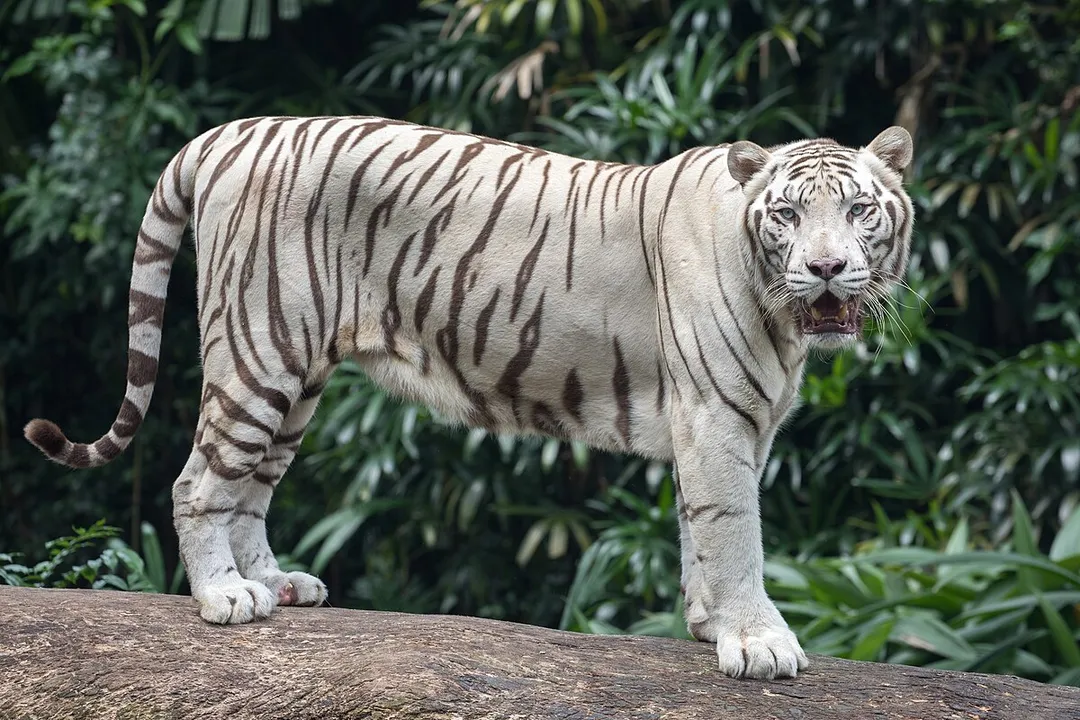
The striking difference in coat coloration stems from the absence of a specific pigment called pheomelanin. This particular pigment is responsible for producing the characteristic red and yellow tones observed in the background coat of typical Bengal tigers. When pheomelanin is absent or severely reduced in expression, the result is the creamy white or pure white base coat seen in white tigers. The stripes themselves, which can range from dark brown to jet black, still retain some pigment, likely eumelanin, which is why they are not completely white, thus demonstrating that the issue is a selective lack of one specific color-producing agent rather than a complete inability to produce color.
#Videos
White Tigers - Get The FACTS! - YouTube
Related Questions
What species classification applies to white tigers, which are often mistaken for a separate type?Which pigment is lacking in white tigers that is responsible for red and yellow hues in standard Bengal tigers?What eye color is the primary feature differentiating white tigers (leucism) from true albinos?What is required genetically for a cub to inherit the rare recessive trait for the white coat coloration?Why does the standard orange coloration provide an advantage for Bengal tigers in a natural jungle setting?What is the current recognized conservation status of naturally occurring white tigers in the wild?Which specific male tiger is the progenitor of the vast majority of white tigers alive today in captivity?What specific physical ailments are associated with the close family matings used to maintain the white coat lineage?What condition, characterized by reduced but not eliminated pigmentation, defines the white tiger's coat coloring?What shared physical aptitude demonstrates that white tigers align physiologically with their orange counterparts?