White Bass Facts
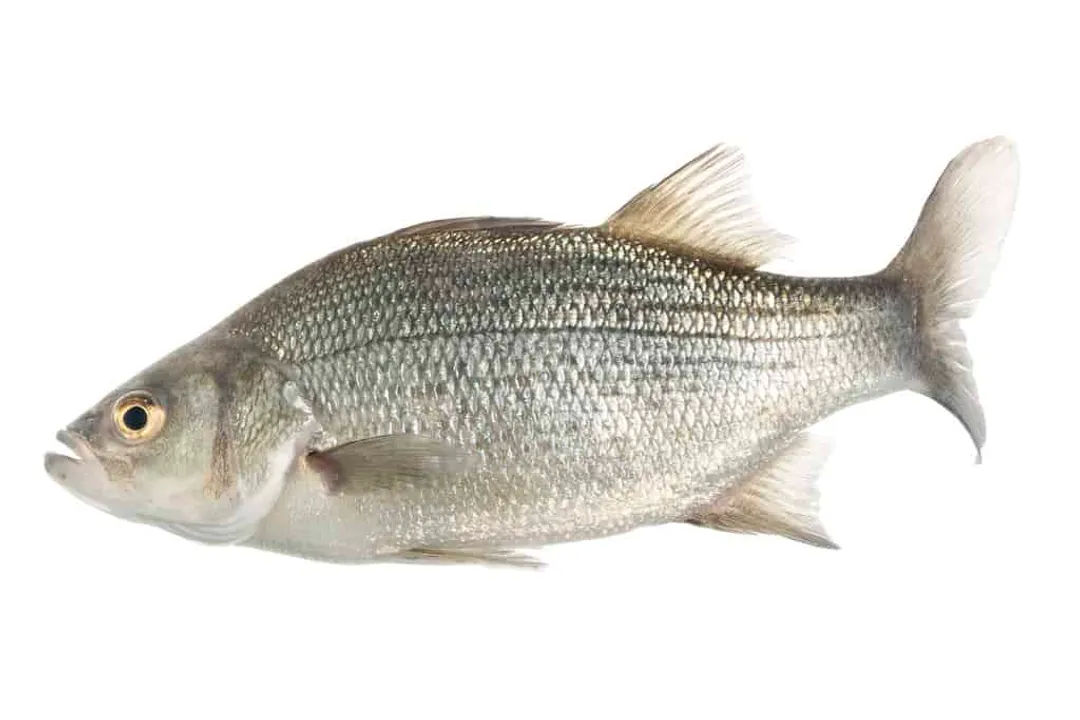
The White Bass, Morone chrysops, is a streamlined, silvery fish that holds a prominent place in the freshwater angling community across North America. [1][2][4] Often overlooked in favor of its larger, more aggressive cousins, this species offers fast action and excellent eating quality when found in large schools. [3][4] Distinguished by its characteristic deep body shape and flashing flanks, it is a member of the temperate bass family, related to the Striped Bass and the Wiper (a hybrid of the White and Striped Bass). [1][5]
# Body Markings
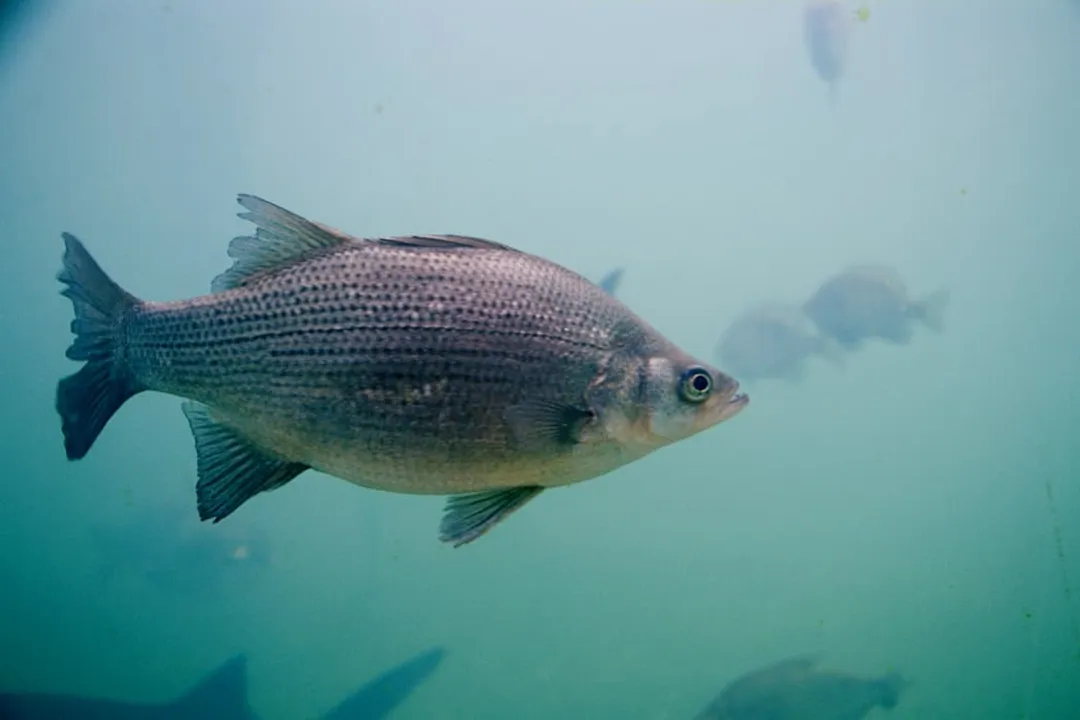
A primary feature setting the White Bass apart is its pattern of dark, horizontal stripes running along its silvery sides. [1][7] Typically, an adult will display about seven of these stripes, which run from the gill cover back to the tail fin. [4][7] These markings are generally more distinct on younger or smaller individuals. [1] The fish possesses two dorsal fins—the first being spiny and the second soft-rayed—a trait shared with other temperate basses. [1][4] Its coloration tends toward a silver or whitish sheen, with an olive-green or darker shade along the back. [7] The mouth is terminal, meaning it faces straight ahead, and it often appears slightly upturned. [1]
# Size Limits
While anglers often target them, White Bass generally do not achieve the massive sizes associated with Largemouth Bass or Striped Bass. [4] A good-sized specimen might measure around 17 inches in length. [1] In many regions, a fish weighing 2 to 4 pounds is considered a trophy or a truly exceptional catch. [4][7] The current world record, for instance, hovers just over 5 pounds. [1] This moderate size contributes to their reputation as exciting fighters; they are known for their rapid, hard strikes when hooked in a school. [3]
# Water Preference
White Bass inhabit a broad geographic range spanning temperate regions of North America. [1][2] They are typically found in large, deep lakes and rivers, and often thrive in large man-made reservoirs. [2][4][7] Their preference leans toward clear water conditions. [1] Unlike some bottom-dwelling species, the White Bass spends most of its life in the open, pelagic zones of the water column. [1]
During the warmer months, as the water heats up, these schooling fish will often move to deeper sections of the lake or reservoir. [1] A helpful observation for summer anglers is that the density of zooplankton, their primary food source, dictates where the bass position themselves vertically in the water column; successful trolling often requires precise depth control to intercept these mobile feeding aggregations. [1] This tendency to school tightly around specific layers of forage or temperature gradients means that once you locate one, you are likely to find many others nearby. [4][7]
# Feeding Habits
The diet of the White Bass shifts noticeably as they mature. [1] Younger fish primarily consume zooplankton and aquatic insects. [1][4] As they grow larger, their diet pivots to include more substantial prey, mainly small forage fish such as shad and minnows. [1][4] They are visually oriented feeders, meaning they rely heavily on sight to locate meals. [1] This hunting strategy leads to the spectacular surface feeding events for which they are famous, where an entire school will erupt at the surface chasing insects or small baitfish, causing the water to boil. [1] Because they are concentrated in schools, a feeding frenzy can create high-volume action for a short period. [4]
It is worth noting that because they are frequently chasing mobile baitfish in open water, anglers sometimes mistake them for the far more aggressive Hybrid Striped Bass (Wiper). [5] While both species school, recognizing the White Bass’s historical reliance on smaller, sometimes planktonic, food sources can change an angler’s approach. When lake clarity is exceptionally high, White Bass may hold deeper, relying more on very small baitfish or invertebrates than larger, flashier lures might suggest. [1]

# Reproduction Cycles
The reproductive phase of the White Bass is a predictable, temperature-driven event that occurs each spring. [1][7] Once water temperatures consistently reach between 55 and 65 degrees Fahrenheit, usually in April or May, the fish begin their spawning migration. [1][4][7] They often move from deep, open water into shallower areas, migrating up tributary streams or moving toward the shallower, near-shore zones of lakes. [1]
The spawning process itself takes place in moving water near the shoreline. [1][4] Females are prolific breeders, capable of releasing anywhere from 300,000 up to nearly 2 million eggs in a single season. [1][4] Unlike some other bass species, White Bass offer no parental care after the eggs are deposited. [1] Due to this lack of protection and high predation pressure, the survival rate of the fry is low, though the sheer volume of eggs ensures population maintenance. [1] The species has a relatively short lifespan compared to some freshwater game fish, often only living between five and seven years. [1]
# Angling and Management
As a strong fighting, schooling fish, the White Bass is highly regarded by anglers seeking consistent action. [2][3] They are generally managed by state agencies, and anglers should always confirm current size and creel limits as regulations can vary significantly between jurisdictions. [3][4]
Techniques for catching White Bass often revolve around locating their schools. [3] Trolling with small crankbaits or spoons, or casting jigs tipped with live minnows or soft plastics, are common effective methods. [3] When they are feeding actively on the surface, topwater lures or flies can provide very exciting action. [1]
One crucial management distinction to keep in mind when targeting them is differentiating the pure White Bass from the Hybrid Striped Bass (Wiper). [5] While both are often silver-sided and school heavily, Wipers are sterile hybrids resulting from crossing a male Striped Bass with a female White Bass. [5] Wipers generally grow much larger and often exhibit darker, more broken horizontal stripes compared to the cleanly defined lines of the true White Bass. [5] Understanding which species is dominant in a specific reservoir dictates the size of the tackle you might want to use; if a fishery is known for large Wipers, anglers might opt for slightly heavier gear than they would for the generally smaller, though plentiful, White Bass. [4]

# Conservation Status
The White Bass has proven highly adaptable, successfully populating many bodies of water across the United States. [2] Because of their ability to thrive in diverse environments, they are widely stocked and managed for recreational fishing. [2] While they are native to the central and eastern parts of the continent, their success in colonization means they are now a common fixture in many state fish and wildlife programs. [2][7] Their general hardiness and widespread distribution mean they are not currently listed as a threatened or endangered species. [2]
#Videos
White Bass: Everything You Need to Know - YouTube
Related Questions
#Citations
White bass - Wikipedia
White Bass (Morone chrysops) | U.S. Fish & Wildlife Service
White Bass: Fish Description & Facts - WVDNR
White Bass - Virginia Department of Wildlife Resources
White Bass - Lake Scientist
[PDF] White bass - Fortune Fish & Gourmet
Bass, White | Oklahoma Department of Wildlife Conservation
White Bass Fish Facts - Morone chrysops - A-Z Animals
White Bass: Everything You Need to Know - YouTube
White bass - Fish - South Carolina Department of Natural Resources