White Shark Facts
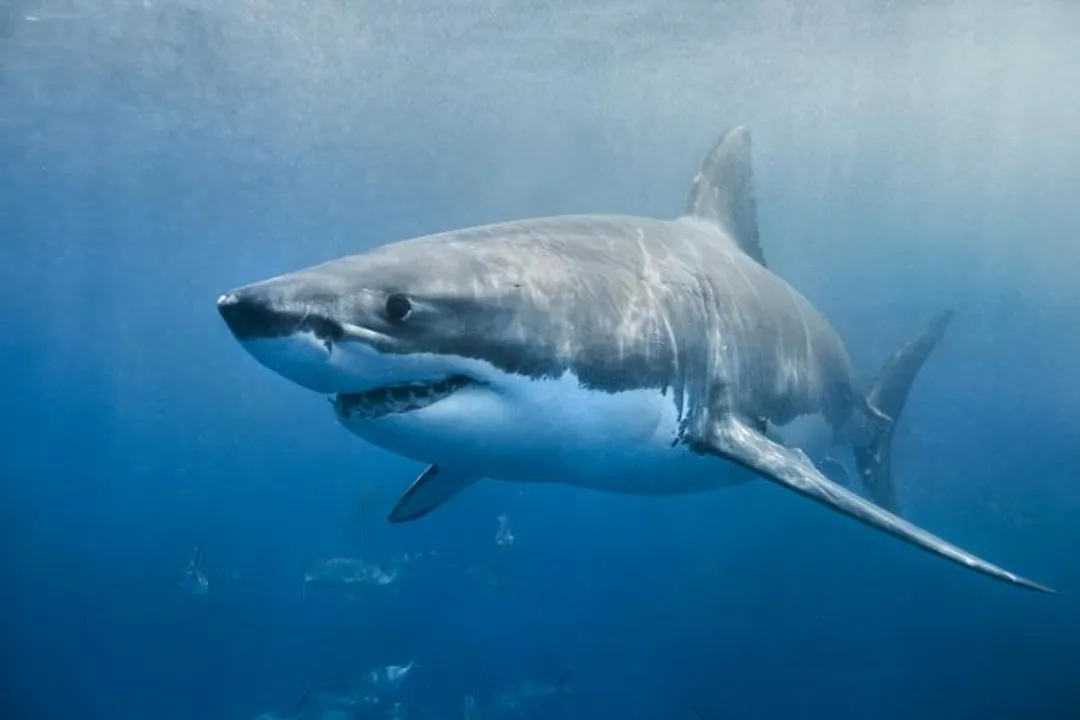
The great white shark, scientifically known as Carcharodon carcharias, is arguably the most recognized fish in the ocean, often thanks to sensationalized media depictions. However, moving past the cinematic monster, the reality of this apex predator is far more complex and fascinating than simple fear suggests. These sharks are true originals, having refined their body plan over hundreds of millions of years and surviving nearly every mass extinction event our planet has seen.
# Great Size
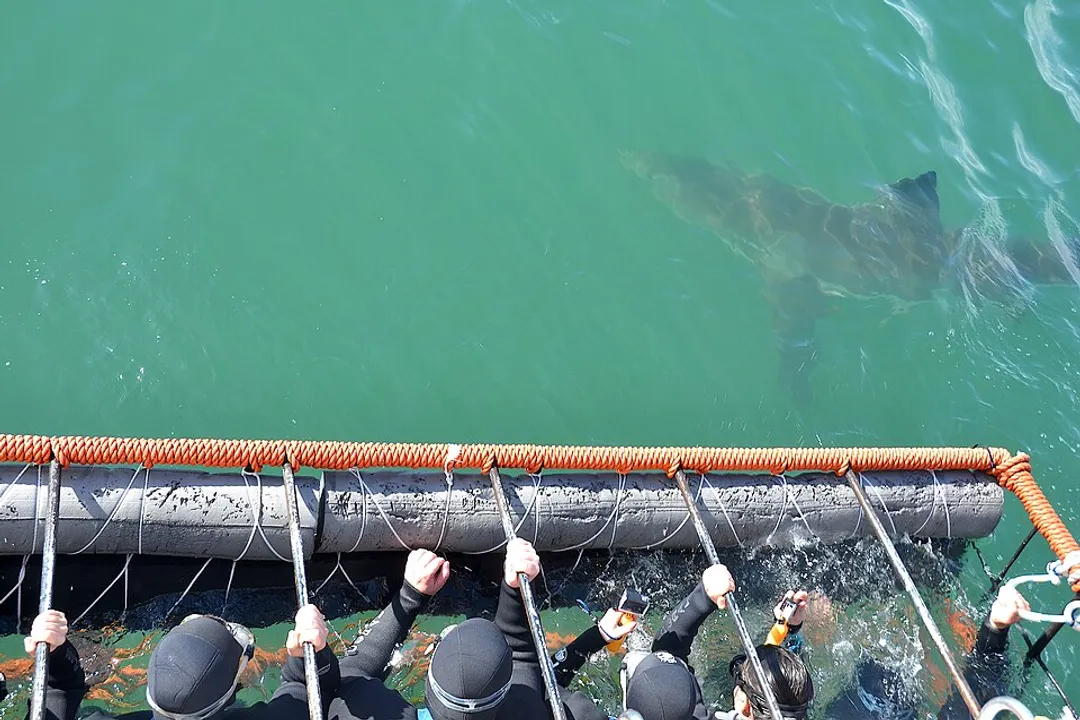
The sheer scale of the great white shark immediately sets it apart. It holds the title of the world's largest actively predatory fish. While filter feeders like the whale shark are physically larger overall, the great white dominates the carnivorous category.
Adults can reach impressive dimensions. Reliable measurements show they can exceed $19.5$ feet in length, with some estimates suggesting they approach $21$ feet. This size translates to significant mass, often topping $4,000$ pounds, with documentation of individuals weighing up to $4,500$ pounds.
Sexual size dimorphism is clearly present in the species; the females are consistently larger than the males. On average, females measure between $15$ and $16$ feet and weigh between $2,200$ and $4,200$ pounds. Males, conversely, average closer to $11$ to $13$ feet and weigh between $1,500$ and $2,200$ pounds.
It is worth noting that the history books are filled with exaggerated and discredited claims of specimens much larger than these documented sizes—giants that seem to shrink when a tape measure is actually applied. Despite these legends, the reliably measured largest specimens confirm that this is a fish of monumental proportions.
# Body Design
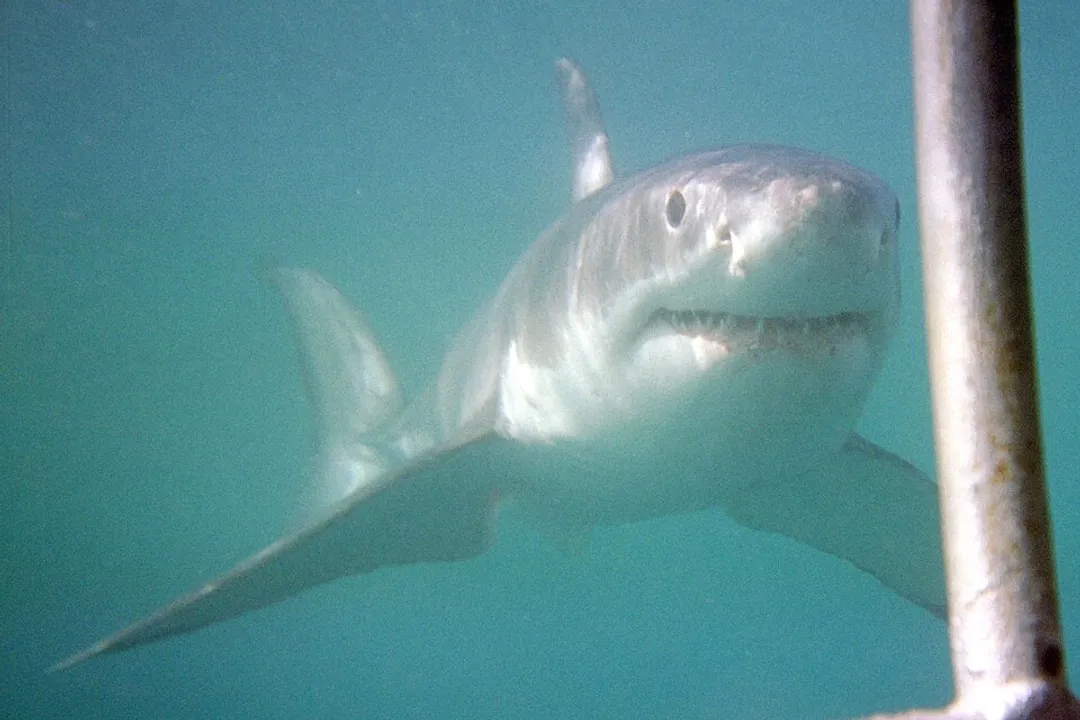
The physical architecture of the great white is purpose-built for power and stealth. Its body shape is described as torpedo-like, allowing for incredible bursts of speed. They possess a robust build, making them powerful swimmers capable of reaching speeds up to $35$ miles per hour, or approximately $50$ kilometers per hour, thanks to their powerful tails.
A defining visual feature is its coloration, known as countershading. The shark’s underside is stark white, while its dorsal side ranges from dark gray to brown or even black. This contrast helps it blend into its environment, obscuring its silhouette against the bright surface when viewed from below, or against the dark depths when viewed from above. Scientists have found that great white skin contains specialized cells called melanocytes, which may allow the shark to subtly lighten or darken its skin, offering an even greater level of camouflage when stalking prey from beneath. Adding to the distinct pattern, some individuals exhibit black tips on the undersides of their pectoral fins, and occasionally a black spot near the pectoral axil ("armpit").
The infamous smile is composed of rows of serrated, triangular teeth. While they possess around $300$ teeth in total, they operate on a highly efficient, conveyor-belt system where new teeth constantly move forward to replace those lost to wear and tear or in altercations. The teeth are broader on the upper jaw and generally more slender in juveniles. Males exhibit specific tooth shape changes as they mature—the third upper tooth tilts backward more dramatically, possibly to assist in gripping females during mating. The massive jaws are connected to the skull only by muscles and tendons, allowing for an impressive gape of up to $150$ degrees.
# Senses Felt
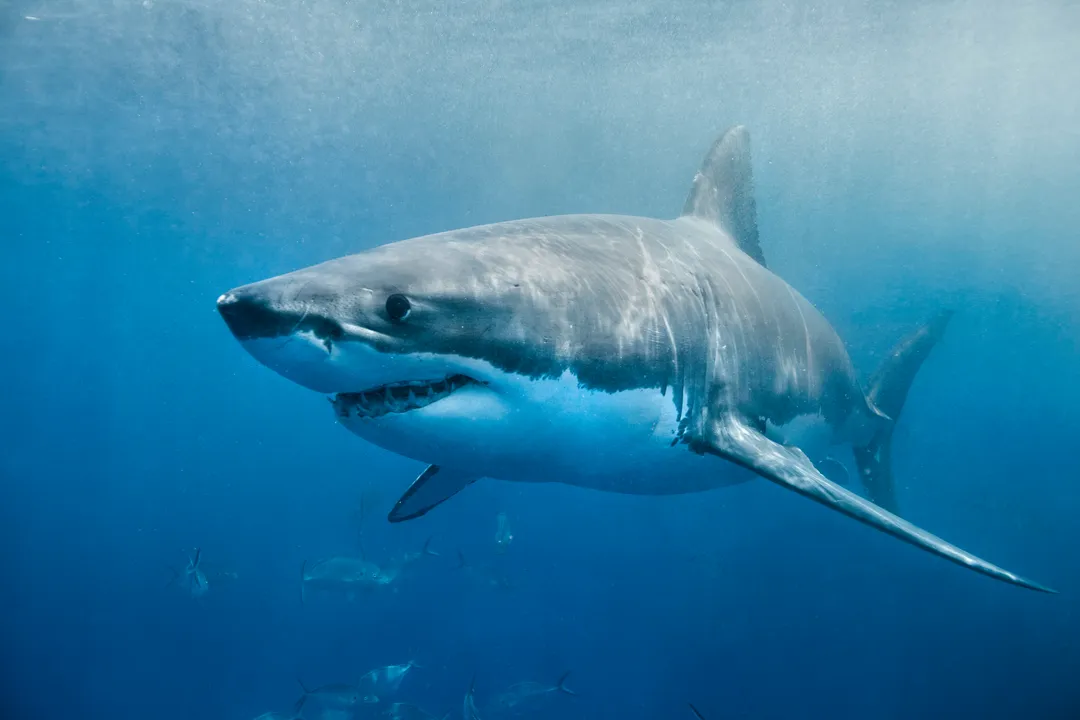
To hunt effectively, the great white relies on an astonishing suite of sensory organs, utilizing all five traditional senses plus two specialized systems. Vision and smell are considered among the most developed senses. Their eyes, which can appear solid black but possess blue irises and horizontal pupils, are adapted for daytime visibility.
However, it is their specialized senses that truly set them apart. The Ampullae of Lorenzini are thousands of gel-filled sacs concentrated around the snout that detect faint electrical signals in the water. These signals originate from the electrical fields generated by the heartbeats or muscle movements of other living creatures. Complementing this is the lateral line system, which detects minute vibrations and water movements, potentially sensing prey struggling from up to $2$ kilometers away.
Furthermore, their olfactory epithelium is acute, allowing them to detect tiny scent particles carried by currents, which is how they can locate distant sources of blood. When considering the full sensory package—sight, smell, movement detection, and electricity—it becomes clear that avoiding detection by a great white is nearly impossible in the water column.
# Fossil Roots
The great white shark is not a newly evolved creature; its lineage is ancient, appearing unambiguously in the Pacific fossil record approximately $5.3$ million years ago, marking the start of the Pliocene epoch. Since their skeletons are made of cartilage, which rarely fossilizes well, the vast majority of evidence comes from their durable teeth.
Paleontologists trace the modern great white back to an extinct, large shark called Carcharodon hastalis, known as the Broad-Toothed Mako. The key difference between the ancient relative and the modern shark was the teeth: C. hastalis possessed teeth similar in shape but lacked serrations. The evolution toward the serrated tooth structure, which is far more effective for carving flesh, seems to have been driven by the regular predation of marine mammals. As these early forms began to frequently target seals and sea lions, the selection pressure favored mutations that led to increasingly coarse serrations, culminating in the Carcharodon carcharias we recognize today.
# Prey Strategy
As an apex predator, the great white is opportunistic, but its feeding style is highly strategic and dependent on its size and age. Juveniles typically focus on smaller, more accessible prey like schooling fish, rays, and squid. Once they reach about $3$ meters ($9.8$ feet), their menu expands dramatically to include high-fat prey such as marine mammals.
The primary hunting technique is ambush. Off the coast of California, encounters with pinnipeds (seals and sea lions) often involve the shark attacking vertically from below, attempting to seize and drag the prey underwater. They often target the young, inexperienced seals that possess protective blubber but are vulnerable targets. Sea lions, with their large fore-flippers, may escape the initial bite but are typically recaptured once weakened by blood loss.
A particularly dramatic hunting style observed off South Africa involves breaching. To achieve this, the shark ascends rapidly from depths as great as $66$ feet, gaining enough speed and pitch angle to launch its entire body clear of the water surface. While they sometimes consume prey like sea turtles and other sharks, they are also prolific scavengers, frequently found feeding on the carcasses of large, deceased whales.
# Social Life
While often characterized as solitary hunters, great whites will aggregate, particularly at reliable, abundant feeding grounds like seal rookeries. When they congregate, they utilize a complex system of body language rather than resorting to frequent violence.
At sites like the Neptune Islands or Dyer Island, researchers have cataloged over twenty unique non-aggressive interactions, often involving sharks swimming parallel or in circles to inspect one another. This behavior is theorized to be a way of establishing a dominance hierarchy based on size to minimize costly fights over resources. If a conflict over food does arise, the most common resolution is a tail splash fight, where one shark whips its tail against the water to splash the competitor, with the more tenacious splashing ultimately winning the dispute. It has been suggested that in areas where sharks are more familiar with each other’s rank, such social interactions occur less frequently than in newly formed aggregations.

# Slow Life
The great white life history is characterized by slowness—slow growth, late maturity, and longevity. They are estimated to live for $70$ years or more.
Reproduction is infrequent. The species is ovoviviparous, meaning the eggs hatch inside the female, and the pups develop within the uterus, nourished first by a yolk sac, then by a uterine secretion, and finally by unfertilized eggs. After a gestation period of about twelve months, the female gives live birth, usually to between two and ten pups, every two to three years. Newborns are substantial, measuring $4$ to $6$ feet long and ready to hunt immediately.
Maturity is reached surprisingly late. Males typically mature around $26$ years of age, while females do not reach sexual maturity until around $33$ years old. A female only gets a limited number of reproductive chances across her entire lifespan, which is a key factor in population dynamics.
Considering the late maturity rate and the $2-3$ year breeding interval, a female great white might only successfully raise about $10$ to $15$ litters throughout a $70$-year life. This inherently low reproductive output means that even small increases in adult mortality rates can have a prolonged negative effect on the overall population numbers, making recovery a very long-term proposition.
# Conservation Status
Despite their powerful reputation, great whites face significant pressures, leading the International Union for Conservation of Nature (IUCN) to list the species as Vulnerable globally. Regionally, the outlook is worse, with the European and Mediterranean populations listed as Critically Endangered.
The most substantial threat comes from human activity. They are frequently caught incidentally as bycatch in commercial fishing operations. In some areas, like Australia and South Africa, they are further threatened by entanglement in nets and drum-lines used in shark control programs aimed at protecting swimmers.
Conversely, in places like the US, populations are protected, and fishing for them is prohibited in federal waters. In the Northeast Pacific, populations appear to be increasing, potentially due to protections enacted in the $1990$s and the subsequent rebound of their prey, such as the seal and sea lion populations off the coast.
If you are fishing in waters known to host white sharks, understanding the local rules is crucial. For example, in California, it is explicitly illegal to use chum, bait, or decoys to attract them if one is present within one mile of shore, a regulation aimed at minimizing interaction and harassment. Always check local advisories, such as those provided by the California Department of Fish and Wildlife, before engaging in shore-based activities.
# Human Risk
When we consider the sheer size and reputation of the great white, the resulting attacks might seem frequent, but data strongly suggests otherwise. Globally, sharks of all species cause an average of just $5$ to $10$ attacks per year. Great whites are responsible for the most documented unprovoked bites, yet most of these incidents are not predatory; the shark releases the human after an initial bite.
One long-standing hypothesis suggests these encounters are a case of mistaken identity, where the shark confuses a silhouetted surfer or swimmer for a seal or sea lion. Recent research suggests that because the sharks may be colorblind or lack fine visual acuity, they investigate novel objects—like a surfboard—with an exploratory bite. A competing, yet related, theory suggests sharks are simply investigating novel objects by tasting them to determine if they are potential prey, rather than making an error.
It is important to remember that you are statistically more likely to suffer injury from common animals like cows or dogs than from any shark. The greatest threat these magnificent predators face comes from us, not the other way around. Furthermore, while they are apex predators, they are not entirely without their own enemies; large orcas (killer whales) are known to hunt and consume the energy-rich livers of adult great white sharks, sometimes driving them out of prime feeding areas entirely.
Related Questions
#Citations
White Shark | NOAA Fisheries
Great white shark - Wikipedia
Great white sharks, facts and information | National Geographic
Fun Facts About Great White Sharks - Oceana USA
Exploring Great White Sharks: Fact vs. Fiction - Mystic Aquarium
How many Great White Shark facts do you know? - YouTube
pls give cool shark facts - Reddit
White Shark Information - California Department of Fish and Wildlife
Great White Shark Facts and Information | United Parks & Resorts