What are some interesting facts about the white-crowned sparrow?
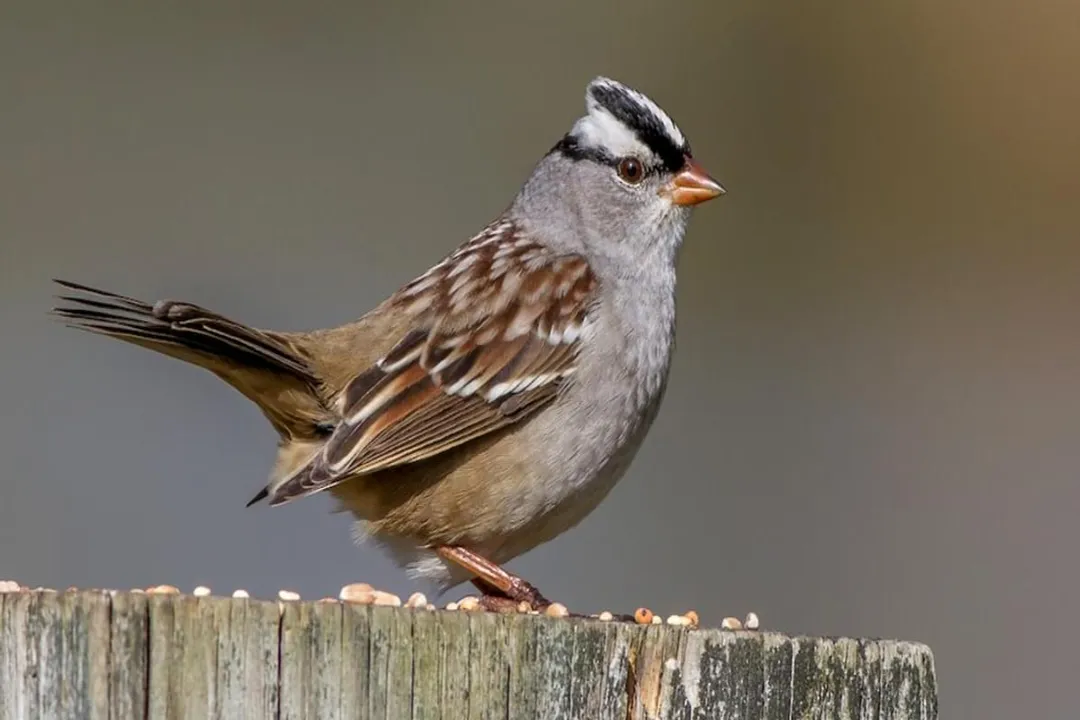
The sight of a small, gray-brown bird with unmistakable black and white stripes slashing across its head often signals a change in the season, a clear indication that the White-crowned Sparrow has arrived or is preparing to move on. These common visitors to feeders and thickets across North America carry a surprising amount of complexity hidden beneath their deceptively simple appearance, making them a fascinating subject for both backyard birdwatchers and dedicated ornithologists. [2][3] Often overlooked in favor of flashier species, this sparrow is one of the most widespread and readily identifiable sparrows in the continent, providing a steady presence through much of the year in many regions. [5][6]
# Head Markings
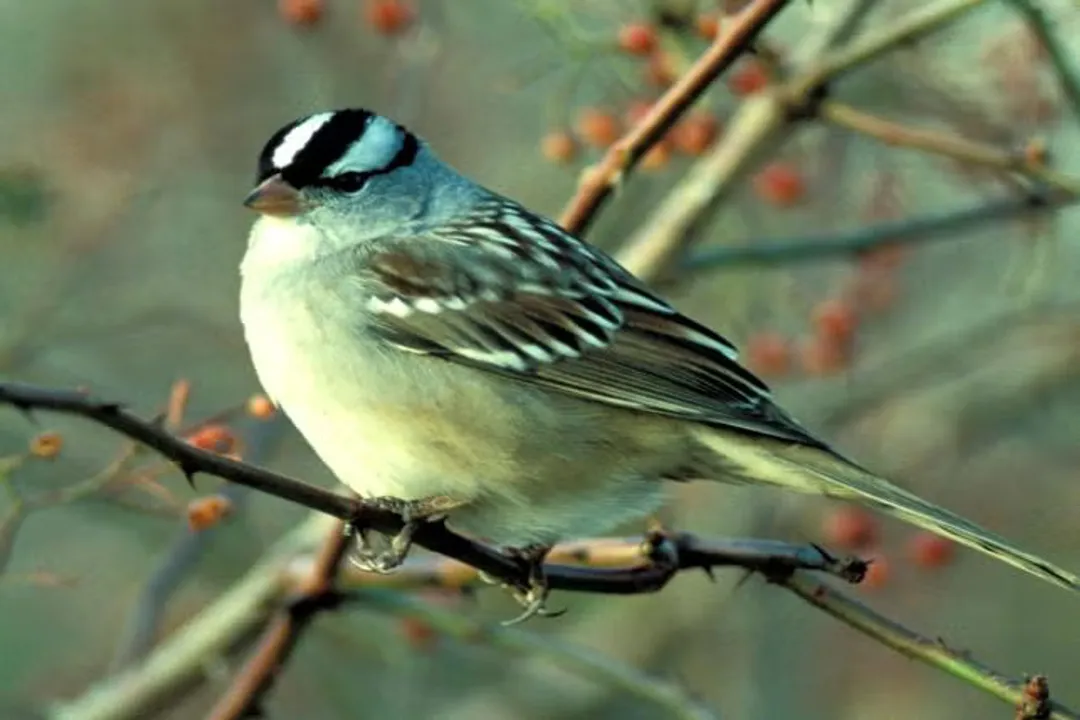
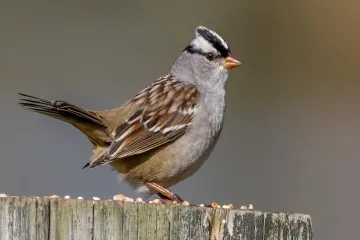
The most immediate and distinguishing feature of the adult White-crowned Sparrow is its distinctive head pattern, a stark contrast of bold stripes. [2] Adults showcase five distinct black and white stripes running from the bill to the back of the head: three black stripes framing two white ones down the center. [5] This striking headgear is the easiest way to separate them from other similar spartrows, like the White-throated Sparrow, which features a yellowish spot near the bill and a white throat patch that the White-crowned lacks. [7] However, the beauty of this pattern is not present from birth. Juvenile and first-year birds exhibit a muted version of this field mark, displaying brownish or dusky stripes where the adults show crisp black and white. [2][6] This immature plumage can sometimes cause confusion during late summer and early fall migrations when both age classes are present simultaneously. [7] Furthermore, there is significant variation among the subspecies; while the bird most frequently seen in the western U.S. often has clear, bright white crown stripes, some eastern subspecies might present duller or grayer markings, meaning a birder in coastal California might see a slightly different visual presentation than one in New England. [9]
# Vocal Expertise
Perhaps even more compelling than their appearance is the sophisticated vocal repertoire of the White-crowned Sparrow, particularly that of the males. [2] Their song is a clear, whistled series of notes, often described as a "jolly" or sweet, fluting melody, sometimes sounding like a simplified version of a robin’s song but delivered with a distinct, lower pitch. [3][5] What makes this song truly interesting is its regional variation. These sparrows exhibit an incredible degree of vocal learning, meaning young males learn their songs by listening to adult males in their vicinity. [2] This process results in distinct dialects across their expansive range. [1] A male in one isolated western mountain range might sing a song structurally different from a male nesting a few hundred miles away in the next valley. [2] This phenomenon suggests that song structure plays a key role in mate selection and territorial defense within established local populations. [1] A fascinating observation for those who listen closely is that males typically learn several different song types, sometimes utilizing different versions depending on the context, such as territorial disputes versus courtship displays. [2]
# Migration Patterns
The White-crowned Sparrow is widely distributed across North America, but its presence is often cyclical, tied closely to the seasons. [6] They breed across much of Canada and the northern United States, as well as in high-elevation areas in the western mountains. [2] When the northern chill sets in, many of these northern breeders undertake long migrations south, often stopping in the lower forty-eight states, sometimes reaching as far as Mexico. [6][9] The pattern of migration can vary significantly by location. In many eastern areas, they are strictly seasonal migrants, arriving in fall and departing in spring. [7] Conversely, in milder areas of the Pacific coast, especially Southern California, the bird is often a year-round resident, with local populations being supplemented or replaced by migratory flocks passing through or wintering nearby. [9]
This difference in residency status offers an opportunity for local birders to gauge the season. If you live in the northern plains, seeing a White-crowned Sparrow after November might mean you are observing a winter visitor, whereas a resident in the Pacific Northwest might see them in the same spot throughout January. [5] Their migration often occurs relatively high in the air, but they travel in flocks, sometimes associating with other sparrow species like White-throated Sparrows, especially during stopovers. [2][4]
# Habitat Preferences
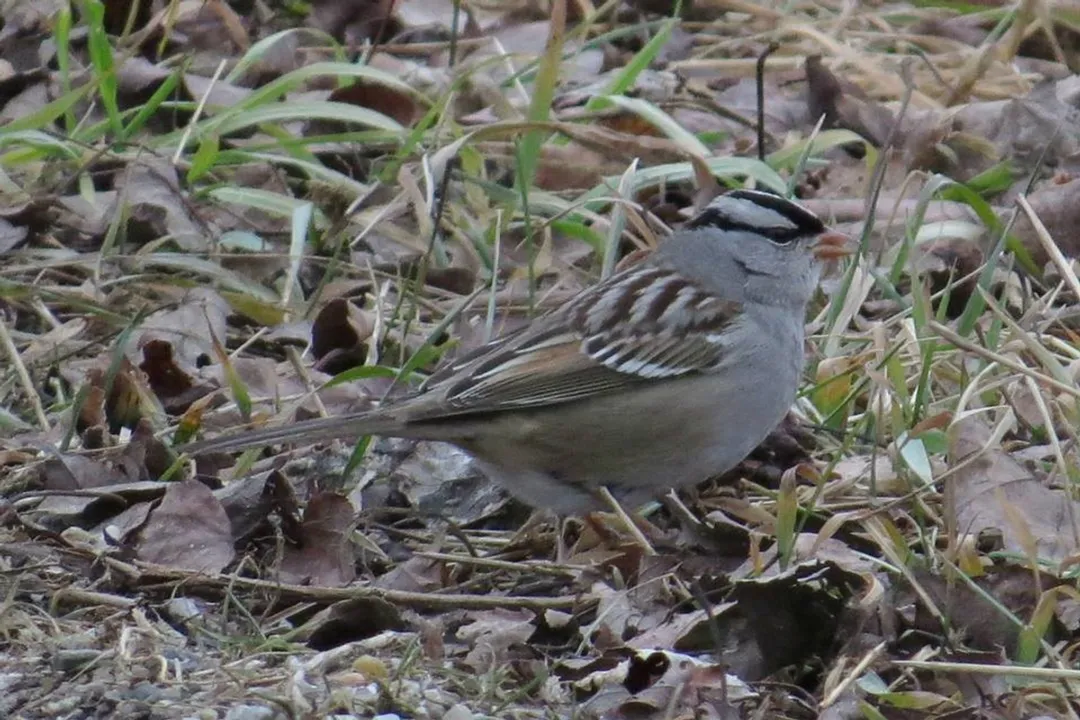
White-crowned Sparrows are not birds of wide-open spaces; they prefer areas that offer a mix of dense cover and open foraging ground. [3][6] During the breeding season, they seek out thickets, shrubby clearings, forest edges, and brushy stream banks where they can build their nests relatively close to the ground amidst the protection of dense vegetation. [2][5] They often favor areas with patchy ground cover, allowing them easy access to seeds while still having nearby escape routes from predators. [3]
When they arrive in the wintering grounds, their habitat preferences shift slightly but remain rooted in the need for cover. They frequently seek out dense, low-lying shrubs, hedgerows, or the brushy edges around suburban yards and parks. [4][6] They are famously ground foragers, hopping or walking across the ground to scratch through leaf litter to find seeds and insects. [2] If you want to specifically attract them to your yard during the colder months, consider placing feeders near dense evergreen shrubs or brush piles. This proximity gives them the security they crave while foraging on the ground beneath the feeding station. [4] Furthermore, while they are ground feeders, they are also known to occasionally use platform feeders or even hopper feeders when the seed supply on the ground is scarce or covered by snow. [1]
# Diet and Foraging
The diet of the White-crowned Sparrow changes seasonally, reflecting what is available in their immediate surroundings. [2] During the warmer months, particularly when feeding young, their diet leans heavily toward protein, consisting of various insects and spiders. [6] As the weather cools and the migratory season approaches, they become much more reliant on seeds. [2]
Their main food sources include weed seeds, grass seeds, and fallen grains. [4][5] In suburban or agricultural settings, they readily consume seeds from sunflower, millet, and cracked corn when provided at feeders. [4] Their foraging style is characteristic: they often scratch backward with both feet simultaneously, effectively tossing aside leaves and debris to uncover hidden morsels below. [2] This dual-foot scratch is a classic sparrow maneuver, distinguishing them from birds that scratch with just one foot, like towhees. [5]
One observation you might make while watching a winter flock is the hierarchy at a feeder. While they generally associate in mixed flocks, the older, more established individuals, particularly males from certain subspecies, might display slight dominance or boldness around prime food sources compared to younger birds or species passing through. [9] Understanding this ground-foraging behavior is key to successful backyard observation.
# Nesting and Reproduction
The reproductive cycle of the White-crowned Sparrow generally kicks off in late spring or early summer, coinciding with the availability of plentiful insects for their nestlings. [2] The female usually selects the nest site, choosing a location low to the ground—often less than three feet high—within a dense shrub, small tree, or thicket. [3][5] The nest itself is a rather bulky cup, constructed primarily of coarse materials like twigs, grasses, and rootlets on the outside, then lined more finely with soft materials such as grass, hair, or feathers for insulation. [2]
The typical clutch size ranges from three to five eggs, which are usually pale buff or greenish-white, speckled or spotted with brown and lilac markings. [2][6] Incubation is shared, with both parents taking shifts, though the female generally does the majority of the sitting, which lasts about twelve days. [2] Once hatched, the young birds are fed almost exclusively on insects by both parents for about nine to twelve days before they fledge. [2] This short dependency period allows many birds to raise multiple broods throughout a single summer, which is common for many temperate-zone sparrows. [1]

# Longevity and Size
White-crowned Sparrows are relatively small songbirds, measuring about six to seven inches in length. [5][6] Their overall body shape is somewhat stocky, giving them a robust look compared to some more delicate finches. [3] In terms of weight, they are light, usually tipping the scales at around three-quarters of an ounce. [1]
While many small songbirds have relatively short lifespans in the wild due to predation and environmental stress, the White-crowned Sparrow has the potential for surprising longevity. Records show that these birds can live for several years. [1] One documented individual, banded as an adult, was recaptured and found to be over 17 years old. [1] Such an advanced age for a small, migratory songbird highlights their resilience, suggesting that once they successfully navigate their first few risky migrations and breeding seasons, they have the tenacity to survive for a surprisingly long time in the wild. [1]
# Variation Across Subspecies
For the dedicated birder, one of the most captivating aspects of this species is the noticeable variation across its many subspecies, especially within the Western North America population. While we generally think of one bird, the Zonotrichia leucophrys complex actually includes several distinct subspecies that can differ in plumage tone and, critically, in their song dialects. [9] For instance, the Gambel’s White-crowned Sparrow (Z. l. gambelii), which breeds further north and migrates through the interior, tends to have a more defined and slightly bolder crown pattern compared to the Nuttall’s White-crowned Sparrow (Z. l. nuttalli) common along the Pacific coast. [9]
If you are tracking these birds as they move through, understanding this subtle division can add a layer of depth to your observations. While the difference between the "Eastern" or "Migrant" subspecies and the "Resident" subspecies along the West Coast is mainly geographic and related to migration timing, observing how the crown stripes appear on a bird in your backyard versus one seen in a field guide focused on the Rocky Mountains can prompt you to look closer at subtle coloration shifts—are the cheek patches more gray or more buffy? These minor variances are often the key differentiators between subspecies that share the same general range during winter but breed in completely different locales. [9]
# A Tip for Winter Identification
When you see a flock of dark sparrows scratching on the ground in your yard during winter, try this simple test to quickly confirm the presence of the White-crowned Sparrow versus the slightly larger and often more boldly patterned Dark-eyed Junco (which is often called a "snowbird" and shares similar wintering habitats). Focus not just on the head stripes, but on the bill color. The White-crowned Sparrow almost always maintains a noticeable pale, pinkish, or yellowish bill year-round, even in non-breeding plumage. [3] In contrast, the bill of the Dark-eyed Junco is typically dark gray or blackish. [7] This simple, non-plumage trait, which is visible even from a distance, can often resolve an immediate identification question between common winter ground-feeders. [3]
Related Questions
#Citations
Fun Facts About White-crowned Sparrows - Wild Birds Unlimited
White-crowned Sparrow - All About Birds
White-crowned Sparrow | Audubon Field Guide
White-Crowned Sparrow - Wild Bird Feeder and Accessory Store
White-crowned Sparrow - Zonotrichia leucophrys - NatureWorks
White-Crowned Sparrow - Missouri Department of Conservation
White-crowned Sparrow - Connecticut Audubon Society
Bird of the Week: White-crowned Sparrow
White-crowned Sparrow: The bird of many songs